Our blog

Latest news
& events

Woman reviewing home purchase documents, one of the growing share of women homebuyers
Women Homebuyers Are Reshaping the Housing Market

I thought I had a good read on who is buying homes right now. Then the data made me look again. Women homebuyers, and single women in particular, are not a niche of the market anymore. They are one of its main engines, and they have been quietly outbuying single men for four decades. The 2026 numbers make the case plainly. They also expose a gap that every solo buyer and seller should know about before signing anything.

By the end of this article, you’ll know:

  • What the latest NAR data shows about women homebuyers, including a first-ever income flip
  • What the Yale research on the 2 percent gap actually found, and why it happens
  • How an independent appraisal works as a negotiation equalizer for solo buyers and sellers

Women Homebuyers Are Reshaping the Market

The National Association of Realtors has tracked buyer demographics since 1981. Single women have outpaced single men every year of it. The 2025 Profile of Home Buyers and Sellers puts single women at 21 percent of all buyers. Single men sit at 9 percent. Among first-time buyers the split is 25 percent to 10 percent. Among Gen Z buyers, single women hit 35 percent against 18 percent for men.

Then came a milestone. For the first time in the survey’s history, single women buying their first home now out-earn their male counterparts, as CNBC reported from the 2026 NAR data. Their median income is $73,000 against $66,400 for men. This is not a trend that is coming. It is a structural feature of the market that is already here.

The 2 Percent Gap: What the Yale Research Actually Found

Now the uncomfortable part. Researchers at the Yale School of Management analyzed roughly 50 million U.S. housing transactions. Their finding, per the Goldsmith-Pinkham and Shue study: single women buy the same property for about 2 percent more and sell it for about 2 percent less than single men. Compounded over an ownership cycle, that gap eats a meaningful share of housing wealth.

The mechanism matters as much as the number. The study traces the gap largely to negotiation: women tend to list for less and experience worse negotiated discounts. And in tight markets, where bidding replaces haggling, the gap shrinks. So this is not a property problem or a credit problem. It is a pricing-information problem that shows up wherever a deal gets negotiated one on one.

A Negotiation Gap Has a Valuation Answer

Here is where my profession can actually help, and I want to be precise about how. An appraisal does not fix lending bias, and under USPAP an appraiser’s opinion of value is independent of who the buyer or seller is. That independence is exactly the point.

If the 2 percent gap lives in negotiation, then the counterweight is walking into the negotiation with a documented, defensible number. A pre-offer appraisal tells a buyer what the property is worth before emotions and pressure set the price. A pre-listing appraisal keeps a seller from anchoring low. The Yale data shows that low anchor is where much of the selling-side gap starts. Either way, the negotiation stops being about confidence and starts being about evidence. Evidence does not care who is holding it.

Money in Motion: Divorce, Inheritance, and Solo Ownership

A large share of solo female ownership arrives through life transitions. Divorce, widowhood, and inheritance all put property decisions in front of one person. Often the timeline is not one they chose. Those are also the moments when an unverified number does the most damage. It might be a buyout figure in a settlement or a listing price set while grieving.

The protection is the same in every case: an independent value, documented at the moment of the transition. In a divorce, that value is the foundation of a fair split. Our guide to appraisals in divorce proceedings is built around it. In an estate, it sets the record before heirs have to negotiate with each other. Solo decisions carry enough weight without guessing at the biggest number involved.

What Solo Buyers and Sellers Can Do Right Now

The practical moves are simple. Before you offer, know the market value from evidence, not from the listing or your agent’s enthusiasm. The steps in our home appraisal process guide apply whether a lender orders the report or you do. Before you list, consider a pre-listing appraisal so your asking price reflects the market rather than caution. And if a number in front of you feels off, an appraisal review can tell you if the doubt is justified. That holds whether the number came from a buyer, a lender, or a soon-to-be ex.

None of this requires anyone’s permission. Any buyer or seller can order their own residential appraisal to get the number checked before committing to it.

Bring Your Own Number to the Table

Women homebuyers have already changed who the market serves. The remaining gap is not about showing up, since the data proves they are showing up in force. It is about pricing power at the negotiating table, and pricing power comes from information. Get the value documented before the negotiation starts, and the 2 percent gap has a much harder time finding you.

Negotiate From Evidence, Not Estimates

A pre-offer or pre-listing appraisal from PahRoo gives you a documented value before the negotiation starts, in Chicago, Dallas, Philadelphia, Phoenix, and Naples.

Request Your Appraisal

Frequently Asked Questions

Are single women really buying more homes than single men?

Yes, and they have every year since NAR began tracking in 1981. The 2025 Profile of Home Buyers and Sellers shows single women at 21 percent of all buyers versus 9 percent for single men. The gap is even wider among first-time and Gen Z buyers.

Do women actually pay more when buying a home?

Yale researchers analyzed about 50 million transactions. They found single women buy comparable properties for roughly 2 percent more and sell for roughly 2 percent less than single men. The study attributes most of the gap to negotiation dynamics rather than the properties themselves.

Can an appraisal help me negotiate a better price?

Yes. A pre-offer appraisal gives a buyer a documented market value to negotiate from. A pre-listing appraisal keeps a seller from anchoring below the market. Since the research ties the gender gap to negotiation, entering with independent evidence directly targets where the gap occurs.

Does the appraiser’s opinion change based on who is buying or selling?

No. Under USPAP, an appraiser must be impartial, and the opinion of value cannot favor any party. That independence is what makes the appraisal useful as a neutral anchor in negotiation.

Should I get my own appraisal after a divorce or inheritance?

In most cases, yes. Life transitions put major property decisions in front of one person. A documented value at the time of the transition protects buyouts, settlements, and estate distributions from disputes later.

Need an Independent Appraisal?

PahRoo Appraisal & Consultancy provides independent residential and commercial appraisals across Chicago, Dallas, Philadelphia, Phoenix, and Naples. Led by Michael Hobbs, our MAI and SRA designated team gives every buyer and seller the same thing. That is a defensible number nobody at the table can argue with.
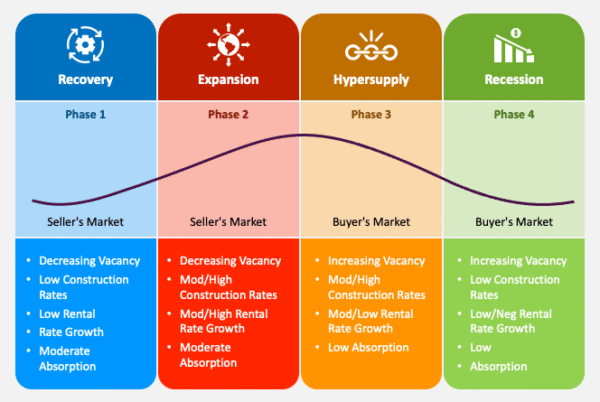


our phases of the real estate market cycle: recovery, expansion, hyper supply, and recession
Real Estate Cycles Explained: The Insider’s Guide to Buying or Selling at the Perfect Time

Real estate does not move in a straight line. It moves through a real estate market cycle, four repeating phases that shape when homes sell fast, when they sit, and when prices swing in your favor. If you are planning a purchase, a sale, or a refinance in Cook County or one of the other markets we serve, knowing where your local market sits in that cycle changes your timing and your negotiating position.

By the end of this article, you’ll know:

  • The four phases of the real estate market cycle and what drives each one
  • Where current data puts the national market, and how Chicago compares
  • Why an appraiser factors cycle position into a defensible valuation

Understanding the Real Estate Market Cycle

Property markets move in patterns of supply and demand, not random swings. Dr. Glenn Mueller at the University of Denver’s Burns School of Real Estate has tracked this pattern across more than 50 U.S. metro areas for decades through his Cycle Monitor research. His work breaks the real estate market cycle into four phases: recovery, expansion, hypersupply, and recession. Every metro area moves through these phases at its own pace, but the sequence itself rarely changes. That consistency is what makes the cycle useful for planning, even though no two markets hit each phase on the same calendar.

The Four Phases and What Each One Means for Your Timing

Recovery

Vacancy is falling from a high point, but rents and prices have not caught up yet. Headlines still sound cautious. This is usually where the best long-term purchases happen, because pricing has not reflected the improving fundamentals. If you can hold a property for several years, recovery rewards patience.

Expansion

Confidence returns. New construction picks up, competition among buyers increases, and prices climb at a steady pace. If you bought during recovery, expansion is often the strongest window to sell or refinance, since demand is outpacing new supply.

Hypersupply

Construction catches up to demand and then overshoots it. Listings sit longer, price growth slows, and the first soft spots appear in specific neighborhoods or property types before they show up in national averages. Sellers should move with realistic pricing here. Buyers should confirm the deal holds up on its own merits, not just on the assumption that values keep rising.

Recession

Demand falls below the level supply can absorb. Prices soften and negative headlines dominate coverage. This phase is uncomfortable to sit through, but it also sets up the next recovery. Buyers with cash and a long time horizon often find their best opportunities here.

Where the Market Sits Right Now

National data from the National Association of REALTORS shows existing home sales still running below pre-pandemic norms in 2026, with inventory improving but not yet back to a balanced five to six months of supply nationally. That points to a market transitioning out of hypersupply in some regions while staying tighter than average in others. Illinois has landed on the tighter side, with home prices up close to 5% year over year even as several Sun Belt states post outright declines. That divergence matters. A market that looks like early hypersupply in Phoenix or Naples can still behave like expansion in parts of Cook County. Our recent look at the Chicago condo market in mid-2026 found the cooling concentrated in the suburbs while the city core held firmer, which is exactly the kind of local divergence a national headline will miss.

If you are weighing a move in Chicago, Dallas, Philadelphia, Phoenix, or Naples, the national cycle position is a starting point, not an answer. Your neighborhood, property type, and price band each carry their own timing.

How Cycle Position Shows Up in an Appraisal

An appraiser does not guess at cycle position from headlines. We track absorption rates, days on market, and the direction of recent comparable sales for the specific property type and price range in question. That data point, not a general sense of “the market is hot,” is what supports a defensible opinion of value under USPAP.

Cycle position also affects Cook County property tax strategy. A property assessed during a hypersupply or recession phase, when comparable sales are softening, often has stronger grounds for a reduction than one assessed at the peak of expansion. If your reassessment notice landed during a cooling window, it is worth reviewing whether the assessed value still reflects current market conditions. Our 2026 Cook County reassessment guide walks through how that evidence gets built into an appeal.

Know Your Local Phase Before You Move

National forecasts are a decent starting point, but they will not tell you what is happening on your block. Before you list, buy, or refinance, get an opinion of value grounded in your specific neighborhood’s cycle position, not a national average. That is the difference between a decision based on data and one based on a headline.

Get a Cycle-Informed Valuation Before You List or Buy

PahRoo appraisers track local absorption and comparable sales trends across Chicago, Dallas, Philadelphia, Phoenix, and Naples, so your valuation reflects where your market actually stands, not a national headline.

Request Your Appraisal

Frequently Asked Questions

What are the four phases of the real estate market cycle?

Recovery, expansion, hypersupply, and recession. Recovery is the trough where vacancy is falling but prices lag. Expansion brings rising demand and new construction. Hypersupply is when new supply overshoots demand and listings linger. Recession is when demand falls below what supply can absorb and prices soften.

How can I tell what phase my local market is in right now?

Look at absorption rate, days on market, and the direction of recent comparable sales for your specific property type and neighborhood. National data sets the broad backdrop, but local trends can run a full phase ahead of or behind the national picture.

Is 2026 a buyer’s market or a seller’s market?

It depends heavily on location. National inventory is still below pre-pandemic norms, but Sun Belt states like Florida and Arizona are seeing price declines while Illinois and parts of the Midwest are still posting price gains near 5% annually. Ask about your specific submarket rather than relying on the national average.

Does an appraiser account for market cycle position in a valuation?

Yes. A USPAP-compliant appraisal weighs absorption trends and recent comparable sales for the property’s specific type and price range, which reflects where that submarket sits in the cycle rather than relying on general market sentiment.

Does market cycle timing matter for a Cook County property tax appeal?

It can. A property assessed near the peak of expansion may carry a higher value than current comparable sales support if the market has since cooled toward hypersupply or recession. A current, well-documented appraisal helps show whether the assessed value still matches market conditions.

Need an Independent Appraisal?

Whether you are timing a sale in residential real estate, weighing a commercial acquisition, or reviewing a Cook County reassessment notice, PahRoo Appraisal & Consultancy can give you a valuation grounded in current, local market data. Contact us to talk through your specific situation.

Small investment property of the kind where real estate investment mistakes get expensive
Real Estate Investment Mistakes an Appraiser Keeps Seeing

Most lists of real estate investment mistakes are written by people who sell properties. This one comes from the other side of the closing table. Appraisers get called in when deals are underwritten, contested, refinanced, and unwound, so we see where investors actually lose money. The pattern is consistent. Almost every expensive mistake traces back to the same root: acting on a number nobody verified.

By the end of this article, you’ll know:

  • The six valuation mistakes that cost investors the most, and how each one starts
  • Why online estimates and listing prices fail hardest on investment property
  • Which deals justify an independent appraisal even when no lender requires one

The Real Estate Investment Mistakes That Start With a Bad Number

The first and most common of the real estate investment mistakes is treating price as value. A listing price is a seller’s ambition. An online estimate is an algorithm’s guess. It is built from public records that miss condition, layout, and everything behind the front door. Neither is an opinion of market value.

Investment properties break automated models even faster than owner-occupied homes do. Rents, expenses, and condition drive the math, and none of those live in public data. An investor who underwrites a deal on an algorithm’s number is building the whole return projection on sand. Standards-based valuation exists for exactly this reason. It is why appraisers work under USPAP rather than under whatever the listing says.

Underwriting Yesterday’s Market

The second mistake is running today’s deal on last year’s assumptions. Rents soften and cap rates move. A comparable sale from eighteen months ago may describe a market that no longer exists. We covered how this plays out for income property in our article on commercial appraisals in a shifting market. The short version applies to a two-flat as much as an office tower: value has a date on it.

Before you commit, ask what the market has done since each of your comparables closed. Then ask whether your rent and expense assumptions reflect current conditions or hopeful ones. If the deal only works with yesterday’s numbers, it does not work.

Missing What Drags Value Down

Investors are good at spotting upside and bad at pricing decay. Deferred maintenance, an obsolete layout, a flood zone designation, or environmental issues next door all pull value below what the surface suggests. These are exactly the items a drive-by look and a listing photo tour will miss.

So do the unglamorous work. Get the inspection, pull the flood maps, and walk every unit. When a defect turns up, price it as the market would, not as a contractor’s repair quote. Buyers discount problems by more than the cost to fix them.

Confusing Renovation Cost With Value

Here is the mistake that ruins flip math. Spending $80,000 on a renovation does not add $80,000 of value. Appraisers measure contributory value, meaning what the market pays for the improvement. That figure routinely lands below cost, especially for over-improvements that push a property past its neighborhood ceiling.

We walked through this discipline for green property features, and it governs every upgrade. Think granite in a C-class rental, a luxury bath in a starter-home block, or an addition that makes the biggest house on the street bigger. Budget renovations against what comparable renovated properties actually sell for, not against what the work costs.

Skipping the Appraisal Because No Lender Made You Get One

Cash purchases, off-market deals, seller financing, and partnership buy-ins share a dangerous feature. Nobody in the transaction is required to check the value. The lender’s appraisal, whatever its limits, at least forces one independent look. Remove it and the only value opinion in the room belongs to the person selling to you.

These are precisely the deals where an independent appraisal earns its fee. It is also the cheapest dispute insurance available. Partnership stakes, buyouts, and estate transfers priced without a documented value tend to resurface in litigation years later, when reconstructing the number costs far more.

Treating Taxes and Insurance as Fixed Costs

The last mistake hides in the expense column. Property taxes are not frozen at the seller’s bill. A sale and a reassessment can move them, and in high-tax markets like Cook County that swing can erase a thin margin. Insurance has its own trap. Replacement cost and market value are different numbers, and underinsuring a building to its purchase price can leave a gap when something burns.

The fix is professional, not heroic. Have your CPA model the tax picture, and ask an insurance professional to quote replacement cost properly. If the assessment comes in high after you buy, a tax appeal supported by an appraisal is a real option, not a lost cause.

Verify the Number Before You Wire the Money

Every mistake above has the same antidote: independent verification before commitment. Underwrite on current data. Price the defects and the improvements at market rather than at cost, and put a real appraisal behind any deal where no one else will check the value. The investors who last are rarely the boldest. They are the ones whose numbers were right.

Check the Number Before You Commit

PahRoo appraises residential and commercial investment property across Chicago, Dallas, Philadelphia, Phoenix, and Naples, so your deal math starts from a value you can defend.

Request an Investment Appraisal

Frequently Asked Questions

What is the biggest mistake new real estate investors make?

Acting on an unverified number. Whether it is a listing price, an online estimate, or a seller’s rent roll, new investors routinely underwrite deals on unchecked figures. Every downstream calculation inherits that error.

Is an online estimate good enough for an investment purchase?

No. Automated estimates miss condition, interior quality, actual rents, and expenses, which are the inputs that drive investment value. They are a starting point for curiosity, not a basis for wiring money.

Do I need an appraisal if I’m paying cash?

That is when you need one most. With no lender in the deal, no one is required to verify the value. The only opinion in the room belongs to the seller. An independent appraisal is the check the transaction otherwise lacks.

Will my renovation add its full cost to the property’s value?

Usually not. Appraisers measure contributory value, meaning what buyers actually pay for the improvement, which often runs below cost. Over-improvements beyond the neighborhood’s ceiling return the least.

Can property taxes change after I buy an investment property?

Yes. Reassessment can move the bill well above what the seller paid, which matters in high-tax markets. Model the tax picture with your CPA before closing. A high assessment can also be appealed with appraisal evidence.

Need an Independent Appraisal?

PahRoo Appraisal & Consultancy values investment property across Chicago, Dallas, Philadelphia, Phoenix, and Naples, from residential two-flats to commercial buildings. Led by Michael Hobbs, our MAI and SRA designated team gives investors the number before the market gives them the lesson.


Gated entrance to a luxury waterfront estate on an exclusive residential street.
Most Expensive Streets in the US: The 2026 Top 5

The most expensive streets in the U.S. are led by Indian Creek Island Road in Florida, where Mark Zuckerberg paid $170 million for a single waterfront estate. Beverly Park Circle in Los Angeles, Lazy Lane Boulevard in Houston, Conyers Farm Drive in Greenwich, and Manhattan’s Billionaires’ Row round out the list. The prices are startling. The valuation questions behind them are even more interesting.

By the end of this article, you’ll know:

  • Which five streets top the U.S. rankings and what homes there actually sell for now
  • Why these addresses command nine-figure prices
  • How appraisers value properties when almost no comparable sales exist

The Five Most Expensive Streets in the U.S.

Street-level rankings, first popularized by Zillow’s analysis of median home values, have long placed the same five names at the top. Indian Creek Island Road in Miami-Dade County leads. Beverly Park Circle and Beverly Park Terrace in Los Angeles follow. Lazy Lane Boulevard in Houston’s River Oaks and Conyers Farm Drive in Greenwich, Connecticut, come next. Manhattan’s Billionaires’ Row, centered on 57th Street, closes the list.

The rankings have stayed stable. The prices have not. When those medians were first published, Indian Creek’s stood at about $21 million. Recent sales on the same street have cleared five times that number. Any list of the most expensive streets is really a snapshot, and the current snapshot is far richer than the old one.

Indian Creek: Where a Vacant Lot Sells for $105 Million

Indian Creek Island Road sits on a guarded private island with just 41 properties and its own police force. Residents include Jeff Bezos, Tom Brady, and Ivanka Trump. In June 2025, a 1.8-acre vacant lot next to Bezos sold for $105 million, as Forbes reported. The seller had paid $27.5 million for it in 2018. That is land alone, no house.

Then came the record. Mark Zuckerberg purchased the estate at 7 Indian Creek Island Road for $170 million, the most expensive home sale in Miami-Dade County history, according to Robb Report. Bezos himself now owns three properties on the island. One street, 41 lots, and a run of transactions that would fund a small city’s budget.

What Actually Drives Nine-Figure Street Prices

Strip away the celebrity names and the pattern is consistent. First, absolute scarcity: Indian Creek has 41 lots, Beverly Park sits behind two guard gates, and Conyers Farm parcels run ten acres or more. Supply cannot grow. Second, security and privacy, which ultra-wealthy buyers treat as necessities rather than amenities. Third, water or park frontage that cannot be replicated.

There is also a quieter factor: the address itself carries a premium. Buyers at this level are purchasing membership in a place as much as a house. That is why a teardown on Indian Creek outsells a finished mansion almost anywhere else. The land and the address hold the value. The structure is often negotiable.

How Appraisers Value Homes With Almost No Comparables

Here is the part most lists skip. The sales comparison approach, the backbone of residential appraisal, depends on recent sales of similar properties. On a street with 41 homes that trade once every few years, that pool barely exists. So how does a credible value opinion get built?

Fannie Mae’s appraisal guidance addresses exactly this situation. When recent comparable sales are scarce, appraisers may extend search parameters, use older sales, and draw on competing markets. Every adjustment must be sound and the reasoning explained. In ultra-luxury work, appraisers also lean harder on land value, cost analysis, and documented market behavior. The same discipline applies to any unique property, whether it is a nine-figure island estate or a one-of-a-kind vintage home in Chicago. Thin markets do not excuse weak analysis. They demand stronger analysis.

What Chicago Owners Can Take From Billionaire Streets

Chicago has its own premium addresses along the lakefront, in Lincoln Park, and on the North Shore. The same principles scale down to them. If your property is unusual for its market, whether through size, architecture, location, or history, its value depends on an appraiser who can build support where easy comparables do not exist. Ask how they handle thin markets before you hire. Then ask what evidence backs the final number. Our Chicago appraisal team works on exactly these kinds of assignments, from distinctive homes to complex residential and commercial valuations.

Own a One-of-a-Kind Property? Get a Valuation Built on Evidence

Unique properties demand more than a quick comp search. PahRoo’s appraisers build defensible values for homes that don’t fit the mold.

Request Your Appraisal Quote

Frequently Asked Questions

What is the most expensive street in the U.S.?

Indian Creek Island Road in Miami-Dade County, Florida. The private island has only 41 properties, and recent sales include a $170 million estate purchase and a $105 million vacant lot, the highest prices ever recorded in the county.

What was the biggest home sale on Indian Creek Island?

Mark Zuckerberg’s purchase of 7 Indian Creek Island Road for $170 million, which set the record for the most expensive home sale in Miami-Dade County history.

Why are these streets so expensive?

Three factors drive the prices: absolute scarcity, since supply on these streets cannot grow; security and privacy, which ultra-wealthy buyers require; and irreplaceable water or park frontage. The address itself also carries a premium beyond the physical house.

How do appraisers value homes with no comparable sales?

When recent comparable sales are scarce, appraisers extend search parameters, use older sales, and analyze competing markets, with every adjustment explained and supported. They also rely more heavily on land value, cost analysis, and documented market behavior.

Does this matter for homes outside luxury markets?

Yes. Any property that is unusual for its market, through size, architecture, age, or location, faces the same thin-comparable problem. Its value depends on an appraiser who can build market support rather than rely on easy matches.

Need an Appraisal That Holds Up?

PahRoo Appraisal & Consultancy has valued Chicago-area real estate for more than two decades, from lakefront estates to vintage homes that defy easy comparison. Whether you need a residential appraisal, an independent valuation for divorce proceedings, or answers to your questions, visit our FAQ page or learn more about PahRoo.


The Green Premium: How Sustainable Features Boost Property Value in 2025
sustainable green building

In 2025, the real estate landscape is increasingly influenced by sustainability. Properties equipped with green and energy-efficient features are not only reducing environmental footprints but also commanding higher market values. This trend reflects a growing demand among buyers and investors for eco-friendly and cost-effective living spaces.

The Financial Upside of Green Certifications

Properties with recognized green certifications, such as LEED (Leadership in Energy and Environmental Design) and Energy Star, are witnessing a surge in desirability. These certifications signify a property’s commitment to sustainability and superior energy efficiency, leading to lower operational costs. For instance, LEED-certified homes have been reported to sell at a premium compared to non-certified homes. Similarly, commercial properties with Energy Star certifications often achieve higher rental rates and increased occupancy due to their energy efficiency and appeal to environmentally conscious tenants.

Market Demand for Sustainable Living

The shift towards sustainable living is not just a niche movement but a significant market trend. Buyers are increasingly prioritizing properties that align with their environmental values and offer long-term cost savings. This demand is driven by heightened awareness of climate change and the tangible benefits of reduced utility expenses. As a result, energy-efficient homes are selling faster and often at higher prices than their conventional counterparts.

Incorporating Renewable Energy Solutions

The integration of renewable energy sources, such as solar panels and wind turbines, into residential and commercial properties is becoming more prevalent. These installations not only reduce dependence on non-renewable energy but also enhance property appeal. Homes equipped with solar panels, for example, can experience significant reductions in electricity bills, making them more attractive to potential buyers. Additionally, properties with renewable energy features may qualify for tax incentives and rebates, further increasing their value proposition.

Emerging Trends in Sustainable Real Estate
  • Smart Tech: Energy-efficient appliances and automated systems that optimize usage.
  • Solar & Renewables: Homes with solar panels reduce electricity bills and qualify for tax incentives.
  • Climate-Resilient Design: Materials that withstand extreme weather add long-term value.
  • Urban Greening: Green roofs and community gardens increase curb appeal and livability.
The Bottom Line

The integration of green and energy-efficient features is proving to be a valuable investment in the 2025 real estate market. Properties that embrace sustainability not only contribute positively to the environment but also enjoy enhanced marketability and financial returns. As the demand for eco-friendly living spaces continues to rise, incorporating these features becomes a strategic imperative for property owners and developers aiming to maximize property values.

Ready to enhance your property’s value? Contact PahRoo Appraisal & Consultancy today to learn how sustainable features can boost your property’s market appeal

Could You Afford These 2024 Luxury Homes? Here’s What Your Monthly Payment Would Look Like

2024 luxury home affordability: Aspen high-end home

“Ever wondered what it costs to own a $200 million mansion? Sure, buying a mega-mansion is reserved for billionaires—but what if you somehow hit the jackpot? Would your paycheck cover the monthly mortgage?”

Let’s break down the most expensive homes sold in 2024 and see if you (or anyone besides a billionaire) could actually afford the payments. Spoiler alert: It’s insane.

1. Malibu, CA – $210 Million

Location: Malibu, CA
Sold For: $210,000,000
Mortgage Breakdown (30-year fixed loan at 6.5%):

20% Down Payment: $42 million
Loan Amount: $168 million
Monthly Payment: $1.06 MILLION
Property Taxes (~1.1% in CA): $192,500 per month
Home Insurance & Maintenance: $50,000+ per month

Reality Check: You’d need to make $20 million per year just to cover this home’s mortgage, taxes, and maintenance!

And that’s before you hire a full-time staff, security team, and pool boy.

2. Palm Beach, FL – $152 Million

Location: Palm Beach, FL
Sold For: $152,000,000
Mortgage Breakdown:

20% Down Payment: $30.4 million
Loan Amount: $121.6 million
Monthly Payment: $770,000+
Property Taxes (~1.3% in FL): $165,000 per month
Private Yacht Dock + Staff Costs: $50,000 per month

Reality Check: Florida has no state income tax, which helps… but you still need at least $12M-$15M per year just to cover the basics.

Hope you don’t mind skipping Starbucks.

3. NYC Penthouse – $135 Million

Location: Manhattan, NY
Sold For: $135,000,000
Mortgage Breakdown:

20% Down Payment: $27 million
Loan Amount: $108 million
Monthly Payment: $685,000+
Property Taxes (~1.6% in NYC): $180,000 per month
HOA Fees & Luxury Concierge: $20,000+ per month

Reality Check: Living in a five-story penthouse with a rooftop pool sounds amazing, but good luck finding street parking when your driver’s off duty.

4. Aspen, CO – $77 Million

Location: Aspen, CO
Sold For: $77,000,000
Mortgage Breakdown:

20% Down Payment: $15.4 million
Loan Amount: $61.6 million
Monthly Payment: $390,000+
Property Taxes (~0.5% in CO): $32,000 per month
Ski Resort Maintenance & Private Staff: $50,000 per month

 Reality Check: This is probably the cheapest home on this list, but you’ll still need $6M+ per year just to keep up with the mortgage, taxes, and staff.

At least your winters will be epic!

5. Carpinteria, CA – $96 Million

Location: Carpinteria, CA
Sold For: $96,000,000
Mortgage Breakdown:

20% Down Payment: $19.2 million
Loan Amount: $76.8 million
Monthly Payment: $485,000+
Property Taxes (~1.1% in CA): $88,000 per month
Coastal Maintenance & Security: $35,000 per month

Reality Check: If you can afford this, you’re probably rubbing shoulders with Oprah and Ellen.

But even billionaires think twice before paying half a million per month on a home.

So… Could You Afford One of These Homes?

Unless you’re a tech billionaire, oil tycoon, or royalty, the answer is probably not. But it’s fun to dream, right?

Which one would YOU choose if money wasn’t an issue?

Drop your dream home in the comments!

Curious about how much home you can afford? Use our affordability calculator to estimate your potential monthly payments and explore luxury properties within your budget.

Luxury home interior representing a luxury real estate appraisal assignment
Luxury Real Estate Appraisal as the Buyer Pool Changes

Walk into a high-end open house today and the buyers look different than they did a decade ago. Younger, more often women buying on their own, and asking about smart systems instead of formal dining rooms. That shift changes more than marketing. It changes what a luxury real estate appraisal has to measure, and it is about to make documented values matter more than ever, because the largest wealth transfer in history is moving property along with the money.

By the end of this article, you’ll know:

  • Who the new luxury buyers are, and how much wealth is heading their way
  • Why high-end homes are the hardest properties to value, and where online estimates fail
  • Why the wealth transfer itself creates appraisal needs for estates, gifts, and trusts

The Buyers Are Changing, and So Is Luxury Real Estate Appraisal

For years, the top of the market belonged to Baby Boomers and Gen X. That is ending. Roughly $124 trillion in assets is projected to change hands through 2048, with about $106 trillion going to heirs, mostly Gen X, Millennials, and Gen Z, according to Cerulli Associates research summarized by Merrill and Bank of America Private Bank. Some of that inheritance arrives as cash that buys homes. A lot of it arrives as the homes themselves.

For a luxury real estate appraisal, the buyer pool is not trivia. Value is what the probable buyer would pay, so when the probable buyer changes, the analysis has to follow. An appraiser who still assumes a 1998 buyer profile will misread what today’s market rewards and what it ignores.

Why Luxury Homes Are the Hardest to Value

High-end properties break the tools that work everywhere else. Automated estimates lean on volume and similarity, and luxury homes offer neither. Sales are few, features are custom, and no two properties match. A $400,000 house might have a dozen recent comps within a mile. A $4 million house might have three loosely similar sales in a year, spread across neighborhoods.

So the appraiser has to work harder. That means widening the search area with care, verifying the terms behind each sale, adjusting for one-of-a-kind features with market support, and accounting for longer exposure times at the top of the market. This is the segment where designations and experience separate a defensible residential appraisal from an expensive guess.

What the New Buyers Pay For, and What They Do Not

Younger luxury buyers consistently favor smart-home technology, wellness spaces, energy performance, and turnkey condition. Sellers hear that and assume every upgrade returns its cost. The appraisal answers a colder question: what does the market actually pay for the feature?

Some of these amenities now carry real contributory value in the right submarkets. Others read as personal taste that the next buyer will renovate away. The discipline is the same one we described for green property features: cost is not value, and market evidence decides. In luxury, where a single feature can represent six figures, that distinction gets expensive to ignore.

Women Are a Growing Share of the Buyer Pool

The other structural shift is who holds the wealth. Women in the United States are projected to control about $34 trillion in assets by 2030, roughly 38 percent of the total, per McKinsey research. More high-end purchases are made by women buying independently, often through trusts or after a divorce or inheritance.

Those purchase paths share a common need: an independent value nobody can argue with. Trust purchases, divorce settlements, and estate distributions all put the number under scrutiny from trustees, attorneys, or courts. The appraisal is what keeps that scrutiny short.

The Wealth Transfer Is an Appraisal Event

Here is what the trend coverage misses. Every luxury property that passes between generations needs a documented value at the moment it moves. Estates need date-of-death values to set basis and settle fairly among heirs. Gifted property needs a supportable value for the paperwork the family’s CPA will file. Homes placed in trusts need values for funding and accounting. The tax mechanics belong to a CPA, but the value itself is appraisal work, and it has to hold up years later if anyone asks.

Families who handle this well get the appraisal at the time of transfer, not five years later when a dispute or an audit forces a retrospective reconstruction. With this much property set to change hands, the cheapest insurance in estate planning is a current, well-documented value from a qualified appraiser. Our estate planning appraisal work exists for exactly this moment.

Get the Value Documented Before the Asset Moves

If you own, advise on, or expect to inherit high-end property, the order of operations matters. Appraise before the transfer, before the listing, and before the settlement talks, while the facts are fresh and the market data is current. The new luxury market rewards buyers and families who know their number. It punishes the ones who guess.

Put a Defensible Number on a High-Value Property

PahRoo’s MAI and SRA designated appraisers value luxury and estate homes for purchases, trusts, estates, and settlements across Chicago, Dallas, Philadelphia, Phoenix, and Naples.

Request a Luxury Home Appraisal

Frequently Asked Questions

Why is a luxury home harder to appraise than a typical house?

Because comparable sales are scarce and the properties are one of a kind. The appraiser must widen the search, verify each sale’s terms, and support adjustments for custom features, which takes more skill and more market evidence than a standard assignment.

Can I rely on an online estimate for a high-end property?

No. Automated models depend on many similar recent sales, which luxury markets rarely provide. Estimates at the top of the market routinely miss by wide margins, in either direction, and carry no weight with courts, trustees, or the IRS.

Do smart home and wellness features increase appraised value?

Sometimes. The appraiser measures contributory value, meaning what buyers in that submarket actually pay for the feature, which is often less than installation cost. Well-documented, market-supported features fare best.

When does inherited or gifted property need an appraisal?

At the time of transfer. Estates typically need a value as of the date of death, and gifts need a supportable value for the related filings. Getting the appraisal when the property moves avoids a costlier retrospective reconstruction later. The tax treatment itself is a matter for your CPA.

How long does a luxury home appraisal take?

Longer than a standard assignment. The inspection alone can take several hours for a large custom home, and the research and reporting often run one to two weeks depending on how thin the comparable data is. Complex properties reward starting early.

Need an Independent Appraisal?

PahRoo Appraisal & Consultancy values luxury, estate, and unique residential properties across Chicago, Dallas, Philadelphia, Phoenix, and Naples. Led by Michael Hobbs, our MAI and SRA designated team delivers appraisals built to satisfy trustees, attorneys, and courts, not just curiosity.


Logistics cost pressure 2024: warehouse and supply chain operations
Trends in the Chicago Real Estate Market: Insights for 2024

In 2024, businesses across the U.S. are facing logistics cost pressures that affect every stage of transportation and delivery. Rising fuel prices, labor shortages, and global supply chain disruptions have combined to create a challenging environment. Companies must understand these dynamics to optimize their operations and maintain profitability. Accurate insight into these trends also helps property owners and investors in logistics-related real estate make informed decisions.

Factors Driving Logistics Cost Pressure 2024
  • Rising Fuel and Transportation Costs
    Fuel prices have surged in 2024, directly impacting the cost of shipping goods over long distances. Companies are forced to adjust pricing or absorb expenses, affecting profitability.
  • Labor and Staffing Challenges
    The logistics industry is experiencing shortages of qualified drivers and warehouse staff. Higher wages and overtime requirements increase overall operating costs.
  • Supply Chain Delays and Global Disruptions
    Global events, port congestion, and fluctuating demand contribute to unpredictable delivery times and higher costs, further pressuring logistics budgets.
Strategies Businesses Can Adopt
  • Optimize Delivery Routes and Warehouse Efficiency
    Using route planning software and automated warehouse systems can reduce time, fuel usage, and costs.
  • Leverage Technology for Cost Forecasting
    Real-time analytics, AI-driven forecasting, and inventory management tools help companies anticipate and manage expenses.
  • Negotiate Contracts with Carriers
    Long-term agreements and flexible terms with carriers can mitigate sudden cost spikes and improve stability.
Impact on the Broader Economy
  • Logistics cost pressures ripple through the entire economy:
  • Increased transportation expenses often lead to higher prices for goods and services.
  • Businesses may adjust pricing strategies or shift sourcing locations to manage costs.
  • Supply chain challenges can affect delivery speed, impacting consumer satisfaction and market competitiveness.

Understanding logistics cost pressure 2024 is crucial for businesses, investors, and property owners. While some sectors are recovering, strategic planning is necessary to mitigate challenges, optimize operations, and maintain profitability. Accurate insight into these trends provides a competitive advantage in the evolving logistics landscape.

Stay ahead in the evolving logistics market. Contact PahRoo Appraisal & Consultancy today to understand how current trends impact your logistics-related investments and property valuations.

eco-friendly home features impacting the home appraisal process
Home Appraisal Process: A Guide for First-Time Homebuyers

The home appraisal process is an independent check on what a property is worth. For most first-time buyers, it happens right in the middle of the mortgage. Once your offer is accepted, your lender orders an appraisal. The goal is to confirm the home is worth what you agreed to pay. That number can move your loan, your down payment, and sometimes the deal itself.

By the end of this article, you’ll know:

  • What the appraisal checks, and who orders it
  • What to do if the value comes in below your offer
  • How local factors in Chicago, Philadelphia, and Dallas shape the result

What the Home Appraisal Process Actually Is

An appraisal is a written opinion of a home’s market value. A licensed appraiser inspects the property and compares it to recent sales nearby. In a typical purchase, your lender orders it. You usually pay for it as part of your closing costs. The Consumer Financial Protection Bureau notes that lenders rely on this valuation. It tells them how much they can safely lend against the home.

Value and price are not the same thing, and that is the whole point of the exercise. Your offer is what you agreed to pay. The appraisal is a neutral read on what the market actually supports.

There is a second kind of appraisal worth knowing about. You can hire your own independent appraiser, separate from the lender’s. It gives you a private read on value before you commit. That is often where we come in. You can see the scope of that work on our residential appraisal page. The lender’s appraisal protects the bank. An independent one protects you.

What Appraisers Look At

Appraisers do not guess. They build value from evidence, and a few things carry most of the weight.

Location leads. Two nearly identical houses can appraise very differently. The block, the school boundary, and nearby sales all play a part. Condition comes next. A dated kitchen, a tired roof, or deferred maintenance pull the number down. Recent updates can lift it, including the energy-efficient features that more buyers now pay for.

Size and layout matter too, measured as gross living area rather than the listing’s claims. Then come the comparable sales, usually called comps. These are recent sales of similar homes nearby. The appraiser adjusts for the differences between those homes and yours. Think up for a finished basement, down for a smaller lot. Those adjusted figures anchor the final opinion of value. The closer and more recent the comps, the more reliable that anchor tends to be.

What Happens If the Appraisal Comes In Low

This is the part that catches first-time buyers off guard. If the appraisal lands below your offer, your lender will finance against the lower figure, not your contract price. That gap has to close somehow.

You have a few options. You can renegotiate with the seller. The appraisal is evidence that the home is worth less than you agreed to pay. You can cover the difference in cash if you have it. You can also challenge the appraisal through what the CFPB calls a reconsideration of value. That means pointing to stronger comps or factual errors in the report.

Walking away is on the table too, if your contract includes an appraisal contingency. None of these is fun. But knowing them ahead of time keeps a low number from becoming a panic at closing.

City-Specific Considerations in Chicago, Philadelphia, and Dallas

Local markets shape appraisals more than most buyers expect.

In Chicago, property taxes, ward-level zoning, and neighborhood lines all influence value. Comps from even a few blocks away may not fit. In Philadelphia, historic housing stock and school catchment lines weigh heavily. Older homes there raise condition questions that newer markets do not. In Dallas, fast suburban growth means comps can age quickly. A sale from six months ago may already understate a developing area.

A local appraiser reads these signals. That knowledge is a big part of why the same home can appraise differently from one market to the next.

How to Prepare for Your Appraisal

You cannot control the final number, but you can help the appraiser see the home accurately. Make sure the property is accessible and clean. Have a list of recent upgrades ready, with rough dates and costs. If you are the buyer, ask your agent for the comps behind the offer. That way you can spot a low appraisal early.

One thing not to do: try to influence the appraiser toward a number. Their independence is what makes the report credible, and pushing on it tends to backfire. Treat the appraisal as useful information rather than a judgment on your choice. A clear-eyed read of value is what keeps you from overpaying, and it is worth getting right before you sign.

Want an Independent Read Before You Buy?

A private appraisal from PahRoo tells you what a home is really worth before you commit. It covers Chicago, Philadelphia, and Dallas. Know your number before the bank tells you theirs.

Request Your Appraisal Quote

Frequently Asked Questions

What is the home appraisal process?

It is an independent assessment of a property’s market value. A licensed appraiser inspects the home and compares it to recent nearby sales. In a purchase, your lender usually orders it after your offer is accepted.

Who pays for the appraisal when buying a home?

The buyer typically pays for the lender’s appraisal as part of closing costs, even though the lender orders it. You can also pay for your own independent appraisal if you want a second, private opinion of value.

What happens if the appraisal is lower than my offer?

Your lender will finance against the lower value. From there, you have options. You can renegotiate the price, pay the difference in cash, or challenge the appraisal. You can also use your contract’s appraisal contingency to walk away.

How long does a home appraisal take?

The on-site inspection usually takes under an hour for a typical single-family home. The full written report often takes a few days to a week. It depends on the appraiser’s workload and the property’s complexity.

Can I get my own appraisal separate from the lender’s?

Yes. Buyers can hire an independent appraiser for a private opinion of value before making or finalizing an offer. This is common when you want an unbiased read that is not tied to the lender’s process.

Need an Independent Appraisal?

PahRoo Appraisal & Consultancy provides independent residential valuations across Chicago, Philadelphia, and Dallas, led by Michael Hobbs. Maybe you are buying your first home. Maybe you just want a private read before you make an offer. Either way, our residential appraisal team can help. Reach us any time through our contact page.


NEWSLETTER

Knowing a property's true value is key
to making informed real estate decisions

Visit us

7383 Lincoln Ave Suite,
#100 Lincolnwood, IL, 60712