
Tag: Litigation Support

Request a quote

Our blog

Latest news
& events

Former church building on a residential block, a common subject of a special use property appraisal
When There Are No Comps for a Mixed-Use or Special Use Building

What do you tell a client who asks what a former church is worth? Or a bowling alley, or a storefront with four apartments upstairs? A special use property appraisal starts where the usual shortcuts stop. There may be no recent sales of anything like it, and no rental market to borrow from. So the report has to show more of its reasoning, and counsel should know where to look.

By the end of this article, you’ll know:

  • What makes a property special use or mixed-use, and why comparable sales fall short.
  • How highest and best use and the cost approach carry the analysis.
  • Which value, interest, and use questions to settle before the engagement letter goes out.

Why a Special Use Property Appraisal Takes More Work

A special use property is a building designed around one purpose. Its layout, structure, or equipment fits that use and little else. Think of a house of worship, a school, a theater, a car wash, a gas station, or a bowling alley. Appraisal texts usually call it special purpose property, but the idea is the same.

The trouble starts with the market. Few buyers want a building they would have to gut, so these properties sell rarely. When one does sell, the price often reflects a conversion or a teardown. Because of that, the sale may say little about what the building is worth in its current use.

So the appraiser widens the search. Sales from other counties or other states may come in, along with older ones. Each needs more adjustment and more explanation. The income approach has limits too, because many of these buildings have no rental market to speak of. Our guide to the three approaches to value explains how each one works on ordinary commercial property.

Highest and Best Use Comes Before Any Number

Every appraisal rests on a use. Highest and best use is the use that passes four tests. It has to be legally permissible, physically possible, financially feasible, and maximally productive. On a special use building, that analysis can decide the whole assignment.

Take a closed church on a residential block. It may be worth the most to another congregation. Or a developer may pay more to convert it to housing, if zoning allows. Sometimes the land is worth more with the building gone. Those are three different values for the same parcel.

The first test is where your work and ours meet. Zoning, a special use permit, legal nonconforming status, deed restrictions, and easements all shape what a buyer can do. The appraiser reports what the analysis relied on. But if the legal status is in doubt, that call belongs to counsel, not to us. In that case the report should state the assumption plainly, so any reader knows what the value depends on.

Federal bank guidance takes the same view. Under the Interagency Appraisal and Evaluation Guidelines, market value should reflect the property’s actual physical condition, use, and zoning as of the effective date. If the highest and best use is redevelopment, demolition and site preparation costs also belong in the analysis.

Where the Cost Approach Earns Its Place

When sales and rents are thin, the cost approach often carries the most weight. It adds land value to the cost of building the improvements new, then subtracts depreciation. On a special use building, depreciation is the hard part.

Physical wear is easy enough to see, but functional obsolescence takes more judgment. A 600-seat sanctuary or a 40-lane bowling center may cost far more to build than the market would pay for it today. That gap has to come off the cost, and the report should say how the appraiser measured it.

Consider a hypothetical single-purpose building. Say the land is worth $600,000 and the improvements would cost $3,200,000 to replace. Physical depreciation of 35 percent takes off $1,120,000. Functional obsolescence then takes off another $480,000. So the improvements contribute $1,600,000, and the cost approach indicates $2,200,000.

In a dispute, that $480,000 line is the one the other side will test. The same goes for the land value, which still comes from sales. The interagency guidelines also expect the appraiser to explain any approach left out. If the report skips sales comparison, it should say why.

Mixed-Use Property Is Several Buildings in One

Mixed-use property has the opposite problem. There is plenty of market evidence, but it belongs to different markets. A building with retail at grade and apartments above answers to retail rents and apartment rents at once. Each part has its own vacancy pattern, expense load, and lease structure.

So the income approach gets built one component at a time. The appraiser estimates net operating income for the retail and for the apartments, then asks who buys the building as a whole. The cap rate should come from sales of buildings with a similar mix. If it can’t, the report should explain how the appraiser blended the rate.

Leases need a close read as well. The interagency guidelines note that a long lease below market rent can make the leased fee worth less than the fee simple. For that reason, the report must state which interest it values.

In Cook County, the mix also drives the tax line. Under the Assessor’s class definitions, revised in December 2024, a mixed-use building with six or fewer units and under 20,000 square feet is Class 2-12. That class sits at a 10 percent level of assessment, while commercial classes sit at 25 percent. Larger buildings can end up split between the two. The Assessor makes that call, but the appraisal still has to model the taxes a buyer would expect.

The Real Estate Is Not the Business

Some special use properties sell as operating businesses. A car wash or a hotel changes hands with its equipment and its customer base. That total is going concern value, and it is not the value of the real estate.

The distinction matters for lending. The same federal guidelines say going concern value, value in use, and value to a specific user may not stand in for market value in a federally related transaction. An appraisal can report them, but only as separate opinions with clear labels.

SBA lending went a step further. In a 2015 notice, SBA said going concern appraisals of special purpose property must allocate separate values to land, building, equipment, and intangible assets. SBA has revised its procedures since then, so confirm the current rule with the lender.

Still, the allocation question comes up in purchase agreements, collateral descriptions, and ownership disputes too. How those pieces get characterized legally is your call. Our job is to support each number.

What Owners and Investors Should Hand the Appraiser

If you own or are buying one of these buildings, the file you hand over shapes the report. So pull these together first.

  • Every commercial lease, plus a rent roll that separates commercial space from apartments.
  • Three years of income and expenses, with shared costs such as taxes and insurance split by component where you can.
  • The certificate of occupancy and any special use permit, variance, or zoning letter.
  • For a single-purpose building, the construction costs or recent contractor bids.
  • A list showing which equipment stays with the building and which belongs to the business.

If your own company occupies the building, put a written lease in place at a rent you can support. Then the appraiser has something to analyze besides your word. Also, before you buy a special use building, price the exit. Ask a contractor what conversion would cost, because the next buyer will ask the same thing.

Settle Four Questions Before the Engagement Letter Goes Out

Most trouble with these appraisals starts before anyone hires the appraiser. So settle four points up front and put them in the engagement letter.

  • Start with the value, whether market value of the real estate, value in use, or going concern.
  • Then name the interest, fee simple or leased fee.
  • Next comes the use, as the property stands today or under a stated zoning or conversion assumption.
  • Finally, fix the date, either today or a past date the matter turns on.

A special use property appraisal that answers those four on page one is far easier to defend. It is also easier to compare when the other side produces its own report.

Drafting Around a Hard-to-Value Building?

PahRoo lays out the highest and best use, the approaches, and any allocation step by step, so counsel can follow how the value was reached.

Discuss Your Commercial Assignment

Frequently Asked Questions

What counts as special use property?

A property built for one purpose, with a design or layout that suits that use and little else. Common examples are houses of worship, schools, theaters, car washes, gas stations, and bowling alleys. Appraisers often call it special purpose property. Because few buyers want such a building as it stands, sales are scarce.

How do you appraise a church or school?

Usually with the cost approach in the lead. The appraiser values the land from sales, estimates the cost to build the improvements new, then subtracts physical wear and functional obsolescence. Sales of similar buildings, often from a wider area, serve as a check. Highest and best use analysis comes first, since conversion or redevelopment may be worth more than continued use.

How is mixed-use property valued?

Mostly through the income approach, built one component at a time. Retail, office, and apartment space each get their own market rent, vacancy, and expense analysis. The appraiser then applies a cap rate supported by sales of buildings with a similar mix, and checks the result against those sales directly.

What is a going concern in appraisal?

It is the value of an operating business together with its real estate, equipment, and intangible assets. Federal bank guidance says going concern value may not be used as market value for a federally related transaction, though an appraisal may report it as a separate, clearly identified opinion.

Why are special use properties hard to value?

They rarely sell, and many have no rental market, so two of the three approaches have little data. The cost approach fills the gap, but it depends on a judgment about how much value the specialized design has lost. That judgment needs clear support in the report.

Appraisals for Buildings That Don’t Fit a Template

Odd buildings are regular work at PahRoo Appraisal & Consultancy. Our MAI and SRA designated team serves Chicago and Cook County, Dallas-Fort Worth, Philadelphia, Phoenix, and Naples. See our commercial appraisal services for the property types we cover, mixed-use and special purpose assignments included. Or start with our Chicago appraisal services page for local scope questions.
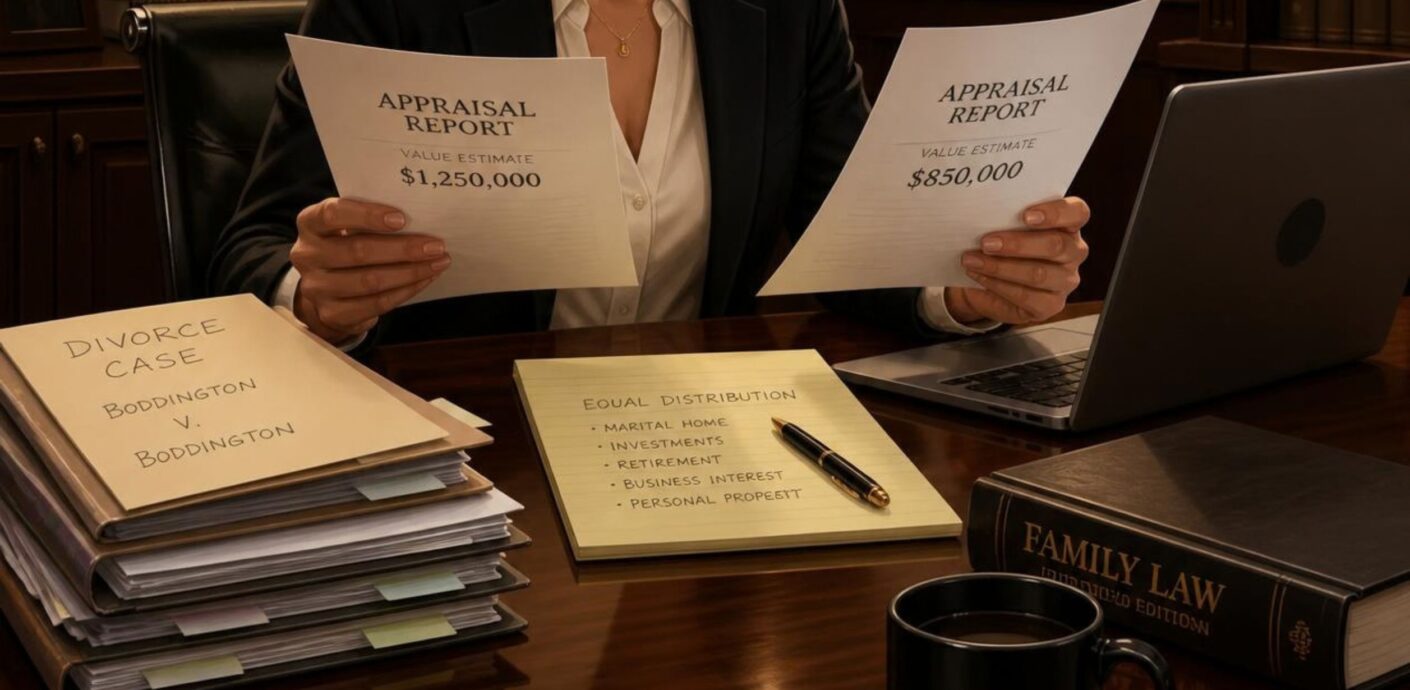


Attorney comparing two competing appraisals in a divorce case side by side on a conference table
When Two Appraisals of the Same House Disagree in Court

Two appraisers walk the same Park Ridge house a few weeks apart. One report says $985,000 and the other says $840,000. It’s a hypothetical, but family law attorneys will recognize it. The competing appraisals divorce counsel bring to trial rarely disagree about everything. Usually the $145,000 sits in three or four specific choices, and each one can be found. So before anyone attacks the other side’s number, it pays to find out where the gap lives.

By the end of this article, you’ll know:

  • The five places two reports on the same house usually split
  • A step-by-step way to trace the gap to its sources before the deposition
  • What a rebuttal review covers, and what the CPA should do with two values

Why Competing Appraisals Divorce Courts See Rarely Match

Two competent appraisers can reach different values without either one being careless. An appraisal is an opinion built from data, and the choices stack up. In my experience the split shows up in five places.

The first is the date. Under 750 ILCS 5/503, the court uses fair market value as of the trial date, or another date the parties agree to or the court orders. If one report carries a March date and the other an October date, they measure two different markets. Our article on the date of value in a divorce appraisal covers how that date gets set.

The second is the house itself. One appraiser measured 3,150 square feet, and the other pulled 2,900 from the assessor’s record. One saw the finished basement, while the other never got past the kitchen because a spouse cut the visit short. Measurement method matters too. Fannie Mae has required the ANSI measuring standard on its loans since April 2022, but a divorce assignment isn’t a Fannie Mae loan. So ask each appraiser how the living area was measured.

The third is comparable selection, and it usually carries the most dollars. Two sales from a stronger school boundary or a newer subdivision will pull a value up. Leaving out the one sale that didn’t fit will do the same. The fourth is the adjustments: what each appraiser added or subtracted for size, condition, and location, and what market evidence backs each figure. The fifth is reconciliation, meaning which sales got the most weight at the end and why.

Trace the Gap Before You Attack the Number

Put the two reports side by side and work through them in order. It’s the same sequence I follow when counsel sends me an opposing report.

  1. Match the assignment terms. Compare the effective date, the definition of value, and the intended use on the first pages.
  2. Match the property. Compare living area, room count, lot size, condition rating, and what each appraiser inspected.
  3. Compare the sales. List every comparable in both reports, then mark the ones only one appraiser used.
  4. Compare adjustments on shared sales. If both used the same sale and adjusted it differently, that difference is pure judgment.
  5. Read both reconciliations. See which sales each appraiser leaned on at the end.
  6. Put a dollar figure on each difference. Then you know which fights matter.

Here is how that might run on the Park Ridge example. The 250 square feet of disputed living area, at a hypothetical $120 per square foot adjustment, accounts for $30,000. A seven-month difference in effective dates might explain $25,000. One appraiser rated the kitchen as updated and the other as average, worth perhaps $40,000. Then the last $50,000 comes from two sales in a stronger pocket that only one report used. Together those four items make up the full $145,000.

Now the dispute looks different. Two of the four items are facts. A tape measure settles the square footage, and the court’s order settles the date. Only the condition rating and the comparable selection are judgment calls, and they total $90,000. In practice, that is the real fight.

What the Judge Has to Work With

Section 503 requires the court to make specific factual findings on values. When the experts disagree, the judge resolves it as the trier of fact. Illinois appellate courts have long said that conflicts in valuation testimony are for the trial court. One 1998 decision added that a valuation within the range the experts testified to ordinarily will not be disturbed on appeal. How that applies to your case is counsel’s call. But from where I sit, it means the judge doesn’t have to adopt one report whole. A number in between is possible too.

So credibility is the contest. A judge reading two reports looks for the appraiser who verified the sales, supported each adjustment with market evidence, and inspected the whole property. Then cross-examination tests whether the explanation holds. We covered that test in what makes an appraisal defensible on the witness stand.

The statute also offers a third route. Under 503(l), the court may seek advice from its own financial experts or other professionals. That advice must be in writing, and counsel may examine the professional as a witness. So a third opinion can enter the case even if neither side orders one.

What a Rebuttal Appraisal Review Does

A rebuttal is usually an appraisal review. USPAP defines appraisal review as developing an opinion about the quality of another appraiser’s work, and Standards 3 and 4 govern it. The Appraisal Institute guidance on reviews makes two points attorneys should know. A reviewer evaluates the work, not the person. And a reviewer may or may not develop a separate opinion of value.

That second point shapes the engagement. A review without a value tells the court where the opposing report lacks support. A review with a value also gives the court another number, and the reviewer then has to support it like any appraisal. Sometimes the first kind is enough, because your retained appraiser’s report already supplies the value. So decide which one you need before you order it.

Timing matters as well. A reviewer needs the full opposing report, and ideally the workfile, well before the deposition. If you haven’t picked the person yet, our list of questions to ask an expert witness appraiser applies to reviewers too. One caution, though. The review should stay in the appraiser’s lane. Opinions about the other expert’s motives belong to counsel.

For the CPA Carrying Two Values Into the Schedules

Accountants often get both reports before anyone resolves the dispute, and the marital balance sheet still has to get built. Three habits keep your work clean.

First, don’t average the two numbers. An average has no effective date, no comparables, and no appraiser to defend it. Instead, run the balance sheet twice and show both. On the Park Ridge example, a $145,000 gap with an equal split of equity moves the equalizing payment by $72,500. That figure tells counsel what the fight is worth.

Second, check each report’s effective date against your own schedules. If the business valuation and the account balances are as of one date and an appraisal is as of another, say so in a footnote. Third, ask counsel for the gap analysis described above. Once you know $55,000 of the difference is date and square footage, you can model the likely range instead of the extremes.

Narrow the Fight to What Is Actually in Dispute

Most dueling appraisals get closer once someone does the tracing. So do it early. Stipulate to the effective date and the living area if you can, because those are facts. Then have a qualified reviewer put the remaining differences in writing, with a dollar figure on each. If the gap survives that, you’ll go into the deposition knowing which two or three questions matter. If it doesn’t, you may have found the settlement range instead. Our guide to disputed property value in an Illinois divorce lists the records to pull first.

Opposing Appraisal Just Landed on Your Desk?

Send us both reports. PahRoo prepares appraisal reviews under USPAP Standards 3 and 4 that show where the two values split and what each difference is worth. Michael Hobbs, MAI, SRA, signs our Illinois litigation work and testifies to it.

Request an Appraisal Review

Frequently Asked Questions

What happens when two appraisals disagree in court?

The judge decides value as the trier of fact. Each appraiser testifies and faces cross-examination, and the court weighs which opinion has better support. Under 750 ILCS 5/503, an Illinois court must make specific findings on the value of the property it divides.

Why do two appraisals of the same house differ so much?

Usually for a handful of traceable reasons: different effective dates, different measurements or condition ratings, different comparable sales, different adjustments, and different weight in the final reconciliation. Putting a dollar figure on each one shows which differences are facts and which are judgment.

How does a judge decide between competing appraisals?

By credibility and support. Judges look at whether the appraiser inspected the property, verified the sales, backed each adjustment with market evidence, and held up under cross-examination. Illinois appellate decisions say conflicts in valuation testimony are for the trial court to resolve.

What is a rebuttal appraisal?

Most often it is an appraisal review: a second appraiser’s written opinion about the quality of the other side’s report, prepared under USPAP Standards 3 and 4. The reviewer may stop there or may also develop a separate opinion of value.

Can you get a third appraisal?

Yes. Either side can retain another appraiser, subject to the court’s disclosure deadlines. Under 750 ILCS 5/503(l), an Illinois court may also seek written advice from its own financial experts or other professionals. Whether a third opinion helps is a strategy question for counsel.

Appraisal Review and Testimony for Contested Divorce Cases

When a second report turns a valuation into a dispute, family law attorneys and forensic accountants call PahRoo Appraisal & Consultancy. From our Lincolnwood office we prepare divorce appraisals and appraisal reviews across Chicago and Cook County, and the firm also works in Dallas-Fort Worth, Philadelphia, Phoenix, and Naples. Michael Hobbs, MAI, SRA, founded the firm and is available for deposition and trial in Cook County. See our residential appraisal services, or contact us with both reports and the disclosure deadline.

Family law attorney interviewing an appraiser before choosing an expert witness appraiser for a divorce case
12 Questions to Ask Before You Hire an Expert Witness Appraiser

Most family law attorneys meet their appraiser twice. Once on the phone, and again at the deposition. But the deposition is the wrong place to learn who you hired. Choosing expert witness appraisers takes a real interview, not a quote request, because the person who signs the report is the person opposing counsel will cross-examine. Here are the questions worth asking first, and what a good answer sounds like.

By the end of this article, you’ll know:

  • The twelve questions to ask before you retain an appraiser for a contested case.
  • How to verify a license, a designation, and disciplinary history yourself.
  • Which answers should end the interview on the spot.

Choosing Expert Witness Appraisers Before the Disclosure Clock Runs

Timing shapes every other choice. Under Illinois Supreme Court Rule 218, the court sets witness disclosure dates at case management. Those dates must let discovery close at least 60 days before the expected trial date, unless the parties agree otherwise. The committee comment also goes further. It says opinion witnesses should be disclosed early enough to be deposed before that 60-day line. Local rules and the case management order control the details, so check both.

An appraiser retained a month before disclosure has a month to inspect, research, write, and answer your questions. In practice, that rarely goes well. We covered what makes the report itself hold up in our article on what makes an appraisal defensible on the witness stand. This one is about the person behind the report instead.

Credentials and Competency: Questions 1 to 4

  1. What credential do you hold, and in which states? The federal system recognizes three levels: State Licensed, Certified Residential, and Certified General. Trainees, however, don’t appear on the federal registry and can’t independently appraise for federally related work.
  2. Can I confirm that myself? Yes, and you should. The Appraisal Subcommittee’s National Registry is searchable by name and state. It also shows active discipline that limits an appraiser’s work, such as a revocation or suspension. For resolved or older matters, call the state licensing agency.
  3. Do you hold a professional designation? The Appraisal Institute awards the MAI for all property types and the SRA for residential work. Its online directory also lets you confirm a designation by name. A designation isn’t a license, and a license isn’t a designation, so check both.
  4. How many properties like this one have you appraised in this market? A Kenilworth estate, a Pilsen three-flat, and a strip center held in an LLC are three different assignments. So ask for a rough count over the last three years and the price range. A vague answer here matters more than a thin resume.

Testimony and Independence: Questions 5 to 9

  1. How many times have you testified, and where? Separate depositions from trials, and ask which courts and case types. Then request case names, subject to confidentiality, so you can pull transcripts if you want them.
  2. Has any court excluded or limited your testimony? A yes isn’t automatically disqualifying. But a yes the appraiser didn’t volunteer usually is.
  3. Have you worked on this property, or for either spouse, before? A refinance appraisal from two years ago, or a friendship with the other side, becomes a cross-examination theme. You want to hear about it now, not at the deposition.
  4. Who hires you in family cases? An appraiser retained only by one side of the bar hands opposing counsel an easy story about bias. Work for petitioners, respondents, and joint engagements reads as independence instead.
  5. How is your fee set? Expect a fixed report fee plus hourly rates for preparation, deposition, and trial. USPAP’s Ethics Rule bars compensation that depends on the value reached or on a result that favors the client. So any hint of a fee tied to the number ends the conversation.

The Report and the File: Questions 10 to 12

  1. Who inspects the property, and who signs the report? If an associate does the fieldwork, the signer still has to describe the house under oath. Find out how that handoff works before a deposition exposes it.
  2. What report format will you use, and can you value a past date? A lender form limits explanation by design. A narrative report written for litigation, by contrast, walks a judge from the data to the value. So it holds up better when the value is contested. If the court may use a date other than trial, confirm retrospective experience. Our article on the date of value in a divorce appraisal explains why that matters.
  3. Will you produce your workfile on request, and how fast? Opposing counsel will ask for it, often in the first deposition notice. An appraiser who hesitates now will hesitate under subpoena too.

Answers That Should End the Interview

Some answers are dealbreakers on their own. Watch for these, even when the rest of the interview goes well.

  • A value quoted, or hinted at, before anyone has inspected the property.
  • Any fee that depends on the number or on how the case turns out.
  • A license you can’t find on the National Registry, or an active suspension on it.
  • No testimony history, and no interest in preparing for cross.
  • Reluctance to share the workfile or to explain an adjustment in plain English.

That last one deserves a live test, because judges need the plain-English version. Ask the appraiser to walk you through one adjustment from a past report, redacted, as if you were the judge. If you’re lost after two minutes, the judge will be too.

For the CPA Coordinating the Valuation

Forensic accountants often build the appraiser shortlist, or inherit one counsel already picked. Either way, four questions belong in your own interview. First, can the appraiser value the property as of the same date as your business valuation or balance sheet? Second, will the report state its definition of value, so you can reconcile it with the standard you’re using? Third, if the real estate sits inside an entity, will the appraiser value the real property and leave interest-level adjustments to you? Finally, will you get the adjustment grid and comparables in a form you can cite in your schedules?

Then put those answers in the engagement letter. That way the two reports meet at the same date and the same definition, instead of colliding at trial.

Interview the Appraiser the Way Opposing Counsel Will

Opposing counsel will ask most of these questions eventually. Asking them first, before the report is ordered, costs you an hour. Skipping them, though, can cost you the valuation. So verify the credential yourself, test the testimony record, and pin down the fee and the date in writing. Then hire the person you’d be comfortable putting on the stand.

Vetting an Appraiser Before Disclosure?

Put PahRoo through the same twelve questions. Michael Hobbs, MAI, SRA, signs our litigation reports and testifies to them, and we’ll answer every question before you retain us.

Schedule an Expert Consult

Frequently Asked Questions

What should you ask an expert witness appraiser?

Start with credentials: license level and states, any Appraisal Institute designation, and experience with the property type. Then ask about testimony history, any exclusion, prior work for either party, how the fee is set, who inspects and signs, and whether the workfile will be produced on request.

What is an MAI or SRA designation?

Both are awarded by the Appraisal Institute. The MAI covers all property types, including commercial and residential. The SRA covers residential property. Each requires education and experience beyond a state license, and holders agree to the Institute’s ethics and standards.

When should you hire an appraisal expert?

As soon as value is contested. In Illinois, Rule 218 has the court set witness disclosure dates so discovery ends at least 60 days before trial, unless the parties agree otherwise. The appraiser needs time to inspect, research, write, and be deposed inside that window.

How much does an expert witness appraiser cost?

It depends on the property, the report type, and how much testimony the case needs. Most engagements pair a report fee with hourly rates for preparation, deposition, and trial. Get both in writing, and confirm nothing depends on the value reached.

How do I check an appraiser’s license?

Search the Appraisal Subcommittee’s National Registry by name and state. It lists the credential level and any active discipline limiting the appraiser’s work. For past or resolved matters, contact the state licensing agency.

Expert Witness Appraisal for Family Law Counsel

If you’re building a shortlist, start with our residential appraisal services page, which covers divorce work across Chicago and Cook County, Dallas-Fort Worth, Philadelphia, Phoenix, and Naples. Michael Hobbs, MAI, SRA, signs PahRoo’s litigation reports and is available for deposition and trial. For a contested estate home, see our guide to appraising luxury homes in high-asset divorce, or contact us with the case caption and the disclosure deadline.

Divorce attorney and expert witness appraiser reviewing a defensible appraisal report before trial
What Makes an Appraisal Defensible on the Witness Stand

Consider a hypothetical Oak Park two-flat in a contested divorce. One appraiser says $1,150,000. The other says $960,000. The judge has to pick, and in Illinois the judge has to explain the pick in writing. What decides it is rarely the number. It is which appraiser can still explain the number after an hour of cross-examination. That is what a defensible appraisal expert witness delivers. It is a different product from a lender appraisal.

By the end of this article, you’ll know:

  • What Illinois and federal courts test when an appraiser takes the stand
  • Where reports break under cross-examination, and how to spot weak ones early
  • What to check before you retain, and what the CPA on the case needs

What Defensible Appraisal Expert Witness Testimony Rests On

Under Illinois Rule of Evidence 702, an expert may testify when specialized knowledge will assist the trier of fact. The rule’s committee comment confirms Illinois is a Frye state. But the general-acceptance burden only applies when the opinion rests on a new or novel scientific methodology. The sales comparison, cost, and income approaches are not novel. So in a Cook County divorce, the fight over an appraiser is rarely about admissibility. It is about weight and credibility.

Federal court is stricter on paper. Under Federal Rule of Evidence 702, the proponent must show four things are more likely than not. The testimony helps the court, rests on sufficient facts or data, uses reliable methods, and applies them reliably. That is the Daubert framework. The committee notes add that valuation opinions get judged by the standards of the appraisal field itself. In practice, opposing counsel in state court borrows the same four questions on cross. Was the appraiser qualified? Is the data sufficient? Does the method have standing in the field? Did the appraiser apply it correctly?

Which standard governs is counsel’s call. What an appraiser controls is whether the report answers all four before anyone asks. Our overview of appraisals in divorce proceedings covers the basics. Below is what changes when testimony is likely.

Where Appraisal Reports Break Under Cross-Examination

The attacks are predictable, because they work. The first is the date. A refinance appraisal carries the lender’s effective date and intended use. In a divorce it answers a question the court did not ask. Under 750 ILCS 5/503, the court applies fair market value as of the trial date or another date it sets. The wrong date sinks a report before the comparables come up. Our article on the date of value in a divorce appraisal explains how that date gets chosen.

The second is verification. Did the appraiser confirm each sale, or lift it from the MLS? Did anyone drive past the comps? An appraiser who cannot describe the confirmation loses that comparable in front of the judge.

The third is adjustment support, and this is where most reports fail. The Colorado Division of Real Estate names four: boilerplate that claims paired sales or regression support but shows no analysis, predetermined adjustments reused from file to file, cost figures treated as market reaction, and averages standing in for real comparisons. Each is one question from collapsing on the stand.

The fourth is the file. USPAP requires a workfile holding all data behind the conclusions, including data considered and not used, plus summaries or transcripts of any testimony. Illinois Rule of Evidence 705 lets cross-examining counsel demand the underlying facts. A thin workfile means a thin opinion, and everyone in the room finds out at once.

Then comes the appraiser. An expert who argues the client’s side, moves the number after a phone call, or forgets a prior report on the same property has written the other side’s closing. Independence, after all, is the whole basis for weight.

What a Defensible Report Looks Like on the Page

USPAP, published by The Appraisal Foundation and authorized by Congress in 1989, is the recognized standard for U.S. appraisers. It requires the appraiser to identify the problem before solving it. That means naming the client and intended users, the intended use, the type and definition of value, the effective date, the property’s relevant characteristics, and any assignment conditions. A court-ready report states each on its first pages, and each matches the case.

From there, the report shows its work. Every adjustment ties back to evidence the reader can check: a paired sale, a bracketed range, a documented buyer interview, or a regression. The reconciliation then says which approach carried the weight and why. Extraordinary assumptions, such as an interior the appraiser could not access, appear up front. And the report discloses what research the appraiser did and did not do, as USPAP’s reporting standard requires.

Format matters too. A lender form limits explanation by design. A narrative report written for litigation walks a judge from the data to the number. It is one reason a divorce appraisal and a price opinion land so differently in court.

What Attorneys Should Check Before the Report Is Ordered

Disclosure shapes the retention. Under Illinois Supreme Court Rule 213(f)(3), a retained appraiser is a controlled expert. On interrogatory you must disclose the subject matter, the opinions and their bases, the qualifications, and any reports. Rule 213(g) then limits direct examination to those disclosures. So the report becomes an exhibit the day the appraiser signs it, and the number cannot drift at trial. Retain early, then, not late.

Vet the witness first. Ask how many times the appraiser has testified at deposition and at trial. Find out whether any court has excluded or limited that testimony. Ask whether they have worked for both husbands and wives, because a one-sided record is a cross-examination theme. Designations matter too; the MAI and SRA require experience beyond a state license. And ask whether they will produce the workfile without a fight.

Then scope the engagement in writing. Name the effective date, or two dates if the case needs a current and a retrospective value, as a quitclaim transfer mid-case often does. State the intended use as the dissolution proceeding. If the appraisal is joint, name both counsel as intended users. Confirm a fixed fee with no tie to the outcome. Confirm a full inspection, which matters most on an estate home with custom features. Our guide to disputed property value in an Illinois divorce lists the records to gather first.

The statute adds one more path. Under 503(l), the court may consult its own financial expert, who is subject to examination and cross-examination too.

For the CPA on the Case

Accountants in a divorce carry the real estate value into the marital balance sheet, the tracing schedule, or a business valuation. If the appraisal falls, those schedules fall with it. Four checks protect your work.

First, match the effective dates. If the business valuation is as of December 31 and the house is as of a May inspection, the balance sheet mixes two markets. So get the appraisal to the same date, or document the bridge. Second, match the definition of value. Section 503(k) calls for fair market value. A lender’s market value definition, or a fair value standard in a business valuation, may not line up. Third, check the arithmetic in the adjustment grid before the number lands in your schedule. The appraiser’s addition error becomes your error on the exhibit. Fourth, if rental property sits inside a business you are valuing, agree with the appraiser in writing on who values the real estate and who values the enterprise. Otherwise the same rent counts twice or not at all.

Keep the appraisal in your permanent file too. The Supreme Court’s standard matrimonial interrogatories ask each party about appraisals from the prior three years and about any net worth statements prepared for them. Whatever you build on the appraisal gets disclosed, so read the report first.

Retain the Witness Before You Order the Report

Sequence is what makes the report defensible. Choose the appraiser you would put on the stand, then order the report from that person. Fix the effective date and intended use in the engagement letter. Get the report early enough to read it, question it, and let the appraiser fix anything that will not hold. A report produced the week before disclosure draws the hardest cross. One built for testimony from the first page usually settles the value question before anyone reaches the courtroom.

Is Your Appraiser Ready for Cross-Examination?

PahRoo prepares litigation appraisals built for Rule 213 disclosure, deposition, and trial. Michael Hobbs, MAI, SRA, signs the report and takes the stand to defend it in Cook County and across our other markets.

Retain an Appraisal Expert Witness

Frequently Asked Questions

What makes an appraisal defensible in court?

It states an effective date, intended use, and definition of value that match the case, uses comparable sales the appraiser verified, supports every adjustment with market evidence, explains which approach carried the weight, and rests on a complete workfile. Then the appraiser explains each choice under cross-examination without changing the number.

Can an appraiser be an expert witness?

Yes. Under Illinois and federal Rule 702, a witness qualified by knowledge, skill, experience, training, or education may give opinion testimony that helps the court. A licensed appraiser with experience in the property type and market generally qualifies. Weight depends on the method and the support behind it.

What happens during appraiser cross-examination?

Opposing counsel tests the effective date and intended use, comparable verification, the evidence behind every adjustment, the workfile, the appraiser’s qualifications and testimony history, and any prior reports on the property. Illinois Rule of Evidence 705 lets counsel demand the underlying facts and data.

What is a Frye or Daubert challenge?

Both ask a judge to exclude expert testimony. Illinois follows Frye, which requires general acceptance only when an opinion rests on a new or novel scientific methodology. Federal courts follow Daubert, which requires sufficient data and reliable, reliably applied methods. Standard appraisal methods are rarely excluded, so most challenges go to weight.

How do you choose an expert appraiser for a divorce?

Look for experience with the property type and price tier, deposition and trial testimony that no court has excluded, work for both sides of prior disputes, an Appraisal Institute designation such as the MAI or SRA, and a willingness to produce the workfile. Then fix the effective date, intended use, and fee in the engagement letter.

Litigation Appraisal and Testimony From One Appraiser

Family law attorneys and forensic accountants across Cook County and the wider Chicago area, along with Dallas-Fort Worth, Philadelphia, Phoenix, and Naples, bring PahRoo Appraisal & Consultancy into contested cases. Since 1999 the firm has prepared appraisals for dissolution, estate, and tax matters, and Michael Hobbs, MAI, SRA, signs every report and is available for deposition and trial. See our residential appraisal services, or contact us with the case caption and the disclosure deadline.


Attorney reviewing a luxury home appraisal report in a high-asset divorce case
Appraising Luxury and Estate Homes in High-Asset Divorce

In a high-asset case, the house is rarely just a house. It might be a 9,000-square-foot estate in Winnetka with a coach house, or a full-floor Gold Coast condominium. The luxury home appraisal divorce counsel puts in front of the court has to survive three readers. An opposing expert, a skeptical judge, and a spouse who is sure the number is wrong. Reports built for lending were never designed for that.

By the end of this article, you’ll know:

  • Why estate and luxury homes are harder to value, and what a defensible method looks like
  • How appraisers find and adjust comparable sales when almost nothing matches
  • What to ask before you retain the appraiser, and how a broker can strengthen the file

What Makes a Luxury Home Appraisal Divorce-Ready

Three things separate a high-value home from the typical marital residence, and each adds risk to the final number. First, the buyer pool is thin. A property at the top of the Kenilworth market competes for a small group of qualified buyers. Second, the features are bespoke. No two estates share the same wine cellar, the same lot, or the same view. Third, the sales data is sparse. A submarket can produce only a handful of closings above a given price in a year.

Illinois law raises the stakes. Under 750 ILCS 5/503, the court must make specific factual findings on the value of each asset. It applies a fair market value standard. And it values the property as of the trial date, or another date the court sets. So the appraisal cannot hedge. It has to state a number, tie it to a date, and show the evidence.

That is where standards come in. The Uniform Standards of Professional Appraisal Practice, published by The Appraisal Foundation, govern how the analysis is developed and reported. A report that follows them names the effective date, explains the scope of work, and supports every adjustment. One that skips those steps hands opposing counsel a script. Our overview of appraisals in divorce proceedings covers the basics. Below is what changes at the top of the market.

Why Few Comparable Sales Is Not an Excuse

Attorneys often hear that there are no comps. In practice that means the appraiser has to work harder. The search widens in three directions.

Geography comes first. A Lake Forest estate may compete with Winnetka, Glencoe, and Barrington Hills rather than the next street over. The buyer choosing among them is the same buyer. The same logic holds in our other markets. A Highland Park buyer in Dallas may also be looking in University Park. Main Line buyers in Philadelphia shop across several townships. A Port Royal buyer in Naples is often weighing Aqualane Shores too. The appraiser then makes a supported location adjustment instead of pretending the sales are next door.

Time comes second. A luxury sale from 18 months ago can still be useful. But the appraiser has to adjust for market movement between that closing and the effective date. That adjustment needs evidence, such as repeat sales or price trends in the same tier, not a guess.

Then the appraiser brackets. Ideally one comparable is superior to the subject and one is inferior. Then the value falls inside a range the market actually produced. Paired sales analysis, where two similar sales differ mainly in one feature, is how the size of an adjustment gets tested. When the paired data is thin, the cost approach steps in as a check. It adds land value from vacant or teardown sales to the depreciated cost of the improvements. It rarely drives the number on an older estate, but it exposes an inflated sales comparison quickly.

Bespoke Features and the Superadequacy Problem

Custom features are where luxury appraisals go wrong most often. An owner who spent $180,000 on a wine cellar expects to see $180,000 in the value. The market usually disagrees.

Appraisers call the excess a superadequacy. The Dictionary of Real Estate Appraisal defines it as an excess in the capacity or quality of a structure or component, judged by market standards. It is a form of functional obsolescence, and it shows up in luxury homes more than anywhere else. The more unusual the feature, the smaller the pool of buyers who will pay for it.

Consider a hypothetical estate in Hinsdale with that $180,000 cellar. Suppose paired sales in the tier show buyers paying roughly $60,000 more for a home with a serious cellar. Then the contributory value is $60,000. The other $120,000 was consumed, not invested. The same math applies to indoor pools, sport courts, elevators, and eight-car garages. The report should state what each feature contributes and show how that figure was derived.

A prior lending appraisal from a refinance is useful here but not decisive. It was written for a different purpose, often on a form that limits explanation. Counsel should still request it, as our guide to disputed property value in Illinois divorce explains. Then expect the litigation appraisal to go well beyond it.

Who Should Appraise an Estate Home in a Divorce

Not every licensed appraiser should take this assignment, and USPAP says so. The Competency Rule requires an appraiser to determine, before agreeing to an assignment, that they can perform it competently. Competency covers the property type, the market, and the intended use. A residential appraiser who works mainly on $500,000 lender assignments may be fully licensed. That same appraiser can still be outside their competence on a $6 million estate headed to trial.

Ask four questions before you retain. How many properties above the relevant price point has the appraiser valued in this submarket in the last three years? Which designation do they hold? The Appraisal Institute awards the MAI for all types of real property and the SRA for residential work. Both require demonstrated experience beyond a state license. Have they testified, and how did the report hold up? And can they support the date of value the case needs, including a retrospective date if the court sets one? Our article on the date of value in a divorce appraisal explains why that last question matters.

Then plan for disclosure. Illinois Supreme Court Rule 213(f)(3) requires a party, on interrogatory, to disclose a controlled expert’s opinions, their bases, qualifications, and reports. A luxury appraisal built to be disclosed reads differently from one built to close a loan. The reasoning is on the page, the comparables can be verified, and the appraiser’s file is ready for deposition.

What Brokers Can Bring to the Appraisal

Luxury brokers hold data the MLS lacks. Off-market sales, buyer feedback on specific features, and the real reason a listing sat for months rarely reach a public record. In a divorce, that knowledge can make or break the comparable analysis.

If you have listed or sold in the subject’s tier, this is what helps the appraiser most. Send the full listing history for the subject, including expired and canceled listings. Prior exposure to the market is evidence of what buyers would not pay. Share any private sales you can verify with a closed price and date. Pass along showing feedback on features the appraiser has to value, such as the indoor pool nobody wanted or the view everyone mentioned. And be candid about concessions and seller credits. A recorded price with, say, $150,000 in credits behind it is not the price the comparable grid should carry.

Brokers also benefit on the back end. If the settlement leads to a sale, a court-ready appraisal gives you a defensible list price. It also protects your own price opinion. A broker price opinion serves a listing decision, but it is not the standard courts apply to a contested value. Our comparison of a divorce home appraisal and a price opinion explains why.

Put the Estate Home’s Value on the Record Early

High-asset cases move slowly, but expert deadlines do not. Retain the appraiser as soon as the property is identified as contested. Agree the effective date with opposing counsel if you can. Then give the appraiser access to the whole property, not a walkthrough of the main floor. If a buyout is on the table, the same report anchors the equity math, as our marital home buyout guide shows. The goal is one number, built on evidence a judge can follow, delivered in time to use it.

Is the Estate Home the Largest Asset in the Case?

PahRoo appraises luxury and estate homes for divorce counsel in Chicago and Cook County, Dallas-Fort Worth, Philadelphia, Phoenix, and Naples, with comparables you can verify and an appraiser who will defend the work on the stand.

Order a Luxury Home Appraisal

Frequently Asked Questions

How is a luxury home appraised in a divorce?

The appraiser inspects the whole property, identifies the competing luxury submarkets, and analyzes comparable sales adjusted for location, time, size, and features. Paired sales and the cost approach test the adjustments. The report ties the value to the effective date the court uses and explains every step so it can be defended in testimony.

Why do luxury home appraisals vary so widely?

Thin sales data and custom features leave more room for judgment. Two appraisers may select different comparables, adjust for a feature differently, or treat a costly improvement as full value when the market pays a fraction. A wide gap usually signals weak support in one report rather than a market that cannot be measured.

How do you find comps for a unique home?

Widen the search to the submarkets the same buyer would consider, extend the time frame with a supported market adjustment, and bracket the subject with a superior and an inferior sale. Verified off-market sales, often known to luxury brokers, can fill gaps the MLS leaves.

Who should appraise an estate home in a divorce?

An appraiser with documented experience in the property type and price tier, ideally holding an Appraisal Institute designation such as the MAI or SRA, who has testified and can support the effective date the case requires. USPAP’s Competency Rule puts the burden on the appraiser to confirm this before accepting the work.

Do custom features add their full cost to the appraised value?

Rarely. A feature contributes what buyers in that market will pay for it, which is often less than it cost to build. The excess is called a superadequacy. The appraisal should state each feature’s contributory value and show the market evidence behind it.

Independent Valuation for High-Asset Divorce Cases

Since 1999, PahRoo Appraisal & Consultancy has valued estate homes, luxury condominiums, and complex residential property across Cook County and the wider Chicago area, along with Dallas-Fort Worth, Philadelphia, Phoenix, and Naples. Michael Hobbs, MAI, SRA, signs every report and is available for testimony. See our residential appraisal services, or contact us to discuss a high-value property.


Signed quitclaim deed on a desk, the kind of divorce transfer an appraiser values at the transfer date
Quitclaim Deed Divorce Transfers and What Appraisers See

A quitclaim deed takes five minutes to sign and a few days to record. In a divorce, that speed is the problem. A quitclaim deed divorce transfer can move a house, a rental building, or a vacant lot to a relative or a new LLC. It can happen before the other spouse knows the marriage is ending. When that happens, the attorney’s first question is usually about the law. My first question is about the date. Everything the court eventually weighs depends on what the property was worth the day it changed hands.

By the end of this article, you’ll know:

  • What a quitclaim deed does, and why it shows up in divorce files
  • The specific things an appraiser checks when a property was transferred mid-case
  • How a transfer-date appraisal gives counsel a number to argue from

What a Quitclaim Deed Divorce Transfer Actually Does

A quitclaim deed conveys whatever interest the signer holds in a property, with no promise that the interest is any good. It is the simplest deed there is. Spouses use it every day for legitimate reasons. Most often, one spouse keeps the house after a marital home buyout and the other signs off.

The trouble starts when the deed runs the other direction, away from the marital estate. A spouse signs the family’s two-flat over to a sibling for ten dollars. A vacant lot moves into a newly formed LLC. Title to a lake house lands with an adult child from a first marriage. On paper the property is gone. In the market, nothing about the property changed that day except the name on title.

That gap is where an appraiser earns a fee. The Illinois Uniform Fraudulent Transfer Act treats real estate as transferred once the conveyance is perfected. It then measures the remedy against the asset’s value at the time of the transfer. Whether that Act, the dissipation rules in the divorce statute, or some other theory applies is the attorney’s call. Each one, though, turns on the same fact: what the property was worth on the transfer date.

Why the Transfer Date Becomes the Effective Date

In most divorce appraisals the court or the parties set the effective date, and it is often the trial date. We covered that choice in our piece on the date of value in a divorce appraisal. A transferred property breaks the pattern. The question is no longer what the house is worth today. It is what walked out of the estate, and when.

So the appraisal is retrospective. I value the property as of the deed’s signing or recording date, using only sales and market conditions that existed then. Sometimes the case also needs a current value, because the court may order the property returned or its value charged against the transferring spouse. That is a second effective date and a second analysis. Ordering both at once costs less than ordering the second one later.

Under USPAP, a retrospective value has to rest on information a market participant could have known as of the effective date. A sale that closed two months after the deed cannot support the value at the deed. Counsel should expect the report to say so plainly.

What an Appraiser Looks For in a Mid-Divorce Transfer

The deed itself is the first exhibit. I read the recorded instrument, not a summary, because the details matter. The grantee’s name tells me whether the property went to an insider: a relative, a business the spouse controls, a close friend. The stated consideration, along with the transfer tax declaration or exemption stamp attached to it, tells me what value reached the county’s records. A deed reciting ten dollars for a $600,000 two-flat is not evidence of value. It is evidence that value was not exchanged.

Then I look at what happened after the transfer. Who is living in the property? Who collects the rent and pays the taxes and insurance? If the transferring spouse still holds the keys and the bank account, the deed changed the name on title and little else. That pattern, retained possession after a transfer to an insider for nominal consideration, appears on the statute’s own list of factors a court may consider. I do not decide whether it is fraud. I do document it, because those facts sit inside the appraisal’s scope.

The property’s condition on the effective date matters too. Photos from a prior listing, a refinance appraisal, permit history, or the other spouse’s recollection all help reconstruct what the building looked like that day. They also show whether the deed came before or after a major repair, a fire, or a new roof.

Lenders meet the same deed from the other side. When one spouse tries to refinance the marital home to fund a buyout, a recent quitclaim to a relative or an LLC surfaces in the title search. Underwriting stalls until the ownership question is settled. A transfer-date appraisal already in the file answers the value half of that question before the loan officer has to ask.

Finally, I check the encumbrances. A property quitclaimed subject to a mortgage moves equity, not the whole value. The report separates the market value of the real estate from the debt against it. That way the attorney sees the actual dollars that left the estate. The same records we recommend in our guide to disputed property value in an Illinois divorce do double duty here.

Reconstructing the Market at the Transfer Date

A retrospective analysis takes more work than a current one, and the reasons are practical. Comparable sales have to reflect the record as it stood then, before later sales and later price movement crept in. Interest rates and inventory as of that date, not today’s, frame the adjustments. When the transfer happened years earlier, archived MLS records, county records, and old listing photos become the evidence base.

The result is a value the court can hold up against the consideration on the deed. A $600,000 building conveyed for ten dollars to a brother-in-law tells its own story once the number is on the table. So does a building conveyed for $580,000 to an unrelated buyer. That one looks like a real sale at a modest discount rather than a stripped asset. The appraisal does not argue the point. It removes the guesswork about the size of the gap.

Where the Appraiser Stops and the Attorney Starts

I establish value at the date the case needs. I document the facts around the transfer that fall within an appraiser’s competence. And I stand behind the report on the witness stand. Whether the deed was fraudulent, dissipative, or voidable, and what remedy the court should order, is legal characterization. That belongs to counsel and the judge. A report that wanders into it loses credibility fast, and opposing counsel will notice.

The same goes for reversing a transfer. Courts have tools to unwind a bad conveyance or charge its value against the party who made it. Which tool fits is a legal question. The appraiser’s job is to make sure that whatever tool the court reaches for, the value it applies is the right one.

Order the Transfer-Date Appraisal Before Discovery Closes

When a transferred property surfaces in a case, pull the recorded deed and the transfer declaration first. Confirm the exact date. Decide with the appraiser whether the case needs one effective date or two. Then order the retrospective appraisal early enough to disclose it with your expert designations. A value produced the week before trial draws the hardest attack. Fix the number to the date, and the rest of the argument has a foundation.

Did a Property Leave the Estate Before the Filing?

PahRoo prepares transfer-date and current-value appraisals for real estate quitclaimed before or during a divorce, documented for discovery and testimony.

Value the Transferred Property

Frequently Asked Questions

What is a quitclaim deed in a divorce?

A quitclaim deed transfers whatever ownership interest the signer holds in a property, with no guarantee of title. In divorce it is commonly used to move the marital home to the spouse who keeps it after settlement. Before or during the case, it can also shift property out of the marital estate to a relative or an entity.

Can a spouse transfer property before a divorce?

A spouse can sign and record a deed, but that does not settle whether the transfer holds up. Courts can examine transfers made in anticipation of divorce, and Illinois law allows dissipation and fraudulent transfer claims in the right circumstances. Whether a given transfer is open to challenge is a legal question for the attorney.

How is a transferred home valued in a divorce?

With a retrospective appraisal. The appraiser sets the effective date at the date of the deed. The value then rests only on sales and market conditions that existed at that time. If the court may also need a current value, the same assignment carries a second effective date.

Is a pre-divorce property transfer reversible?

Sometimes. Courts have remedies that can unwind a transfer or charge its value against the spouse who made it. Fraudulent transfer law provides its own relief. Which remedy applies, and whether one applies at all, depends on the facts and the attorney’s argument. The appraisal supplies the value that sets the size of the remedy.

What is a fraudulent conveyance?

In general terms, a transfer made to hinder, delay, or defraud a creditor. It also covers a transfer made without reasonably equivalent value while the transferor was in financial trouble. Illinois codifies this in the Uniform Fraudulent Transfer Act. Deciding whether a specific deed meets that definition is the court’s job, informed by counsel and by the appraised value at the transfer date.

Appraisal Support When a Deed Changes Hands Mid-Case

Attorneys across Cook County, Dallas-Fort Worth, Philadelphia, Phoenix, and Naples bring PahRoo Appraisal & Consultancy into cases where a property changed hands at the wrong moment. Our MAI and SRA designated team prepares retrospective and current-value divorce appraisals built for discovery and cross examination. Start with our overview of appraisals in divorce proceedings, review our residential appraisal services, or contact us with the recorded deed in hand.

Family lawyer reviewing divorce property documents in Illinois
Disputed Property Value in Illinois Divorce: 3 Documents


The two numbers are $640,000 and $515,000, and each spouse is sure of theirs. Disputed property value in an Illinois divorce usually starts this way. One side quotes a listing site, the other a neighbor’s sale. Before anyone pays for an expert, three records already exist. They will tell you which number is closer, and whether either one is worth defending.

By the end of this article, you’ll know:

  • Which three records to request, where each one lives in Cook County, and what each can and cannot prove
  • The tells inside each record that point to a soft number on the other side
  • When the file needs an independent appraisal, and what a broker should hand over in the meantime

Why Disputed Property Value Gets Settled on Paper First

Illinois divides marital property in just proportions, not an automatic half. That comes from 750 ILCS 5/503, and the court applies it asset by asset. The house is often the largest line on the marital balance sheet, and the court has to land on a value before it can divide anything.

When spouses ask the judge to decide property, each one completes a financial affidavit with supporting documents, as Illinois Legal Aid Online explains. The value on that affidavit has to come from somewhere. Your job, early, is to find out where.

Three records answer that question at almost no cost. Each was created for a different purpose, so none is a value opinion you can take to trial. But together they show you the shape of the dispute. And they do it before you spend a dollar on an independent divorce appraisal.

Record One: The Assessor’s Property Record

Start with the Cook County Assessor. The office values about 1.8 million parcels, and it says plainly that it does not value them one at a time. It uses mass appraisal, a regression model that relates your client’s house to the sales around it. One-third of the county gets reassessed each year on a three-year cycle. The Board of Review then finalizes values after appeals.

Pull the property detail page by PIN. It shows the estimated market value, the assessed value, the property class, and the year of the next reassessment. It also shows an exemption history and a characteristics table: square footage, baths, basement, garage, age. Read the market value line, not the assessed line. For most homes the assessed figure is a fraction of the market estimate. A spouse who quotes it as the value misread the page.

A value reduced at the Board of Review means someone argued, in writing, that the house is worth less. If that same spouse now claims it is worth more, you have the exhibit. A table showing three baths and a full basement when the house has two and a crawl space means the record is wrong. An unpermitted addition or a finished lower level can push the gap the other way. Two homeowner exemptions across two properties is a separate problem your client should hear about now.

Consider a hypothetical Evanston bungalow. The Assessor’s estimated market value reads $480,000. One spouse claims $640,000 and the other claims $515,000. The record proves neither number, but it puts the burden where it belongs. The $640,000 figure sits $160,000 above a model built on nearby sales, so that spouse owes you a report.

Record Two: Any Prior Appraisal on the Property

If either spouse bought, refinanced, or opened a home equity line during the marriage, a lender appraisal exists. Ask for it in discovery, and ask the lender if the spouse cannot find it. It answers a lender’s question as of a lender’s date, so the value itself is stale. The rest of the report is not.

A prior appraisal gives you a measured square footage, a sketch, and interior photos. It also gives a condition rating, the updates the owner claimed at the time, and the comparable sales an independent appraiser chose back then. If one spouse says the kitchen was gutted in 2019, the 2021 refinance photos settle it. Under USPAP, the standard every licensed appraiser works to, the report must state its effective date and intended use. Hold it to that date. Then it is a record of what the house was, not an argument about what it is worth today. Our piece on the date of value in a divorce appraisal explains why that distinction moves settlements.

Three things deserve a second look. A value that lands exactly at the number the loan needed. A property described differently than it stands today, which can mean work done since, or work never done. And a report dated after a deed changed hands, because a quitclaim transfer mid-case changes which date the court cares about. When I get a prior appraisal in a new assignment, I do not adopt its value. I use it to check what changed and to confirm the square footage.

Record Three: Broker Price Opinions and Market Analyses

A broker price opinion, or the comparative market analysis most sellers see, is an agent’s estimate of what a home could list or sell for. In a divorce file they show which comparables each side leans on and whether a range is a listing range or a value. A pricing tool built to win a listing will not survive an opposing expert, which is why a divorce home appraisal and a price opinion land so differently in front of a judge.

If you are the broker being asked for that CMA, here is what makes yours useful instead of a liability. Date it. State on the first page that it is a pricing analysis and not an appraisal. List every comparable with its closed date, closed price, and any seller concessions you know about. Say whether you walked the interior or worked from photos. Then keep your file. In a contested case you may get a subpoena for it, and a range you stretched for one spouse is a bad afternoon under oath. A CMA that shows its work gets read alongside the appraisal. One that does not gets read against you.

For counsel, the practical move is to request both sides’ opinions at once and lay the comparables next to each other. If both agents used the same four sales and landed $90,000 apart, the difference is in the adjustments. That is an appraisal question. If they used different sales, someone is shopping for comps.

When the Paper Runs Out and the File Needs an Appraisal

The three records frame the dispute. They rarely end it. Order an independent appraisal when the gap survives the paper. Order one when the equity is large enough that a five percent error costs real money, or when a buyout or refinance depends on the number. The same goes for an unusual property, a rental unit, or a case likely to reach a hearing. A retrospective date, such as the date of marriage for a premarital equity claim, is its own reason. None of the records will give you one.

Online estimates do not fill the gap. In April 2026 the Appraisal Standards Board adopted Advisory Opinion 41 on automated valuation models, regression software, and generative AI in appraisal work. An appraiser who uses those tools still owns the result and has to support it. A spouse citing a website estimate has none of that behind the number.

Cook County adds a local wrinkle. A block in Oak Park, a two-flat in Hyde Park, and a bungalow in Norwood Park each sit in a market that moves on its own schedule. A report built for Cook County reads those markets and supports each adjustment. Our article on what makes an appraisal defensible on the witness stand goes through that test in detail.

Pull the Records Before the First Settlement Conference

The sequence is simple. Pull the Assessor’s property record on day one; it costs nothing and needs only a PIN. Put prior appraisals and any broker opinions in your first document request. Ask the lender directly if the spouse comes up empty. Lay the three records side by side and see where the gap lives: the square footage, the condition, the comparables, or the date. Then decide whether an appraisal is needed, and if so, agree the effective date with opposing counsel before either side orders one.

Two Numbers on the Table and No Way to Choose?

PahRoo prepares independent divorce appraisals for contested marital property across Cook County and the Chicago area, built to be disclosed, deposed, and defended.

Order an Independent Appraisal

Frequently Asked Questions

What documents should a family lawyer request when property value is disputed?

Request the county assessor’s property record, any prior purchase, refinance, or home equity appraisal, and any broker price opinion or comparative market analysis either spouse relied on. Together they show where the two numbers came from and whether an independent appraisal is needed.

Can a Cook County assessment be used as market value in a divorce?

Not as a value opinion. The Cook County Assessor values property by mass appraisal for tax purposes and does not inspect the individual home. The estimated market value is useful background, and the characteristics table and appeal history can expose errors, but it should not replace an appraisal when value is contested.

Is a broker price opinion the same as an appraisal?

No. A broker price opinion or comparative market analysis is a pricing tool prepared by a real estate agent, usually to set a listing price. An appraisal is an independent opinion of value developed under USPAP by a licensed or certified appraiser, with a stated effective date, intended use, and supported adjustments.

Can a prior refinance appraisal set the value in a divorce?

Rarely. The value in a refinance appraisal applies to the lender’s effective date, which is usually well before the divorce. The report is still valuable for its measured square footage, sketch, photos, condition notes, and comparable sales, which document what the house was on that date.

When should a divorce attorney order an independent appraisal?

When the gap between the spouses survives the three records, when the equity is large, when a buyout or refinance depends on the number, when the property is unusual or includes a rental unit, when a past effective date is needed, or when the case is likely to reach a hearing.

Appraisal Support for Contested Marital Property in Cook County

The records above are where PahRoo starts too. Since 1999 the firm has prepared divorce, estate, and litigation appraisals across Cook County and the wider Chicago area, along with Dallas-Fort Worth, Philadelphia, Phoenix, and Naples. Michael Hobbs, MAI, SRA, signs every report and is available for deposition and testimony. See our residential appraisal services, or contact us with the PIN and the records you already have.

Attorney and appraiser reviewing a litigation-ready commercial appraisal before a hearing
If Your Appraisal Gets Challenged, Does It Hold Its Ground?

Every appraisal looks fine on the day it is delivered. The test comes later, when opposing counsel reads it line by line looking for the soft spot. A litigation-ready commercial appraisal is built for that day. It is not a different number dressed in better formatting. It is a valuation whose data, logic, and documentation were assembled knowing someone would be paid to attack them. The difference between the two kinds of report is invisible at signing and decisive in the room.

By the end of this article, you’ll know:

  • The failure modes that sink appraisals under challenge.
  • What litigation-ready means in practice, element by element.
  • When to involve the appraiser, and what to ask before retaining one.

Why Appraisals Fail Under Challenge

Most appraisals that collapse in a dispute do not fail on arithmetic. They fail on defendability. The patterns repeat across cases. Comparables that were stale or drawn from the wrong buyer pool. Adjustments asserted rather than supported, so nobody can say where the dollar amounts came from. A narrative that tells one story while the numbers tell another. Assumptions that sounded reasonable in the office and unravel under three follow-up questions.

Notice what those have in common. Each one is a gap between the value and its support. Meanwhile, cross-examination is a machine built for finding exactly those gaps. We showed how review bodies stress-test the income side in our piece on NOI and cap rates under scrutiny. A courtroom runs the same test with higher stakes and a hostile reader.

Here is how it goes wrong in practice. Say an expert values a strip center on three comps, and one closed fourteen months before the valuation date in a different submarket. Opposing counsel finds a nearer, newer sale the report ignored. Then every other number in the report inherits the doubt, because the reader now wonders what else was convenient. Also, no recalculation fixes it on the stand. Credibility spends like cash and refunds like nothing, so the report must protect it from page one.

What a Litigation-Ready Commercial Appraisal Means

Four elements separate a litigation-ready commercial appraisal from a transactional one. First, defensible data: every comparable verified, every source named, so nothing in the report depends on trust. Second, traceable logic: a reader can follow each adjustment from market evidence to dollar figure without a leap. Third, standards compliance: the work follows USPAP, the professional standards maintained through The Appraisal Foundation, because the first question an opposing expert asks is whether it does. Fourth, a testifiable author: the appraiser must be able to defend the report in deposition and on the stand, and credentials like the Appraisal Institute’s MAI designation signal that training.

So the honest way to read “litigation-ready” is this: the report assumes the worst day, not the best one. Nothing in it should surprise the attorney who relied on it.

Scope matters as much as polish. The valuation date must match the legal question, since a divorce, an estate, and a tax appeal can each demand a different date for the same building. Then the intended use and users get stated up front, so the report cannot be waved off as borrowed from another purpose. For example, a report written for financing and recycled into litigation hands the other side its first objection for free.

The Referral Is on the Line Too

Attorneys, fiduciaries, and CPAs carry a quiet risk here. When a retained appraisal gets picked apart, the damage does not stop with the appraiser. The room remembers who brought the number. That is why experienced counsel ask about testimony history and report standards before retaining, not after the other side files its rebuttal. A cheap appraisal that fails costs far more than the fee difference, and it costs it in front of a client.

Where These Reports Get Used

PahRoo’s litigation valuation work runs across the places a number gets contested: property tax appeals at the Board of Review and beyond, divorce and family law matters, estate and partnership disputes, and negotiations that settle precisely because the evidence left little to argue about. The pattern holds in every forum. Also, the best outcomes are the quiet ones, where a well-built report ends the fight before testimony is needed. Preparation for the courtroom is what keeps most cases out of it.

Build the Report for the Worst Day

The question in the title has a practical answer. An appraisal holds its ground when it was built to be attacked: verified data, traceable logic, USPAP compliance, and an author ready to take the stand behind it. So involve the appraiser early, before positions harden and deadlines compress. Ask who will testify, and read a sample of the work. The time to find the soft spot in a valuation is before the other side does.

Will your number survive the other side’s expert?

Get a commercial appraisal built for scrutiny, with testimony behind it when the case requires.

Build My Case File

Frequently Asked Questions

What makes an appraisal litigation-ready?

Four things: verified, sourced data behind every comparable and adjustment; logic a hostile reader can trace from evidence to the final number; USPAP-compliant work; and an appraiser prepared to defend the report in deposition and testimony. The report is built assuming it will be attacked.

Is a lender’s appraisal enough for a dispute?

Usually not. A lending appraisal answers a narrow underwriting question for a loan file. A dispute needs a report scoped for the legal question, with fuller support and an author available for testimony. Opposing counsel will spot the difference quickly.

Will the appraiser actually testify?

Ask before retaining, because not every appraiser will. PahRoo’s appraisers are available for deposition and courtroom testimony, and the reports are written so the reasoning holds up under cross-examination rather than leaning on the number alone.

What is USPAP?

The Uniform Standards of Professional Appraisal Practice, the profession’s standards maintained through The Appraisal Foundation. Compliance is the baseline question in any challenge to an appraisal, which is why litigation work starts there.

When should an attorney bring in the appraiser?

Early, ideally while the case strategy is still forming. An early valuation shapes settlement posture, flags evidence problems while they are fixable, and gives the expert time to build a file worth defending. A rushed report near a deadline is where soft spots come from.

Valuation Experts Who Expect the Cross-Examination

PahRoo Appraisal & Consultancy has supported disputes and litigation across Chicagoland for over two decades. An appraiser holding both MAI and SRA designations leads the firm. Maybe your case needs a commercial appraisal with the income analysis attached. Maybe it spans broader appraisal services across an estate or partnership matter. Either way, the report arrives ready for the people who will try to pick it apart.


NEWSLETTER

Knowing a property's true value is key
to making informed real estate decisions

Visit us

7383 Lincoln Ave Suite,
#100 Lincolnwood, IL, 60712