
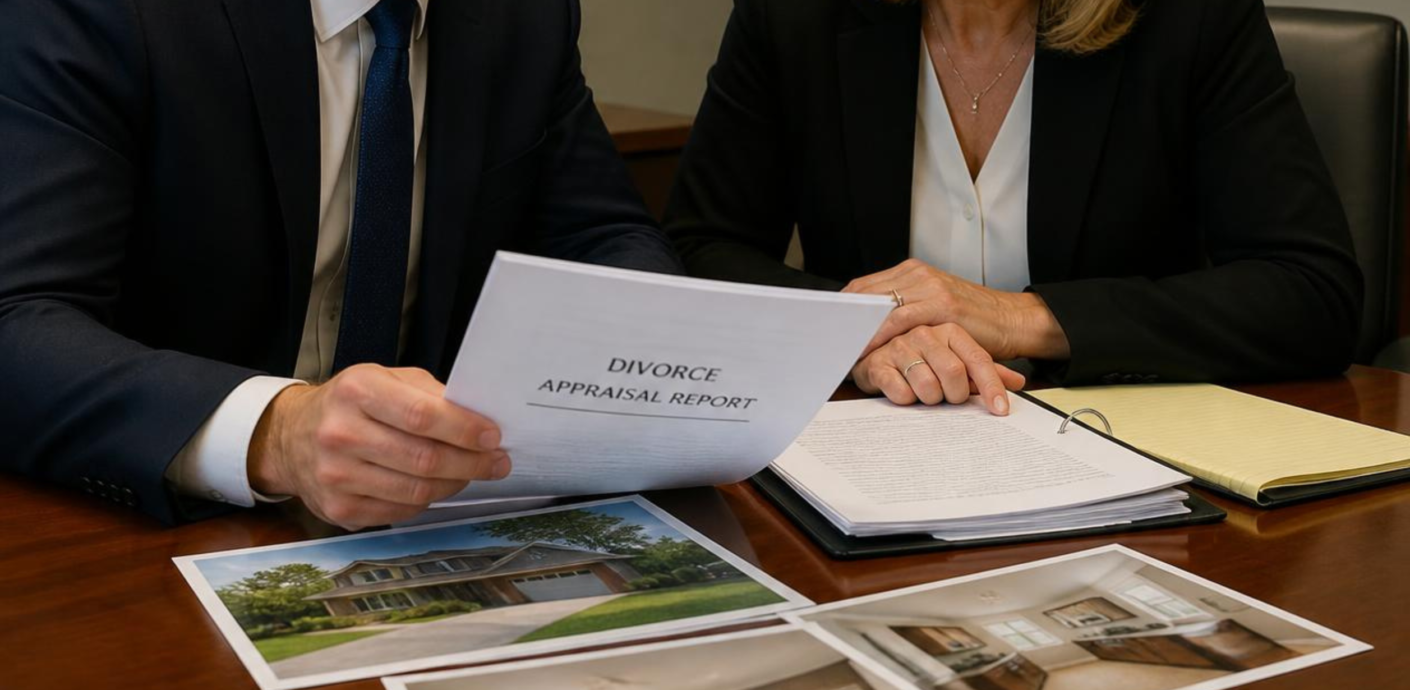
When a divorce case goes to trial, the property number stops being data on a page. It becomes testimony. A defensible appraisal expert witness has to explain every comp, every adjustment, and every finding out loud. Under oath, with opposing counsel looking for the weak spot.
- What actually makes a divorce appraisal hold up once it leaves the desk and reaches the witness stand
- How Illinois courts test expert testimony, and where appraisal methodology usually stands on that test
- What to check before you retain an appraiser, and what a CPA reviewing the report should look for
What Makes a Defensible Appraisal Expert Witness
Defensibility starts long before anyone gets called to testify. It starts with the assignment itself.
Every appraisal PahRoo prepares for a divorce case complies with USPAP, the Uniform Standards of Professional Appraisal Practice. USPAP sets the national ethical and performance standards the appraisal profession runs on. Its Competency Rule requires an appraiser to have the knowledge and experience a specific assignment demands. If they don’t, they have to get there before accepting the work. Its Ethics Rule requires impartiality no matter who signs the check. Neither rule is optional, and both show up the moment cross-examination starts.
A defensible report has three things a weak one skips:
- A documented workfile that shows how each adjustment was derived
- A scope of work that matches what the assignment actually required
- Reasoning a non-appraiser can follow from the data to the final number
If opposing counsel cannot find that thread, they will find something else to attack instead. Our divorce appraisal work starts with that standard, because a report built to survive a settlement conference should be the same report that survives trial.
How Illinois Courts Evaluate Expert Testimony
Attorneys handle admissibility. Appraisers handle the value instead. Still, understanding the standard your expert will face helps you vet the right one.
Illinois follows the Frye standard for expert testimony, not the federal Daubert standard some attorneys expect from television. Under Frye, novel scientific methodology is admissible only if it has gained general acceptance in the relevant field. Real estate appraisal rarely runs into a serious Frye fight on the merits. The sales comparison, income, and cost approaches are long-established methods, not novel science. The fight tends to move instead to Illinois Rule of Evidence 702. That rule asks whether the witness is qualified by knowledge, skill, experience, training, or education. It also asks whether the testimony will help the judge understand the evidence.
Illinois Supreme Court Rule 213(f) also requires disclosure of trial witnesses well before trial. That leaves little room for a last-minute expert. This timeline matters for scheduling. If the appraisal gets ordered late, the disclosure deadline can force a rushed report. A rushed report is an easier target once questioning starts.
What Opposing Counsel Actually Attacks
Cross-examination rarely goes after the final number directly. It goes after the path that led there. Opposing counsel usually opens with one of a few common weak points:
- Comps chosen without explanation
- Adjustments that look like a guess instead of a calculation
- A scope of work that skipped the interior inspection
- A gap between the effective date and the date the case actually needs
Each one draws attention fast, especially if the market moved in between. So does a report that reads like a form filled out quickly, not an analysis built for the specific property. If the property value is already disputed, pull those documents early. They can head off some of the fight before it reaches the witness stand.
None of these problems are fatal on their own. What sinks a witness is not having a ready answer. An appraiser who can explain why one comp was used and another was not tends to hold up. One who says that is just how they always do it usually does not.
Vetting an Expert Appraiser Before You Retain One
The best time to test an appraiser’s credibility is before the engagement letter, not during deposition. A few questions do most of the work:
- Does the appraiser hold a state certification and a designation such as the MAI or SRA?
- How many times have they testified or been deposed, and has any court ever limited or excluded their testimony?
- Will they show a sample workfile, not just a sample report? The workfile is what survives a discovery request.
- How would they handle a property where the comps disagree? The answer shows whether they think in evidence or in shortcuts.
An appraiser who welcomes those questions is usually the one who welcomes cross-examination too. One who deflects them is telling you something worth hearing before the retainer, not after.
What CPAs Should Check Before the Report Goes to Trial
CPAs and forensic accountants working a marital estate rely on the appraisal for more than a headline number. A few checks also catch problems early. Confirm the effective date on the appraisal matches the date your own valuation and cash flow analysis assumes. A property valued as of the filing date is not the same moment as one built around the trial date. Stack them together, and you understate or overstate the estate.
Also check the scope of work. Does it match what your firm actually needs, retrospective or current? And does the appraiser’s highest and best use determination match how you are treating the asset? A ten-minute cross-check now costs far less than a correction on the stand later.
Build the Case File Before You Need It
Most divorce cases settle. But the appraisal ordered for a settlement conference should be built as if it is going to trial anyway. You rarely know which case is the exception until it is too late to redo the work.
Order the appraisal early. Confirm the effective date with your attorney before the inspection. Choose an appraiser whose workfile and testimony history you have actually reviewed. That combination does not guarantee an easy cross-examination. It gives your expert something to stand on when it happens.
Need an Appraiser Who Can Take the Stand?
PahRoo prepares divorce appraisals for Chicago, Dallas, Philadelphia, Phoenix, and Naples attorneys who need a witness who can hold up, not just a number on a page.
Frequently Asked Questions
What makes an appraisal defensible in court?
A defensible appraisal is built to USPAP standards. It has a documented workfile and a scope of work that matches the assignment. The reasoning also has to be easy for a non-appraiser to follow, from the evidence to the final number. The report has to survive explanation under cross-examination, not just review on paper.
Can a real estate appraiser be an expert witness?
A state-certified or state-licensed appraiser with the right competency for the property type can testify as an expert witness. That covers divorce, estate, and property tax matters. Courts weigh both credentials and testimony experience when deciding how much weight to give the opinion.
What happens during appraiser cross-examination?
Opposing counsel typically tests the comps selected, the adjustments applied, the effective date, and the scope of work. They are looking for one step in the analysis that the evidence does not support. An appraiser who can explain each choice in plain language tends to hold up better than one who cannot.
How do you choose an expert appraiser for a divorce case?
Check for a state certification plus a recognized designation, such as the MAI or SRA. Ask about prior testimony and deposition experience. Review a sample workfile, not just a sample report. An appraiser willing to answer those questions directly is usually a stronger witness.
What is a Frye or Daubert challenge, and does it apply to real estate appraisals?
Frye and Daubert are legal standards courts use to decide whether expert testimony is reliable enough to admit. Illinois follows Frye, which asks whether a methodology has gained general acceptance in its field. Established appraisal methods like the sales comparison and income approaches rarely face a serious Frye challenge on the merits. They are not novel techniques.
Litigation Support Across Five Markets
PahRoo prepares USPAP-compliant, court-ready appraisals for divorce, estate, and litigation matters across Chicago, Dallas, Philadelphia, Phoenix, and Naples. Our residential appraisal team holds MAI and SRA designations from the Appraisal Institute. We work regularly with family law attorneys and the CPAs who support them. That includes estate planning valuations when the marital estate crosses into trust or inheritance questions.