
Tag: Chicago real estate

Request a quote

Our blog

Latest news
& events

Vintage home appraisal story about a 1901 Chicago brick house with a bedroom and no closet.
Vintage Home Appraisal: The Bedroom With No Closet

One of our residential appraisers recently stood in a Chicago bedroom built in 1901 and noticed something missing. There was no closet. On a modern checklist, that looks like a problem. In a vintage home appraisal, it tells a story about how people actually lived.

By the end of this article, you’ll know:

  • Why homes built before the 1920s often have bedrooms without closets
  • Whether a room needs a closet to count as a bedroom
  • How market support saved a three-bedroom count after a renovation removed a closet

What a Vintage Home Appraisal Sees That a Checklist Misses

Plenty of people believe a room without a closet cannot be a bedroom. It is one of the most persistent myths in residential real estate. In fact, Fannie Mae’s appraisal guidance contains no closet requirement. A bedroom needs adequate size, ceiling height, privacy, heat, and a window or door for emergency egress. The closet rule comes from habit, not from the standards appraisers follow.

Still, habit shapes markets. Buyers expect closets, agents list rooms based on them, and an appraiser who treats every house like new construction will mark a closet-free room down without a second thought. That is where experience earns its fee. Our residential appraisal work across Chicago’s older housing stock means we read a 1901 floor plan on its own terms, then test that reading against real market evidence.

Why Homes Built in 1901 Rarely Have Bedroom Closets

In 1901, families did not organize their lives around hanging rods. Most clothing lived in wardrobes and large cedar trunks, often one trunk per person, parked at the foot of the bed. Some homes went a step further and built a single oversized cedar closet for the whole household. Individual bedrooms stayed small and simple, sized for a bed and a trunk and little else.

Chicago’s early twentieth century housing boom produced tens of thousands of these homes. The Chicago History Museum documents how bungalows and workers’ cottages filled the city’s neighborhoods as the population surged. Organizations like the Chicago Bungalow Association now work to preserve these layouts as a signature of the era. So when you walk into a vintage bedroom and find no closet, you are not looking at a defect. You are looking at 1901.

The Bathroom Addition That Nearly Erased a Bedroom

Now the story. The subject property was a three-bedroom home, built in 1901, with one and a half bathrooms. In 2025, the owners added a second full bathroom. Smart move on paper, because bathrooms carry real value in older housing stock. But the new bathroom took its space from a bedroom closet, which was removed entirely.

Here is the trap. Judged purely by modern convention, the home now reads as two bedrooms plus an office. That single reclassification can shift the comparable pool, the marketing story, and the final value. A renovation meant to add value would have quietly subtracted a bedroom instead. The owners had no idea. Most owners never do, because nobody warns them that a closet can carry that much weight on a report.

How Market Support Kept the Third Bedroom on the Report

Our appraiser did not simply declare the room a bedroom and move on. Sympathy is not a valuation method. Instead, she built the case. The home’s 1901 construction date placed it firmly in Chicago’s vintage stock, where closet-free bedrooms are a documented, common layout. Comparable vintage homes in the market sell as three-bedroom houses with the same configuration, and buyers in this segment accept the trade.

That is market support: a conclusion backed by evidence of how actual buyers and sellers behave, not by personal opinion. With the era established and the comparables in hand, the report could credibly carry the home as a three-bedroom. The bedroom count survived, the new bathroom added its value, and the renovation did what the owners intended. The difference between those two outcomes was never the house. It was the appraiser’s knowledge of what 1901 means.

What Owners of Older Chicago Homes Should Do Before an Appraisal

First, learn your home’s era before you remodel it. A change that seems harmless, like absorbing a closet into a new bathroom, can alter how a room is classified. Second, keep records of what your home originally looked like, because floor plans and old listing photos help an appraiser reconstruct the vintage layout. Third, and most important, choose an appraiser who knows your housing stock. A checklist can count rooms. Only experience can explain them. If your home was built before the 1920s, ask directly how the appraiser handles vintage layouts. The answer will tell you a lot.

Own a Vintage Home? Get an Appraiser Who Can Read Its Era

A 1901 floor plan deserves more than a modern checklist. PahRoo’s appraisers know Chicago’s vintage housing stock and back every conclusion with market evidence.

Request Your Appraisal Quote

Frequently Asked Questions

Does a bedroom need a closet to count in an appraisal?

No. Fannie Mae guidelines and the International Residential Code do not require a closet. A bedroom needs adequate size, ceiling height, a heat source, privacy, and a window or door for emergency egress. The closet rule is a common myth.

Why do older homes have bedrooms without closets?

Before the 1920s, most families stored clothing in wardrobes and cedar trunks rather than built-in closets. Many vintage Chicago homes also used one large shared cedar closet instead of individual bedroom closets. The layout reflects how people lived at the time.

Can a renovation lower my home’s appraised value?

It can. A renovation that removes a feature buyers expect, such as a bedroom closet, may change how a room is classified. Before you remodel an older home, consider what the change does to room count and functional utility, not just the new feature you gain.

What does market support mean in an appraisal?

Market support means the appraiser backs a conclusion with evidence from actual sales. If comparable vintage homes with closet-free bedrooms sell as three-bedroom houses, the market treats those rooms as bedrooms. The appraiser can then classify the subject home the same way.

Should I add closets to my vintage home before an appraisal?

Not automatically. In many vintage markets, buyers accept period layouts, and forcing modern closets into small rooms can hurt function. Talk with an appraiser who knows your local vintage housing stock before spending money on changes.

Need an Independent Appraisal?

PahRoo Appraisal & Consultancy has appraised Chicago’s housing stock for decades, from 1901 workers’ cottages to new construction. Whether you need a residential appraisal, an independent valuation for divorce proceedings, or simply a straight answer about what your vintage home is worth, our team is ready. Learn more about PahRoo or contact us today.


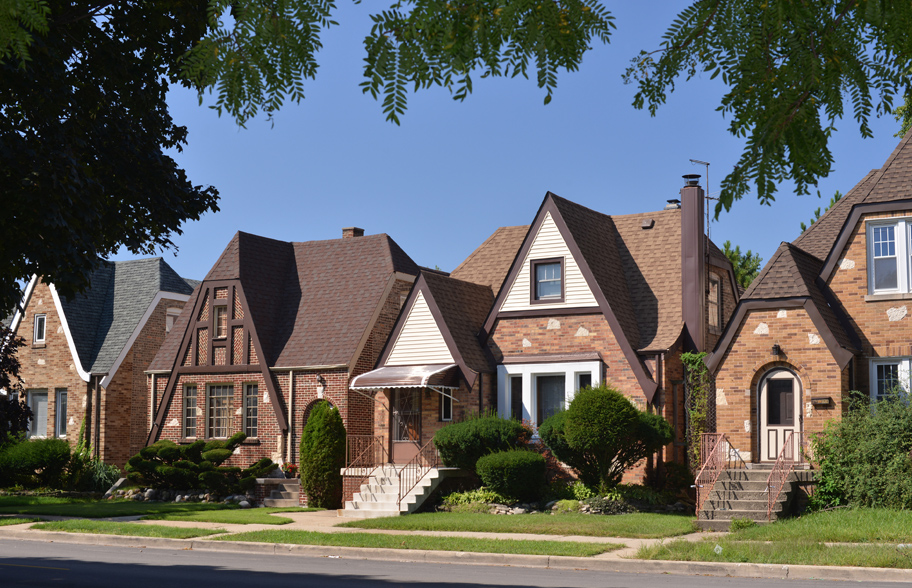
Chicago housing market in June 2026, single-family homes and condos on a residential street.
Chicago Housing Market: June 2026 Update

The Chicago housing market gave a split signal in June 2026. Single-family prices kept rising, yet buyers found more room to negotiate than they had all spring. Condos moved the other way and quietly firmed up. If you need to know what a Chicago home is worth right now, the direction of prices is only half the story.

By the end of this article, you’ll know:

  • Where single-family and condo prices landed in June 2026
  • Why cheaper mortgages have not brought buyers back
  • What the widening gap between asking and sale prices means for your home’s value

What the Chicago Housing Market Did in June 2026

The short version: both sides of the market got smaller. Active inventory fell about 9% from a year ago in each segment. Sellers listed fewer homes, and buyers signed fewer contracts. Still, this is not a buyer’s market by the usual measure.

Months of supply sat near 1.3 in both segments. A balanced market usually runs 4 to 6 months. At 1.3, homes remain scarce, and that scarcity is still doing most of the work holding prices up. The average 30-year fixed mortgage rate came in at 6.49% for the month, down from 6.82% a year earlier. For a running read on where that benchmark sits, Freddie Mac publishes the national average weekly.

So the headline is simple. Fewer homes, fewer buyers, prices still supported by short supply. The detail underneath is where it gets interesting, and it is the part that shapes what your Chicago home is actually worth today.

Single-Family Prices Kept Climbing, But Buyers Gained Ground

Single-family homes carried the appreciation story. The median sale price rose 5.2% year over year to $406,792. List prices climbed 6.3%, and new-listing prices rose 6.9%. When all three price points move together like that, it points to real, supply-driven value rather than a fluke in the data.

But look inside the quarter and the picture softens. In May, single-family homes sold at about 3% under asking. By June, that gap widened to roughly 7%. The share of listings that cut their price rose from 25.4% to 27.2%. Homes still sold, and they still sold at a steady pace of about 36 days on market. Buyers simply had more bargaining power at the closing table than they did sixty days earlier.

One month does not make a trend. Sellers won the year. They gave back a little ground in June, and that is the number I would watch through the summer.

Condos Moved the Other Way

The condo and townhome segment did the opposite. List prices were essentially flat year over year, off a hair at 0.3%. Yet the units that actually sold went for 4.3% more than a year ago, at a median of $318,700. The gap between asking and sale prices narrowed from about 9% to about 4%, and fewer sellers cut prices than last year.

Read that carefully, though. Part of the improvement reflects which condos sold, not a bidding frenzy. Better-positioned units made up more of the closed deals. So the segment looks firmer than last June, but I would not call it hot.

One more note on condos. These figures leave out HOA dues. The true monthly cost of owning a condo runs higher than the sticker suggests, so keep that in mind any time you compare a condo to a house.

Why Cheaper Mortgages Have Not Brought Buyers Back

Here is the puzzle of 2026 so far. Mortgage rates fell, and demand fell anyway. The 33-basis-point drop from last June saved a buyer roughly $88 a month on a loan near the median single-family price. That is real money, but it did not pull more people into the market.

The reason sits in the spread. The gap between the Federal Reserve’s policy rate and the 30-year mortgage rate has stayed wide. So even when the Fed eases, borrowers feel only a watered-down version of the relief. Cheaper money, in other words, has not turned into more buyers. For anyone waiting on rates to rescue the market, June offered little comfort.

How to Price a Chicago Home in This Market

If you are selling a single-family home, price to June, not to spring. Contracts are landing about 7% below asking, so an ambitious list price will likely draw a price cut instead of a fast offer. If you are buying, you have more negotiating room than you did earlier in the year, especially on houses that have been sitting.

And if you need a number you can defend, the list-versus-sale gap is exactly why a current appraisal beats a guess. Automated estimates and stale list prices miss the softening that showed up in June. A divorce settlement, an estate filing, a property tax appeal, or a refinance all turn on an accurate value, not an asking price. That is the work our team does every day across Cook County and the surrounding suburbs.

Know What Your Chicago Home Is Really Worth

Markets shift month to month, and asking prices lag reality. Get an independent, USPAP-compliant appraisal from a local team that reads this data every week.

Request a Chicago Appraisal

Frequently Asked Questions

Are Chicago home prices going up or down in 2026?

Single-family prices are still rising, up about 5.2% year over year as of June 2026, mostly because inventory is scarce. Condo prices look flatter on paper but firmer among the units that actually sold. Within the spring quarter, though, single-family buyers gained negotiating room as the gap between asking and sale prices widened.

Why are Chicago homes selling below their asking price?

In June 2026, single-family homes sold at roughly 7% under list, up from about 3% in May. Sellers set asking prices for spring conditions, and the market cooled a little faster than those prices adjusted. The gap between list and sale price is a normal negotiating spread, and it widened as buyers gained bargaining power.

Did lower mortgage rates help Chicago buyers in 2026?

Rates did fall. The average 30-year fixed rate dropped from 6.82% to 6.49% over the year, saving about $88 a month on a typical loan. Even so, buyer demand fell rather than rose, because the gap between Fed policy rates and mortgage rates stayed wide and diluted the relief.

How many months of housing supply does Chicago have?

About 1.3 months in both the single-family and condo segments as of June 2026. A balanced market usually holds 4 to 6 months of supply. At 1.3, Chicago remains tight, and that scarcity is the main reason prices have held up.

Do I need an appraisal to know my Chicago home’s value?

For a divorce, an estate, a tax appeal, or a refinance, yes. Online estimates and asking prices miss month-to-month shifts like the June softening. An independent, USPAP-compliant appraisal gives you a value you can defend if it is ever questioned.

Need an Independent Appraisal?

PahRoo has valued Chicago-area homes for more than two decades. Whether you need a divorce appraisal, an estate valuation, or help with a property tax appeal, our certified appraisers follow USPAP standards and deliver reports you can stand behind. See our residential appraisal services or learn more about our appraisal services across Chicago, Dallas, and Philadelphia.


Chicago housing market analysis showing Cook, DuPage, Lake and Will County trends
Chicago Housing Market: Tight Inventory, Uneven Demand

Chicago Housing Market Analysis: Tight Inventory Masks Emerging Market Divergence

The Chicago housing market remains firmly in seller-market territory heading into June 2026, but the underlying story is becoming more complex. While inventory levels remain historically tight across Cook, DuPage, Lake, and Will Counties, demand is no longer moving uniformly across the region.

PahRoo Appraisal & Consultancy’s Week 22 Market Intelligence Report reveals a market increasingly shaped by mortgage-rate pressures, county-level demand shifts, and significant differences between single-family and condominium performance. For lenders, attorneys, accountants, brokers, and investors, understanding these distinctions may be more important than ever.

Inventory Remains Tight Across the Chicago MSA

At first glance, the market appears exceptionally strong. Months of supply remain below 1.2 months across all major residential submarkets, a level traditionally associated with a strong seller’s market.

However, that tightness comes with an important caveat.

Much of the current inventory scarcity is being amplified by reduced listing activity. New listings declined across every county during the Memorial Day holiday week, creating artificially compressed inventory metrics. While year-over-year inventory contraction remains real, current supply figures may overstate market strength.

For appraisal assignments, lending decisions, and acquisition strategies, this distinction matters. Inventory scarcity alone does not guarantee accelerating demand.

Mortgage Rates Are Becoming a Larger Market Driver

One of the most significant developments this week is the widening disconnect between Federal Reserve policy and mortgage borrowing costs.

The effective federal funds rate remained unchanged at 3.62%, yet the average 30-year fixed mortgage rate increased to 6.53%.

This pushed the mortgage spread to approximately 291 basis points above the effective federal funds rate, significantly wider than the historical range of 150–170 basis points. According to the Mortgage Bankers Association, mortgage-rate movements continue to influence affordability, financing costs, and housing market activity nationwide.

The result is a housing market where policy easing is no longer fully reaching borrowers.

For buyers operating near affordability thresholds, even modest increases in financing costs can impact purchasing decisions. As mortgage rates rise, the demand recovery observed earlier this spring appears increasingly vulnerable.

Q: How do mortgage rates affect home values?
A: Mortgage rates influence affordability and buyer demand, which can impact pricing 
trends and market activity over time.
Single-Family Housing Demand Is Splitting by County

Perhaps the most important trend emerging in Week 22 is the growing divergence among single-family housing markets.

Only two weeks ago, all four major county markets were showing positive year-over-year pending sales growth. Today, the picture is mixed:

  • DuPage County pending sales increased 19.4% year-over-year.
  • Will County pending sales increased 24.5%.
  • Cook County pending sales declined 5.7%.
  • Lake County pending sales declined 14.2%.

This shift raises an important question.

Are buyers reacting to higher mortgage rates, or is the decline simply the result of Memorial Day-related transaction disruptions?

The answer remains unclear. Market participants should monitor Weeks 23 and 24 closely before concluding that a broader demand slowdown has begun.

DuPage County Emerges as the Strongest Market

Among all Chicago-area counties analyzed, DuPage County continues to demonstrate the healthiest market fundamentals.

Single-family pending sales increased nearly 20% year-over-year, while condominium demand rose more than 25%.

Inventory remains exceptionally tight, and pricing continues to show resilience. Unlike several neighboring markets, DuPage benefits from broad-based demand growth across both housing segments.

For lenders, investors, and real estate professionals seeking stability, DuPage currently presents the strongest combination of demand, supply discipline, and pricing support.

Cook County’s Housing Market Is Cooling

Cook County remains the dominant force within the Chicago MSA, accounting for approximately 61% of active single-family inventory and 77% of active condominium inventory.

Because of its size, county-level trends often influence perceptions of the entire metropolitan market.

Yet Cook’s single-family market is showing signs of moderation.

Earlier this spring, buyers were regularly paying significantly above asking price. The median absorbed-to-list premium has now narrowed substantially, falling from approximately $44,300 two weeks ago to roughly $19,100 today.

This does not signal weakness.

Instead, it suggests that bidding competition is becoming less aggressive and that buyers may be gaining slightly more negotiating leverage than they had earlier in the year.

Will County Condominiums Show the Clearest Signs of Stress

While most Chicago-area housing segments remain stable, one submarket stands apart.

Will County condominiums continue to display the strongest indicators of market softening.

Inventory has increased 26% year-over-year while pending sales have fallen 22%. At the same time, nearly 28% of listings have undergone price reductions, and median absorbed prices have declined 5.8%.

Taken together, these indicators point toward a genuine supply-demand imbalance rather than temporary market noise.

For buyers, this environment may create attractive negotiating opportunities.

For lenders and appraisal professionals, however, the segment warrants additional caution and careful market support when developing value conclusions.

Q: Is Chicago still a seller's market?
A: Yes. Most Chicago-area submarkets continue to have low inventory levels, although demand varies by 
county and housing type.
What This Means for Real Estate Decision-Makers

The Week 22 data highlights the growing importance of submarket-level analysis.

The Chicago housing market cannot be accurately understood through metro-wide averages alone. Strong demand in DuPage and Will County single-family markets coexists with emerging weakness in Lake County and ongoing softness in Will County condominiums.

For attorneys handling estate, divorce, or litigation matters, market-specific Chicago real estate appraisal services become increasingly important when market conditions vary significantly between counties.

For lenders, widening mortgage spreads and shifting demand patterns may affect collateral risk.

For investors, opportunities remain available, but they are becoming more localized and selective.

Looking Ahead

The most important question entering June is whether recent single-family demand softness in Cook and Lake Counties represents a temporary holiday-week distortion or the beginning of a broader affordability-driven slowdown.

  • If mortgage rates continue rising, housing demand could weaken further across rate-sensitive segments.
  • If rates stabilize or retreat, the demand recovery observed earlier this spring may resume.

For now, the data supports a measured conclusion: inventory remains tight, but demand is no longer moving in one direction across the Chicago metropolitan area.

Successful decision-making will depend on understanding where strength is persisting, where weakness is emerging, and when professional Chicago real estate appraisal services can help support informed decisions.

Make More Informed Real Estate Decisions

Real estate decisions are only as strong as the market data behind them. Whether you’re navigating an estate settlement, divorce, litigation matter, lending decision, investment acquisition, or portfolio review, understanding how local market conditions affect value is critical.

The Chicago housing market is becoming increasingly segmented, with meaningful differences emerging between counties, neighborhoods, and property types. Relying on broad market headlines can lead to costly assumptions.

A certified appraiser can provide the independent market analysis and credible appraisal support needed to make informed decisions with confidence.

eco-friendly home features impacting the home appraisal process
Home Appraisal Process: A Guide for First-Time Homebuyers

The home appraisal process is an independent check on what a property is worth. For most first-time buyers, it happens right in the middle of the mortgage. Once your offer is accepted, your lender orders an appraisal. The goal is to confirm the home is worth what you agreed to pay. That number can move your loan, your down payment, and sometimes the deal itself.

By the end of this article, you’ll know:

  • What the appraisal checks, and who orders it
  • What to do if the value comes in below your offer
  • How local factors in Chicago, Philadelphia, and Dallas shape the result

What the Home Appraisal Process Actually Is

An appraisal is a written opinion of a home’s market value. A licensed appraiser inspects the property and compares it to recent sales nearby. In a typical purchase, your lender orders it. You usually pay for it as part of your closing costs. The Consumer Financial Protection Bureau notes that lenders rely on this valuation. It tells them how much they can safely lend against the home.

Value and price are not the same thing, and that is the whole point of the exercise. Your offer is what you agreed to pay. The appraisal is a neutral read on what the market actually supports.

There is a second kind of appraisal worth knowing about. You can hire your own independent appraiser, separate from the lender’s. It gives you a private read on value before you commit. That is often where we come in. You can see the scope of that work on our residential appraisal page. The lender’s appraisal protects the bank. An independent one protects you.

What Appraisers Look At

Appraisers do not guess. They build value from evidence, and a few things carry most of the weight.

Location leads. Two nearly identical houses can appraise very differently. The block, the school boundary, and nearby sales all play a part. Condition comes next. A dated kitchen, a tired roof, or deferred maintenance pull the number down. Recent updates can lift it, including the energy-efficient features that more buyers now pay for.

Size and layout matter too, measured as gross living area rather than the listing’s claims. Then come the comparable sales, usually called comps. These are recent sales of similar homes nearby. The appraiser adjusts for the differences between those homes and yours. Think up for a finished basement, down for a smaller lot. Those adjusted figures anchor the final opinion of value. The closer and more recent the comps, the more reliable that anchor tends to be.

What Happens If the Appraisal Comes In Low

This is the part that catches first-time buyers off guard. If the appraisal lands below your offer, your lender will finance against the lower figure, not your contract price. That gap has to close somehow.

You have a few options. You can renegotiate with the seller. The appraisal is evidence that the home is worth less than you agreed to pay. You can cover the difference in cash if you have it. You can also challenge the appraisal through what the CFPB calls a reconsideration of value. That means pointing to stronger comps or factual errors in the report.

Walking away is on the table too, if your contract includes an appraisal contingency. None of these is fun. But knowing them ahead of time keeps a low number from becoming a panic at closing.

City-Specific Considerations in Chicago, Philadelphia, and Dallas

Local markets shape appraisals more than most buyers expect.

In Chicago, property taxes, ward-level zoning, and neighborhood lines all influence value. Comps from even a few blocks away may not fit. In Philadelphia, historic housing stock and school catchment lines weigh heavily. Older homes there raise condition questions that newer markets do not. In Dallas, fast suburban growth means comps can age quickly. A sale from six months ago may already understate a developing area.

A local appraiser reads these signals. That knowledge is a big part of why the same home can appraise differently from one market to the next.

How to Prepare for Your Appraisal

You cannot control the final number, but you can help the appraiser see the home accurately. Make sure the property is accessible and clean. Have a list of recent upgrades ready, with rough dates and costs. If you are the buyer, ask your agent for the comps behind the offer. That way you can spot a low appraisal early.

One thing not to do: try to influence the appraiser toward a number. Their independence is what makes the report credible, and pushing on it tends to backfire. Treat the appraisal as useful information rather than a judgment on your choice. A clear-eyed read of value is what keeps you from overpaying, and it is worth getting right before you sign.

Want an Independent Read Before You Buy?

A private appraisal from PahRoo tells you what a home is really worth before you commit. It covers Chicago, Philadelphia, and Dallas. Know your number before the bank tells you theirs.

Request Your Appraisal Quote

Frequently Asked Questions

What is the home appraisal process?

It is an independent assessment of a property’s market value. A licensed appraiser inspects the home and compares it to recent nearby sales. In a purchase, your lender usually orders it after your offer is accepted.

Who pays for the appraisal when buying a home?

The buyer typically pays for the lender’s appraisal as part of closing costs, even though the lender orders it. You can also pay for your own independent appraisal if you want a second, private opinion of value.

What happens if the appraisal is lower than my offer?

Your lender will finance against the lower value. From there, you have options. You can renegotiate the price, pay the difference in cash, or challenge the appraisal. You can also use your contract’s appraisal contingency to walk away.

How long does a home appraisal take?

The on-site inspection usually takes under an hour for a typical single-family home. The full written report often takes a few days to a week. It depends on the appraiser’s workload and the property’s complexity.

Can I get my own appraisal separate from the lender’s?

Yes. Buyers can hire an independent appraiser for a private opinion of value before making or finalizing an offer. This is common when you want an unbiased read that is not tied to the lender’s process.

Need an Independent Appraisal?

PahRoo Appraisal & Consultancy provides independent residential valuations across Chicago, Philadelphia, and Dallas, led by Michael Hobbs. Maybe you are buying your first home. Maybe you just want a private read before you make an offer. Either way, our residential appraisal team can help. Reach us any time through our contact page.


NEWSLETTER

Knowing a property's true value is key
to making informed real estate decisions

Visit us

7383 Lincoln Ave Suite,
#100 Lincolnwood, IL, 60712