Category: For Attorneys & Professionals

Request a quote

Our blog

Latest news
& events

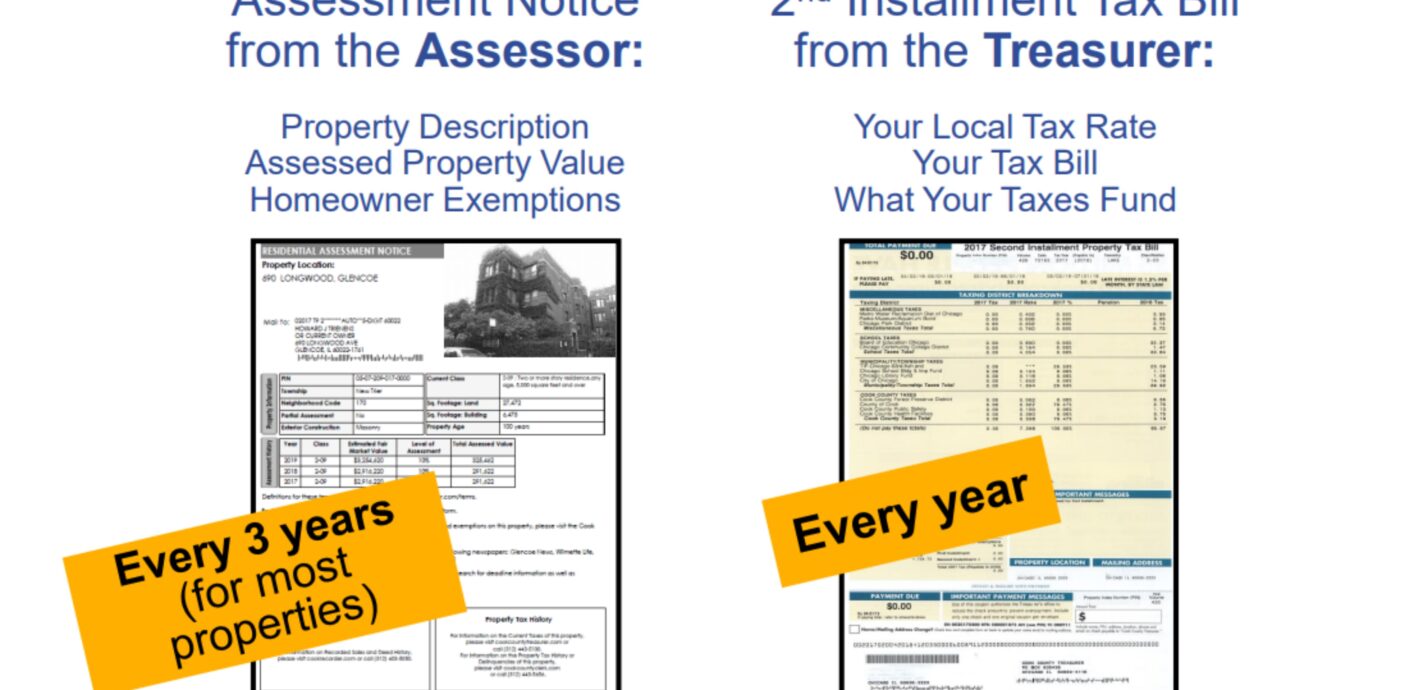
2026 Cook County reassessment notice used for property tax appeal appraisal
2026 Cook County Reassessment Appraisal: Protect Your Property Taxes

Why a 2026 Cook County Reassessment Appraisal Matters?

Reassessment notices for 2026 are arriving across Cook County, and many property owners are doing a double take.

The number assigned to your property is not just a formality. It will directly affect your property taxes for the next three years. If the assessed value feels higher than what the market supports, this is the moment to take a closer look.

A 2026 Cook County reassessment appraisal gives you independent, professional support if you decide to challenge that assessment.

For commercial property owners, investors, estate representatives, attorneys, and accountants, this is about financial positioning. Not frustration. Not speculation. Strategy.

Why Your Reassessment Deserves a Second Look

The Cook County Assessor’s Office is responsible for valuing every property in the county. To manage that scale, the office relies on mass appraisal systems. These systems use neighborhood data, historical trends, and statistical modeling to assign values.

That approach works for volume.

It does not always work for accuracy at the individual property level.

Your building is not a spreadsheet average. It has specific physical characteristics, income patterns, maintenance issues, and market realities that automated systems cannot fully capture.

That gap is where a reassessment appraisal becomes important.

Where Mass Appraisal Often Misses

Mass appraisal relies on broad assumptions. When those assumptions do not match your property, the assessment can miss the mark.

Condition is one common issue. Deferred maintenance, functional limitations, or outdated systems are rarely visible in county models.

Income properties present another challenge. If your building has vacancy, below-market leases, tenant instability, or rising expenses, a statistical model may not reflect those pressures.

Timing also matters. Markets change. Capitalization rates move. Investor demand shifts. If assessment data lags current conditions, the assigned value may not align with today’s market.

When that happens, the tax burden increases even if performance does not.

What a 2026 Cook County Reassessment Appraisal Provides

A professional appraisal is developed under the standards of the Appraisal Foundation and prepared in compliance with USPAP. That means the analysis is independent, objective, and supported by verifiable data.

More importantly, it is specific to your property.

You receive a detailed inspection and analysis that considers:

      • Physical condition
      • Location influences
      • Comparable sales
      • Market rents
      • Operating expenses
      • Income stability

This is not a general estimate. It is a documented opinion of value supported by market evidence.

If you file an appeal with the Cook County Board of Review or the Illinois Property Tax Appeal Board, that documentation becomes critical. Appeals without credible support rarely move the needle. Appeals backed by defensible appraisal analysis carry weight.

Who Should Consider an Appeal

Not every reassessment warrants action. But certain situations deserve careful review.

You may want to consider a reassessment appraisal if:

      • You own commercial or multi-family property
      • You recently purchased the property at a price below the assessed value
      • Income has declined or vacancy has increased
      • Significant repairs or deferred maintenance exist
      • You are managing estate, trust, or divorce-related real estate
      • You advise clients whose tax exposure affects financial planning

Because the reassessment sets the baseline for three years, even a modest reduction can produce meaningful tax savings over time.

This is not just about this year’s bill. It affects cash flow, investment returns, and long-term strategy.

The Appeal Window Is Limited

Each township in Cook County has its own appeal timeline. Deadlines are firm. Once the window closes, your options narrow.

Waiting limits flexibility.

Reviewing the reassessment early allows time to determine whether an appeal makes financial sense and to prepare proper documentation if needed.

A rushed filing rarely produces the best outcome.

What Happens During the Appeal Process

If you move forward, the process generally includes submitting documented evidence supporting a lower value.

The reviewing authority evaluates that evidence. In some cases, additional clarification or a hearing may follow. A final determination is then issued.

When an appeal includes a well-supported appraisal, the discussion shifts from opinion to analysis. That difference can influence the outcome.

The Cost of Doing Nothing

If the assessed value is inflated and no action is taken, the impact continues for the full triennial cycle.

      • Higher assessments can mean:
      • Increased annual property taxes
      • Reduced net operating income
      • Lower property performance
      • Strain on investment or estate planning strategies

A reassessment appraisal gives you clarity before accepting that outcome.

Sometimes the assessment is reasonable. Sometimes it is not. The key is knowing the difference before the deadline passes.

Take a Proactive Approach

The 2026 Cook County reassessment is not a final judgment. It is a proposed value based on mass modeling.

If that value does not reflect the realities of your property or the current market, you have the right to challenge it.

A professionally prepared appraisal provides the documentation necessary to support that challenge with credibility and precision.

Before accepting an automated number that may affect you for years, take the time to evaluate it properly.

Schedule a confidential consultation to determine whether your reassessment supports a formal appeal strategy.

Property tax exemptions impacting appraisal and tax rates
Property Tax Exemptions Are Driving Higher Tax Rates
How Property Tax Exemptions Are Impacting Appraisal and Rising Tax Rates

Property owners across several markets are asking a reasonable question as 2026 tax bills arrive: why are property tax rates increasing when property values haven’t moved much?

From the appraisal side, one factor is becoming harder to ignore, the expansion of homestead and senior exemptions. While these exemptions are designed to protect qualifying homeowners, they can also shrink the taxable base. When budgets stay flat but the base narrows, tax rates often rise. That shift is increasingly relevant in property tax appraisal, especially for commercial, multifamily, and non-exempt residential properties.

This isn’t a new concept, but it is becoming more visible and more consequential for property owners and the professionals advising them.

Why Property Tax Rates Can Rise Without Value Growth

In many jurisdictions, property taxes are driven less by market movement and more by revenue requirements. Local governments set budgets first, then determine what tax rate is needed to collect that amount.

When exemptions expand:

      • Fewer properties contribute to the tax levy
      • The total taxable value declines
      • The same budget must be funded
      • Rates increase to make up the difference

For property owners who do not qualify for exemptions, this can result in higher tax bills even when market value remains stable. From an appraisal standpoint, this disconnect between value trends and tax outcomes is becoming a critical part of context, not noise to be ignored.

How Homestead and Senior Exemptions Shrink the Tax Base

Homestead and senior exemptions reduce the taxable portion of qualifying properties, often significantly. As participation grows, especially in areas with aging populations or aggressive exemption policies, a larger share of the total tax burden shifts elsewhere.

That “elsewhere” is often:

      • Commercial properties
      • Multifamily housing
      • Non-owner-occupied residential assets

For owners and investors in these categories, rising rates can affect net operating income, underwriting assumptions, and long-term hold strategies. Appraisers are increasingly expected to recognize and explain these dynamics when analyzing tax burdens in high-rate jurisdictions.

What the UIC Study Revealed About Exemptions and Tax Burden

A 2024 study conducted by the University of Illinois Chicago Government Finance Research Center in partnership with the Civic Consulting Alliance examined the real-world impact of homestead exemptions in Cook County.

The research found that:

      • Expanded exemptions reduced the overall taxable base in several communities
      • Tax rates increased in response, particularly where spending levels remained unchanged
      • Non-exempt property owners absorbed a disproportionate share of the tax levy

You can review the study’s findings and policy context here of Property Taxes in Cook County: Introduction to Reform

For appraisers and tax professionals, the takeaway is clear: exemptions can influence rates in ways that materially affect property performance, even without changes in market value.

Why This Matters in Property Tax Appraisal

Property tax appraisal isn’t performed in a vacuum. Rising tax rates especially those driven by exemption shifts rather than value growth can influence how property owners, lenders, and investors interpret risk.

From an appraisal perspective, this means:

      • Tax burdens deserve closer scrutiny in high-exemption areas
      • Rate trends may matter as much as assessment changes
      • Context is essential when explaining why taxes increased despite flat values

For clients, this insight answers a critical question: “Why did my tax bill go up?”
For professionals, it supports clearer communication and better-informed decisions.

If you’re evaluating how taxes factor into credible analysis, our property tax appraisal services outline how local tax dynamics are incorporated into professional appraisal work.

Exemptions Offer Relief but Not Without Tradeoffs

It’s important to be clear: homestead and senior exemptions serve an important purpose. They provide targeted relief to homeowners who may be most sensitive to rising costs.

However, tax policy tradeoffs exist. National research from the Urban-Brookings Tax Policy Center shows that exemption-based relief programs can create uneven tax burdens within the same jurisdiction, depending on eligibility and property type.

When exemptions expand without corresponding adjustments to spending or tax structure, the result is often higher rates for those outside the exemption pool.

What Property Owners and Professionals Should Watch

As this trend becomes more visible, a few indicators are worth monitoring:

      • Exemption participation rates in your municipality
      • Tax base concentration between exempt and non-exempt properties
      • Rate changes year over year, not just assessments
      • Local policy discussions around exemption expansion

Understanding these factors helps you anticipate changes rather than react to them, whether you’re managing assets, advising clients, or reviewing tax bills.

The Bottom Line

Rising exemptions and rising tax rates can and often do exist at the same time. As 2026 bills reach mailboxes, this dynamic is prompting more questions from property owners and more conversations with appraisers.

Recognizing how exemptions affect the tax base isn’t just academic. It’s part of responsible property tax appraisal context, especially in jurisdictions where rates are climbing faster than values.

When tax outcomes feel disconnected from the market, understanding why makes all the difference.

Understand Your Property Tax Risk


Request a Property Tax Appraisal

Estate planning and probate appraisal for commercial real estate valuation
From Comps to Code in Today’s Commercial Appraisals

For decades, commercial real estate appraisal relied on a familiar foundation: comparable sales, income analysis, and professional judgment informed by local market knowledge. That framework still matters, but it’s no longer the full story.

Across jurisdictions like Cook County, assessment offices are moving away from purely comp-driven reasoning and toward valuation systems built on large datasets, statistical modeling, and automated analysis. The shift is subtle, but its impact is significant.

In today’s environment, commercial appraisals are increasingly evaluated not just on what value they conclude, but on how that value was produced.

Why “Comps” Alone Are Losing Influence

Comparable sales have long been the backbone of commercial property appraisal. They remain essential, but assessors now view them as just one input among many.

Offices such as the Cook County Assessor’s Office are increasingly integrating broader datasets, including federal appraisal and housing data from the Federal Housing Finance Agency (FHFA).

These datasets support:

      • Regression-based valuation models
      • Automated valuation models (AVMs)
      • Market-wide consistency testing
      • Equity and regressivity analysis

When assessments are defended using these tools, appeals based solely on narrative adjustments or limited comps can struggle to gain traction.

What “Code” Really Means in Modern Appraisal

“Code” doesn’t replace appraisal judgment, but it does change how that judgment is scrutinized.

Modern commercial appraisals are increasingly assessed against:

      • Data relevance and scale
      • Transparency of methodology
      • Replicability of conclusions
      • Consistency across property classes

For professionals involved in commercial real estate appraisal for tax appeals, this means valuation credibility now hinges on explaining methodology as clearly as market behavior.

In other words, the appraiser’s role has expanded from market interpreter to valuation explainer.

The New Battleground in Property Tax Appeals

In a data-driven assessment environment, appeals are less about debating opinion and more about evaluating process.

Effective challenges increasingly focus on:

      • Whether model inputs accurately reflect the subject property
      • Whether income assumptions align with real operating realities
      • Whether classification or use errors skew the data
      • Whether equity claims hold up at the property level

This shift doesn’t eliminate comps, it reframes them. Comparable sales now support or challenge model assumptions rather than serving as the sole basis for value.

Why This Shift Extends Beyond Tax Appeals

The move from comps to code isn’t limited to assessment disputes. The same expectations are influencing appraisals used in legal and advisory contexts.

Attorneys working in:

      • Estate planning appraisal
      • Probate real estate appraisal
      • Date-of-death property appraisal
      • Litigation support appraisal

are increasingly focused on whether an appraisal can withstand scrutiny, not just whether it reaches a reasonable number.

For probate attorneys, especially those handling income-producing or mixed-use commercial properties, valuation clarity and defensibility are essential.

Commercial Appraisals in Probate and Estate Planning

Commercial properties involved in estates present layered appraisal challenges: income history, tenancy changes, market conditions at a specific date, and regulatory expectations.

A credible probate appraisal for real estate must:

      • Address the correct valuation date
      • Clearly document data sources and assumptions
      • Explain methodology in plain, defensible terms
      • Align with IRS, court, and professional standards

As data-driven appraisal becomes more common, courts and counsel are less tolerant of appraisals that rely on surface-level analysis without methodological support.

What Attorneys Should Expect from Modern Appraisals

For tax attorneys, probate attorneys, and real estate counsel, today’s commercial appraisals should provide more than a conclusion—they should provide insight.

Key expectations now include:

      • Transparent explanation of valuation methods
      • Clear articulation of data limitations
      • Logical reconciliation of comps and models
      • Defensible reasoning under cross-examination

This is especially critical in expert witness appraisal services, where the ability to explain both market behavior and data-driven analysis can determine credibility.

Why the Shift Will Continue

Assessment offices face increasing pressure to demonstrate fairness, consistency, and accountability. Large datasets and automated models help meet those expectations.

As these tools become standard, commercial appraisals that fail to engage with methodology, not just market value—will feel outdated.

For firms like PahRoo, this evolution reinforces the value of disciplined, well-documented commercial appraisal work across tax appeals, estate planning, and probate matters.

Commercial appraisal hasn’t abandoned comps, but it has moved beyond them.

In today’s environment, the most credible valuations are those that connect market evidence with data-driven reasoning and clearly explain how conclusions are reached.

For property owners, attorneys, and fiduciaries navigating tax appeals or estate-related matters, working with appraisers who understand both sides of that equation—comps and code—is no longer optional. It’s the standard.

Let’s Talk Before the Numbers Are Challenged for You

If your assessment, appeal, or estate valuation is being defended with data models instead of comps, it’s worth a conversation.
Speak with our commercial appraisal team to understand how today’s valuation methods affect your case and how to respond with confidence.


Schedule a Strategy Call

Commercial property tax appeal strategy showing how rising levies impact tax bills
Why Commercial Property Tax Bills Still Rise

Winning the Appeal Isn’t the Finish Line: Why Commercial Property Tax Bills Still Rise

For experienced property tax attorneys, a successful appeal has traditionally meant a clear outcome: lower assessed value, lower tax bill.

Increasingly, that relationship no longer holds.

Across major U.S. markets including Chicago, Philadelphia, Dallas, Naples, and Phoenix, attorneys are encountering a growing disconnect between assessment victories and actual tax relief. Clients win the appeal, yet the tax bill still increases.

This isn’t a valuation failure.
It’s a levy-driven reality that’s reshaping how effective counsel must advise commercial property owners.

The Structural Issue Attorneys Are Now Forced to Address

In levy-driven tax systems, taxing bodies determine revenue needs first. Tax rates then adjust to meet those levies, regardless of how individual assessments move. Cook County Treasurer – Property Tax System Primer, explains levy-driven systems, how levies are set, and how rates are derived across taxing districts.

Our review of 275 commercial property tax bills post-appeal showed:

  • 38% increased year over year
  • Even when assessed values were reduced by more than 15%

The culprit wasn’t weak advocacy.
It was rising levies from school districts, municipalities, and pension-obligated entities that quietly outpaced assessment reductions.

For attorneys, this creates a professional risk:

Winning the case, but losing client confidence.

How This Plays Out by Market (Attorney Perspective)

While the mechanics are universal, each market applies pressure differently and sophisticated counsel now accounts for that nuance. These dynamics are documented across property tax systems nationwide, where local governments levy property taxes as a major source of local revenue.

Chicago (Cook County) 

Aggressive levy growth, overlapping taxing districts, pension funding obligations, and frequent TIF reallocations make Cook County the most visible example. Appeals focused solely on value often fail to anticipate rate compression. Check Cook County Assessor System Overview — for local system nuance in Chicago

Philadelphia

School district funding demands and shifting assessment practices can neutralize appeal gains, particularly when levy increases coincide with reassessment cycles.

Dallas

Rapid municipal growth, infrastructure expansion, and school funding needs create levy pressure that can dilute even substantial assessment reductions.

Naples (Collier County)

Special districts, redevelopment initiatives, and targeted funding measures can quietly shift tax burdens, especially in high-value commercial corridors.

Phoenix (Maricopa County)

Voter-approved funding measures and expanding tax bases redistribute liability, requiring appeal strategies to be evaluated alongside revenue modeling.

The common thread: 
Assessment appeals are necessary, but no longer sufficient on their own.


How Leading Attorneys Are Reframing Their Advisory Role

The most effective attorneys are adapting by expanding the scope of counsel, not abandoning appeals.

They are:

    • Using district-specific levy forecasts to set expectations before filing
    • Engaging earlier in budget hearings and abatement discussions
    • Coordinating with commercial property appraisal teams to identify when appeals are technically winnable but strategically ineffective

In one downtown case, a law firm helped a client avoid a six-figure exposure by pairing its appeal strategy with a levy-impact model that flagged a mid-cycle rate increase tied to a local referendum, before it surfaced on the tax bill.

That outcome didn’t come from litigation skill alone. It came from anticipating the revenue side of the equation.

Why This Matters for Attorney-Client Relationships

Clients are no longer satisfied with reactive explanations after the bill arrives.

They expect counsel to:

  • Explain why outcomes differ from expectations
  • Flag risks before decisions are locked in
  • Provide context beyond the assessment notice

Attorneys who incorporate levy awareness into their advisory process are:

  • Better positioned to manage expectations
  • Less exposed to second-guessing
  • More likely to be viewed as strategic partners, not procedural advocates
A More Defensible Way to Advise on Commercial Property Tax

As levy-driven pressure intensifies, the attorneys who stand out will be those who prepare clients for both sides of the tax equation:

    • Assessment
    • Revenue demand

That dual-lens approach is quickly becoming the difference between “we won the appeal” and “we protected the client.”

Clients don’t expect certainty, but they do expect clarity. Attorneys who can explain why a successful appeal doesn’t always translate into tax relief will continue to set themselves apart.

Support Your Commercial Property Tax Appeal Strategy with Levy Intelligence

If you represent commercial property owners in Chicago, Philadelphia, Dallas, Naples, or Phoenix, winning the appeal is only part of the equation. In levy-driven tax environments, assessment reductions alone don’t always translate into lower tax bills.

Request a Levy Impact Analysis to:

    • Identify where commercial property tax appeal wins may be offset by rising levies
    • Strengthen client communication and expectation-setting before filing
    • Align valuation and appeal strategy with real-world tax outcomes across local taxing districts

Equip your clients with clarity and your practice with a defensible, data-driven advisory edge.


Attorney and commercial appraiser reviewing a litigation-ready commercial appraisal report.
If Your Appraisal Gets Challenged, Does It Hold Its Ground?

Commercial real estate appraisals usually stay behind the scenes, however, they quickly move into the spotlight when they become part of a negotiation, dispute, or testimony. As a result, every assumption, adjustment, and data point suddenly matters. When the other side challenges the numbers, one question becomes unavoidable.

Will your appraisal hold its ground when challenged?

For attorneys, fiduciaries, CPAs, brokers, and commercial advisors, the appraisal you rely on is more than a document. Instead, it becomes a direct reflection of your judgment and credibility. Consequently, if the appraisal collapses under scrutiny, the room doesn’t look at the appraiser who wrote it, they look at you.

Will this appraisal hold its ground? 

For attorneys, fiduciaries, CPAs, brokers, and commercial advisors, the appraisal you rely on is more than a document. It’s a reflection of your judgment and credibility. If it collapses under scrutiny, you’re the one the room looks at, not the appraiser who wrote it. 

Why Appraisals Fail When They’re Challenged 

Most appraisal failures don’t stem from bad math. Instead, they result from weak defendability. 

Common vulnerabilities include: 

      • Outdated or selectively chosen comps 
      • Adjustments that lack clear justification 
      • Assumptions without evidence 
      • Gaps between the narrative and the numbers 
      • Missing or incomplete market context 
      • Logic that isn’t consistently applied 
      • Explanations that crumble during questioning 

When stakes rise, the opposing side only needs one weak point to undermine an entire report. Moreover, as the Appraisal Institute notes, “credibility is the central responsibility of an appraiser,” and credibility relies on transparency, evidence, and predictable logic. 

The Room Remembers Who Referred the Appraiser 

Here’s the uncomfortable truth many professionals learn only after a tough case: 

A bad appraisal doesn’t just hurt the client, it reflects on the person who recommended the appraiser. 

When an appraisal becomes a point of conflict and the numbers don’t hold, people immediately ask:  

      • Why was this appraiser chosen?
      • Was the report vetted?
      • Did it meet litigation standards?

That moment can permanently influence how colleagues and clients view your judgment. Therefore, a litigation-ready commercial appraisal doesn’t just protect your client’s position, it protects your professional reputation.

What Litigation-Ready Actually Means 

At PahRoo, we treat every commercial valuation as if it might be reviewed in court. This mindset changes how we gather evidence, document logic, and support conclusions. 

Here’s what that approach looks like in practice: 

Defensible, Verifiable Data 

Every comp, adjustment, and market indicator is fully sourced and documented so you can respond confidently to tough questioning. We never rely on shortcuts or unsupported assumptions. 

Transparent, Traceable Logic 

Anyone—attorney, judge, mediator, or CPA—should be able to follow the valuation from start to finish without guessing. If a conclusion doesn’t clearly tie back to data, it doesn’t belong in the report. 

Court-Ready Documentation 

Because litigation exposes gaps, we eliminate them. We clearly explain: 

        • Why certain comps were selected 
        • Why adjustments were justified 
        • Why competing valuation approaches were ruled out 
        • Why the conclusion is most credible 

No Surprises for You or Your Client 

Every potential challenge point is addressed upfront. As a result, your risk is reduced and every conclusion is supported with defensible evidence. 

Who Relies on Litigation-Ready Appraisals? 

We support: 

      • Attorneys preparing for negotiation or litigation 
      • Fiduciaries and trustees protecting estates and assets 
      • CPAs validating valuation positions 
      • Brokers involved in high-stakes deals 
      • Investors evaluating contested valuations 
      • Even fellow appraisers seeking peer review or expert support 

Our reports have been used in: 

      • Settlement negotiations 
      • Mediation and arbitration 
      • Administrative hearings 
      • State and federal court cases 
      • Tax appeals 
      • Partnership and shareholder disputes 
      • Eminent domain / condemnation matters 

Wherever scrutiny increases, credibility becomes the only currency that matters.

Want to See What Litigation-Ready Looks Like? 

If you want to understand how a litigation-ready commercial appraisal is built or how to ensure your valuation will hold its ground under cross-examination, we’re here to guide you through the process. 

Because when an appraisal is challenged, the real question becomes: 

Who stands with you when the numbers are on trial? 

With PahRoo, the answer is simple:
A team that builds every appraisal to be trusted, even when the pressure rises. 

Protect Your Case With a Litigation-Ready Appraisal Now!

Cook County land reassessment 2023 property map showing south suburban tax changes
Cook County Reassessment 2023: Lessons to Protect Property Owners in 2025

When Cook County released its 2023 reassessment results for south suburban properties, thousands of owners were stunned. Land valuations in some cases spiked more than 600% because of a modeling error. The Board of Review eventually corrected more than 4,000 parcels, but the shockwaves are still being felt.

As we head into 2025 with new reassessment cycles and the next triennial review coming in 2026, the lessons from 2023 remain important for every property owner in Cook County.

Cook County 2023 Land Reassessment: What Happened?

During the 2023 reassessment, a systemic error in the valuation model caused inflated land values throughout several south suburban townships. Many property owners opened their notices to discover their land value had increased by several hundred percent overnight. While the Board of Review corrected the mistake, the incident revealed flaws in how land and building values are modeled.

For property owners, this wasn’t just a glitch. It showed how quickly errors in valuation modeling could translate into unexpected tax bills if not identified and challenged.

Why the 2023 Land Spike Still Matters in 2025–2026

Although the 2023 error was corrected, the risk has not disappeared. Valuation modeling remains complex, and as methodologies evolve, new vulnerabilities can emerge. With the 2026 triennial reassessment approaching, property owners should assume that modeling issues are still possible.

Here’s why it matters:

  • Future assessments will use similar tools. If the methodology isn’t monitored, mistakes could happen again.

  • Appeal windows are limited. Miss your opportunity, and you could be stuck with an inflated bill.

  • Township trends matter. Some areas are more prone to land/building imbalances, making vigilance critical.

What Property Owners Can Learn from 2023

Attorneys who handle property tax appeals had a front-row seat to the 2023 spike. Many realized that waiting until the appeal window opened was too late. They began looking for problems as soon as notices arrived and showed clients how to spot unusual numbers before mistakes turned into costly bills.

For property owners, the takeaway is simple: you don’t need to understand all the technical details to protect yourself. What matters is knowing what to look for and acting quickly if something feels off.

Strategies for Property Owners Ahead of 2026

Property owners don’t need a law degree to protect themselves. The key is staying informed and prepared. Here are practical steps:

1. Review Your Assessment Notices Carefully

When you receive your assessment notice, compare land and building values. If your land value seems disproportionately high compared to similar properties, it may signal an error.

2. Track Township Trends

Stay informed about your township’s assessment cycle and average increases. If you notice unusual spikes, take a closer look at your property.

3. Act Early on Appeals

Don’t wait until the deadline. Start reviewing your assessment as soon as it arrives so you have time to file an appeal if needed.

4. Consult Professionals When Needed

While you can file your own appeal, consulting a property tax attorney or appraisal expert can help ensure nothing is overlooked. They may also spot systemic issues you might miss.

5. Leverage Technology

Tools powered by AI and data analytics are becoming more common in the property tax space. Using these resources can help you detect red flags faster and with greater accuracy.

Staying Ahead Pays Off

The 2023 Cook County reassessment showed that even small modeling errors can have massive financial consequences. For property owners, the lesson is simple: don’t wait until a tax bill surprises you. By monitoring assessments, learning from past mistakes, and preparing early, you can protect your investment and avoid overpaying.

Request a Property Tax Consultation
Learn More About Cook County Appeals

The $4.3 Billion Shift: What 2024 BOR Appeals Mean for Attorneys in Cook County

Property tax attorneys in Cook County know just how much the Board of Review (BOR) can reshape the playing field. Recent appeal outcomes have not only saved commercial property owners billions but also shifted the tax burden onto homeowners across Chicago. The numbers tell an important story, one with real implications for attorneys guiding clients through the appeal process.

Attorney reviewing property tax documents related to Cook County Board of Review appeals.

Billions in Savings, Billions in Shifts

Between 2021 and 2023, commercial property owners shaved $3.3 billion off their tax bills through successful BOR appeals. The flip side? Nearly $2 billion of that burden shifted to homeowners.

Fast forward to the 2024 reassessment, and the gap widened. Commercial property values dropped by an average of 17% (~$4.3 billion) through BOR appeals, while residential values fell just 1%. That shift pushed homeowners’ share of the tax base from 49% to 54% in a single reassessment cycle.

The Uneven Impact on Neighborhoods

These shifts don’t land evenly. In lower-income and minority neighborhoods, appeal rates tend to be lower, which means fewer opportunities for relief. As a result, the tax increases in these communities are more pronounced.

This imbalance is drawing attention—not just from affected homeowners but also from policymakers and the media. For attorneys, it’s a reminder that BOR outcomes don’t happen in a vacuum. The broader narrative around fairness and equity is shaping how appeals are perceived.

Why Appeals Still Matter

Despite the scrutiny, one fact hasn’t changed: BOR appeals are still the most effective way to secure property tax relief in Cook County. Businesses continue to depend on them, and attorneys remain on the front lines.

What has changed is the level of preparation required. Large commercial cases, in particular, demand well-supported valuation evidence that can withstand challenges. It’s no longer enough to file paperwork and hope for the best—clients and regulators alike expect appeals to be backed by clear, defensible analysis.

Strong Evidence Wins Cases

This is where experienced appraisers make all the difference. At PahRoo Appraisal & Consultancy, we provide valuation reports that go beyond the basics. Our work helps attorneys:

  • Present solid, defensible evidence at the BOR.

  • Strengthen their position in high-value or complex appeals.

  • Reassure clients who need confidence in the process.

In today’s environment, having the right evidence isn’t just helpful, it’s essential.

The Bottom Line

The 2024 Cook County reassessment shows just how powerful BOR appeals can be. They save billions for commercial property owners but also shift responsibility onto homeowners, fueling debate about fairness.

For attorneys, the opportunity is clear, but so is the responsibility. Delivering results now means pairing legal expertise with strong valuation support that can stand up to scrutiny.

Request a Property Tax Appraisal

NEWSLETTER

Knowing a property's true value is key
to making informed real estate decisions

Visit us

7383 Lincoln Ave Suite,
#100 Lincolnwood, IL, 60712