
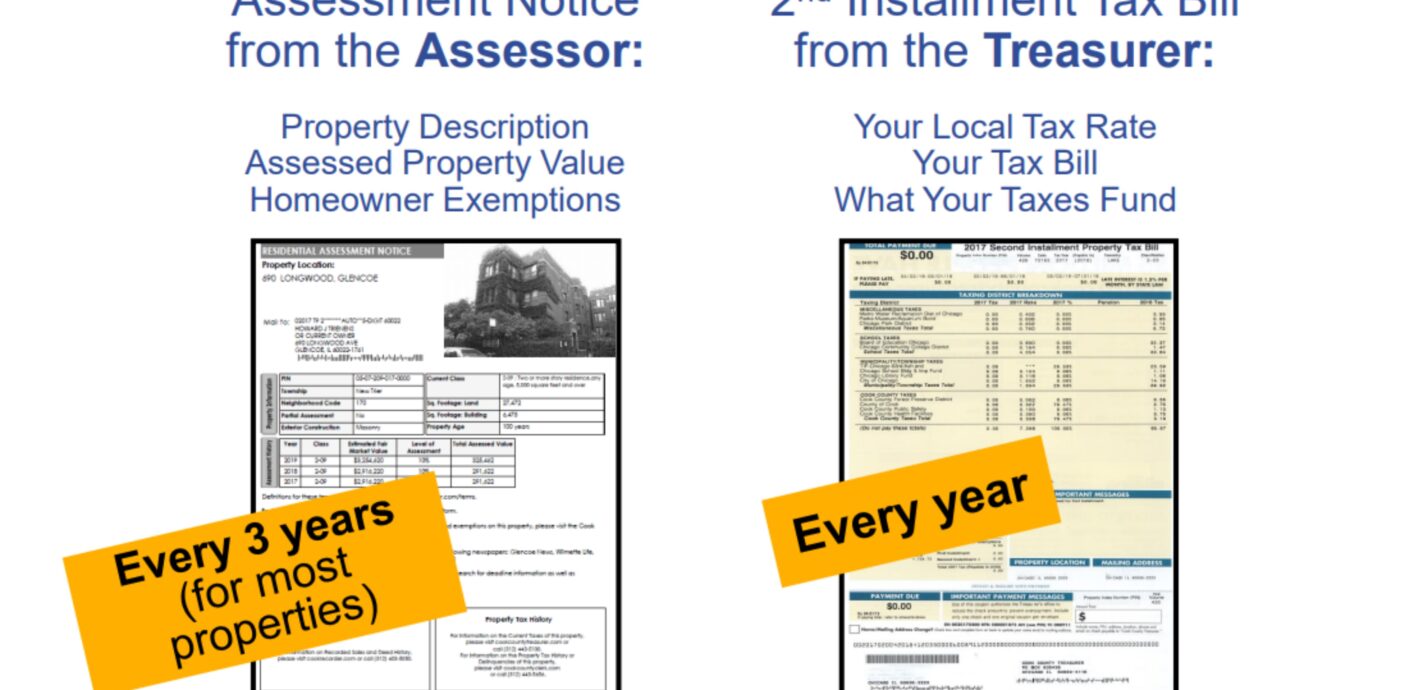
A Cook County reassessment appraisal is an independent, USPAP-compliant opinion of your property’s value, prepared so you can support a property tax appeal when the county’s new number looks too high. The 2026 notices are landing across the county right now. The figure on yours sets the taxable value for the next three years, so it earns a close read before you file it away.
- Why the county’s assessment can miss what your property is really worth
- Which owners have the strongest reason to appeal
- How township deadlines work, and what evidence actually moves a decision
What a Cook County Reassessment Appraisal Actually Does
The Assessor’s Office values every parcel in the county, which is an enormous job. To handle that volume, it uses mass appraisal: neighborhood data, historical trends, and statistical models that assign values in bulk. That method is efficient, but it is also blunt. It describes the average property on your block better than it describes yours.
A reassessment appraisal works the other direction. A certified appraiser inspects your specific property and builds an opinion of value from comparable sales, market rents, physical condition, and income, all documented under the Uniform Standards of Professional Appraisal Practice set by the Appraisal Foundation. The result is independent and tied to evidence, not to a countywide model. When you file an appeal, that is what gives your position weight. You can see how we handle these assignments on our real estate appraisal services page.
Where the County’s Mass Appraisal Misses Your Property
Mass models run on assumptions, and assumptions break down at the individual level.
Condition is the common one. Deferred maintenance, an aging roof, or outdated mechanical systems rarely show up in county data, yet they pull real value out of a building.
Income properties get missed too. If your building carries vacancy, below-market leases, or rising operating costs, a statistical model will not feel any of that. It sees square footage and a neighborhood, not a rent roll under pressure.
Timing matters as well. Markets move, cap rates shift, and investor demand changes faster than assessment cycles do. When the county’s data lags the market, your assigned value can sit above what a buyer would actually pay. Then the tax bill climbs even though performance has not.
Who Should Take a Second Look Before the Deadline
Not every notice is worth challenging. Some assessments are fair, and appealing them only wastes time. But a few situations almost always justify a closer review.
Look harder at your reassessment if you own commercial or multi-family property, or if you bought recently at a price below the new assessed value. The same goes if income has slipped, vacancy has risen, or the building needs significant repairs. Owners handling estate, trust, or divorce real estate should pay attention too, because the assessed value can ripple into those proceedings. So should the CPAs and attorneys advising them.
Because the 2026 figure holds for a full three-year cycle, even a modest reduction compounds. On commercial and investment property, that can add up fast, which is why our commercial appraisal clients tend to run the numbers early.
How the Appeal Timeline Works
Each township in Cook County opens and closes on its own schedule, and the deadlines are firm. Once your township’s window shuts, your options for that year are mostly gone.
Most appeals start at the Cook County Board of Review, where you submit evidence supporting a lower value. The Board weighs that evidence and issues a decision. If it does not resolve things, the Illinois Property Tax Appeal Board is the next stop. In both venues, an appeal built on a documented appraisal reads very differently from one built on a homeowner’s hunch. The discussion shifts from opinion to analysis, and analysis is harder to wave off.
Waiting is the quiet mistake. A rushed filing in the final week rarely produces the strongest case. Reviewing your notice early gives you time to decide whether an appeal even makes sense, and to prepare the documentation properly if it does.
What to Do With Your 2026 Notice
Start by reading the assessed value the way a buyer would. Would your property actually sell for that today? If the answer is yes, you can probably let it stand. If it feels high, or if your income numbers no longer support it, that is your signal to get an independent appraisal before your township deadline.
The 2026 reassessment is a proposed value. You have the right to test it, and the evidence to do so is well within reach.
Think Your 2026 Assessment Runs High?
We prepare USPAP-compliant appraisals built to stand up at the Board of Review, tailored to your property and your township’s deadline. Let’s find out whether an appeal makes financial sense.
Frequently Asked Questions
What is a Cook County reassessment appraisal?
It is an independent, USPAP-compliant opinion of your property’s value, prepared by a certified appraiser so you can support a property tax appeal. It looks at your specific property rather than a countywide model.
Does a higher assessment always mean I should appeal?
No. Some reassessments are accurate, and appealing them is not worth the effort. An appraisal helps you tell the difference before you commit to filing.
What evidence carries the most weight in a property tax appeal?
A documented appraisal supported by comparable sales, market rents, and condition analysis tends to carry the most weight. It moves the discussion from opinion toward verifiable data.
How long do I have to appeal my 2026 reassessment?
Each Cook County township has its own appeal window, and the deadlines are firm. Check your township’s schedule as soon as your notice arrives, because late filings are generally not accepted.
Can an appraisal help with commercial or investment property appeals?
Yes. Commercial and multi-family properties often benefit most, since vacancy, below-market leases, and rising expenses are exactly the factors a mass model overlooks.
Need an Independent Appraisal in Cook County?
PahRoo Appraisal & Consultancy prepares independent, USPAP-compliant valuations across Chicago and Cook County, led by Michael Hobbs. Alongside property tax appeal work, we handle commercial and estate assignments, and you can reach the team any time through our contact page. If your 2026 notice looks off, the earliest review gives you the most room to act.