Chicago Housing Market Analysis: Tight Inventory Masks Emerging Market Divergence
The Chicago housing market remains firmly in seller-market territory heading into June 2026, but the underlying story is becoming more complex. While inventory levels remain historically tight across Cook, DuPage, Lake, and Will Counties, demand is no longer moving uniformly across the region.
PahRoo Appraisal & Consultancy’s Week 22 Market Intelligence Report reveals a market increasingly shaped by mortgage-rate pressures, county-level demand shifts, and significant differences between single-family and condominium performance. For lenders, attorneys, accountants, brokers, and investors, understanding these distinctions may be more important than ever.
Inventory Remains Tight Across the Chicago MSA
At first glance, the market appears exceptionally strong. Months of supply remain below 1.2 months across all major residential submarkets, a level traditionally associated with a strong seller’s market.
However, that tightness comes with an important caveat.
Much of the current inventory scarcity is being amplified by reduced listing activity. New listings declined across every county during the Memorial Day holiday week, creating artificially compressed inventory metrics. While year-over-year inventory contraction remains real, current supply figures may overstate market strength.
For appraisal assignments, lending decisions, and acquisition strategies, this distinction matters. Inventory scarcity alone does not guarantee accelerating demand.
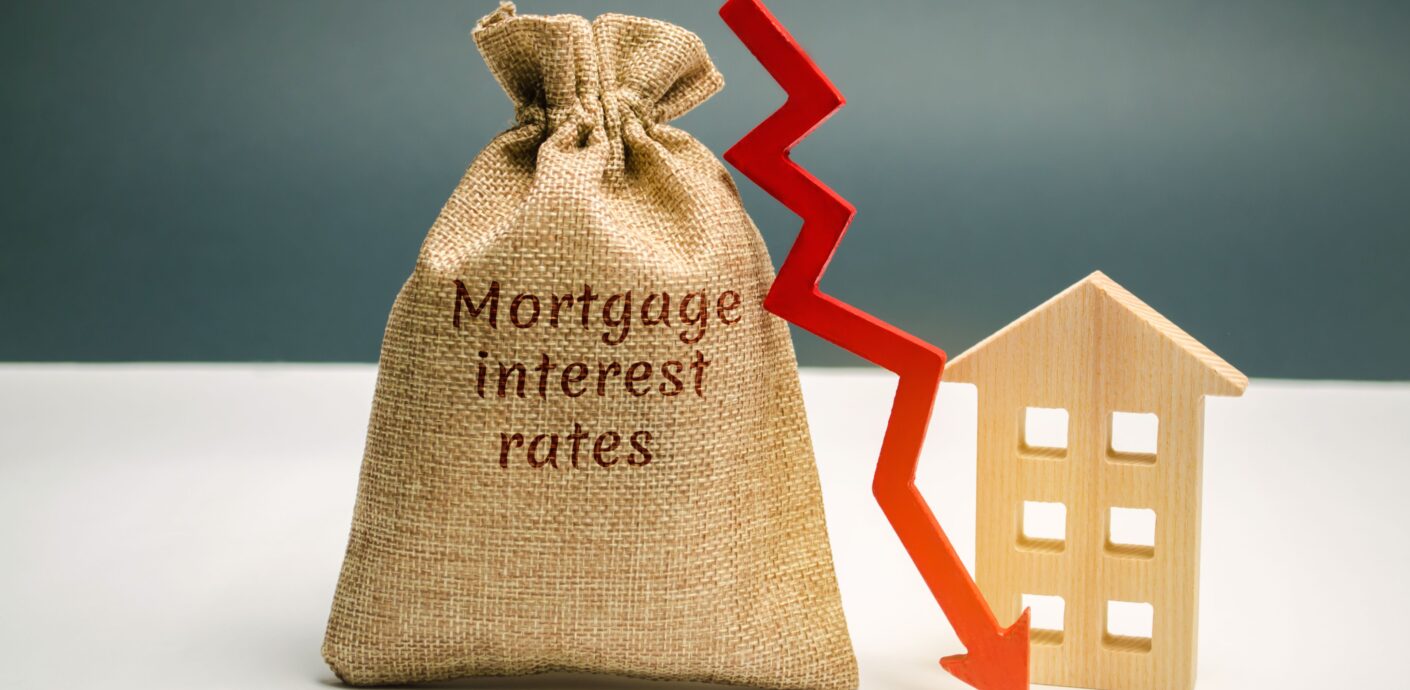
Mortgage Rates Are Becoming a Larger Market Driver
One of the most significant developments this week is the widening disconnect between Federal Reserve policy and mortgage borrowing costs.
The effective federal funds rate remained unchanged at 3.62%, yet the average 30-year fixed mortgage rate increased to 6.53%.
This pushed the mortgage spread to approximately 291 basis points above the effective federal funds rate, significantly wider than the historical range of 150–170 basis points. According to the Mortgage Bankers Association, mortgage-rate movements continue to influence affordability, financing costs, and housing market activity nationwide.
The result is a housing market where policy easing is no longer fully reaching borrowers.
For buyers operating near affordability thresholds, even modest increases in financing costs can impact purchasing decisions. As mortgage rates rise, the demand recovery observed earlier this spring appears increasingly vulnerable.
Q: How do mortgage rates affect home values?
A: Mortgage rates influence affordability and buyer demand, which can impact pricing
trends and market activity over time.
Single-Family Housing Demand Is Splitting by County
Perhaps the most important trend emerging in Week 22 is the growing divergence among single-family housing markets.
Only two weeks ago, all four major county markets were showing positive year-over-year pending sales growth. Today, the picture is mixed:
- DuPage County pending sales increased 19.4% year-over-year.
- Will County pending sales increased 24.5%.
- Cook County pending sales declined 5.7%.
- Lake County pending sales declined 14.2%.
This shift raises an important question.
Are buyers reacting to higher mortgage rates, or is the decline simply the result of Memorial Day-related transaction disruptions?
The answer remains unclear. Market participants should monitor Weeks 23 and 24 closely before concluding that a broader demand slowdown has begun.
DuPage County Emerges as the Strongest Market
Among all Chicago-area counties analyzed, DuPage County continues to demonstrate the healthiest market fundamentals.
Single-family pending sales increased nearly 20% year-over-year, while condominium demand rose more than 25%.
Inventory remains exceptionally tight, and pricing continues to show resilience. Unlike several neighboring markets, DuPage benefits from broad-based demand growth across both housing segments.
For lenders, investors, and real estate professionals seeking stability, DuPage currently presents the strongest combination of demand, supply discipline, and pricing support.
Cook County’s Housing Market Is Cooling
Cook County remains the dominant force within the Chicago MSA, accounting for approximately 61% of active single-family inventory and 77% of active condominium inventory.
Because of its size, county-level trends often influence perceptions of the entire metropolitan market.
Yet Cook’s single-family market is showing signs of moderation.
Earlier this spring, buyers were regularly paying significantly above asking price. The median absorbed-to-list premium has now narrowed substantially, falling from approximately $44,300 two weeks ago to roughly $19,100 today.
This does not signal weakness.
Instead, it suggests that bidding competition is becoming less aggressive and that buyers may be gaining slightly more negotiating leverage than they had earlier in the year.
Will County Condominiums Show the Clearest Signs of Stress
While most Chicago-area housing segments remain stable, one submarket stands apart.
Will County condominiums continue to display the strongest indicators of market softening.
Inventory has increased 26% year-over-year while pending sales have fallen 22%. At the same time, nearly 28% of listings have undergone price reductions, and median absorbed prices have declined 5.8%.
Taken together, these indicators point toward a genuine supply-demand imbalance rather than temporary market noise.
For buyers, this environment may create attractive negotiating opportunities.
For lenders and appraisal professionals, however, the segment warrants additional caution and careful market support when developing value conclusions.
Q: Is Chicago still a seller's market?
A: Yes. Most Chicago-area submarkets continue to have low inventory levels, although demand varies by
county and housing type.
What This Means for Real Estate Decision-Makers
The Week 22 data highlights the growing importance of submarket-level analysis.
The Chicago housing market cannot be accurately understood through metro-wide averages alone. Strong demand in DuPage and Will County single-family markets coexists with emerging weakness in Lake County and ongoing softness in Will County condominiums.
For attorneys handling estate, divorce, or litigation matters, market-specific Chicago real estate appraisal services become increasingly important when market conditions vary significantly between counties.
For lenders, widening mortgage spreads and shifting demand patterns may affect collateral risk.
For investors, opportunities remain available, but they are becoming more localized and selective.
Looking Ahead
The most important question entering June is whether recent single-family demand softness in Cook and Lake Counties represents a temporary holiday-week distortion or the beginning of a broader affordability-driven slowdown.
- If mortgage rates continue rising, housing demand could weaken further across rate-sensitive segments.
- If rates stabilize or retreat, the demand recovery observed earlier this spring may resume.
For now, the data supports a measured conclusion: inventory remains tight, but demand is no longer moving in one direction across the Chicago metropolitan area.
Successful decision-making will depend on understanding where strength is persisting, where weakness is emerging, and when professional Chicago real estate appraisal services can help support informed decisions.
Make More Informed Real Estate Decisions
Real estate decisions are only as strong as the market data behind them. Whether you’re navigating an estate settlement, divorce, litigation matter, lending decision, investment acquisition, or portfolio review, understanding how local market conditions affect value is critical.
The Chicago housing market is becoming increasingly segmented, with meaningful differences emerging between counties, neighborhoods, and property types. Relying on broad market headlines can lead to costly assumptions.
A certified appraiser can provide the independent market analysis and credible appraisal support needed to make informed decisions with confidence.