Our blog

Latest news
& events

Property Taxes, But Make It Easy

A Beginner-Friendly Guide on How Property Taxes Work, What They Fund, and How to Lower Your Bill

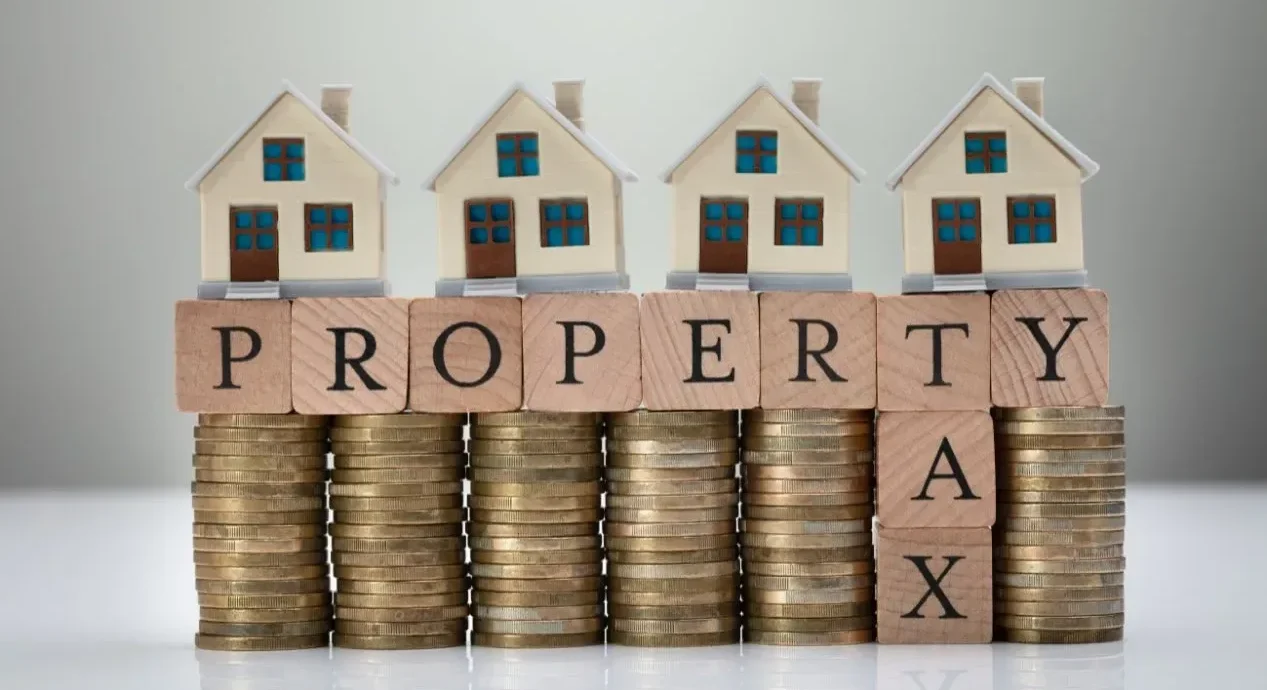
Confused about property taxes? Understanding how property taxes work is essential for homeowners and investors alike. In this guide, we explain how local governments calculate property taxes, where your tax dollars go, and actionable steps to lower your bill.

What Are Property Taxes?

Property owners pay annual taxes based on the assessed value of their real estate. These taxes help fund essential local services like schools, roads, and emergency responders. But despite how common they are, many homeowners don’t fully understand how they’re calculated or how to challenge them if something seems off.

How Are Property Taxes Calculated?

Understanding your property tax bill starts with two key components:

1. Assessed Property Value

This is the dollar amount your local tax assessor says your home is worth. It’s not always equal to market value and may be reassessed every few years. In some areas, only a percentage of the market value is taxed, this is called the assessment ratio.

2. Property Tax Rate (Millage Rate)

A mill equals $1 for every $1,000 of assessed value. If your home is assessed at $250,000 and your local tax rate is 20 mills, your property tax would be:
250 × 20 = $5,000 annually

Pro Tip: Check if your area has a property tax calculator on the county assessor’s website.

What Do Property Taxes Pay For?

Local governments invest your property taxes back into your community. Here’s where that money usually goes:

  • Public Schools

  • Police and Fire Departments

  • Roads and Transportation

  • Public Health and Sanitation

  • Libraries, Parks, and Recreation

In most counties, you can see a breakdown of how your tax dollars are allocated on your property tax statement or local government website.

Why Did My Property Taxes Go Up?

A common question homeowners ask is: “Why are my property taxes increasing every year?”

Here are a few reasons:

  • A reassessment increased your property’s value.

  • Voters approved new levies or bond measures.

  • Local government budget changes raised the tax rate.

Understanding these causes helps you figure out whether your tax increase is fair, or something you can dispute.

How to Lower Your Property Tax Bill

Feeling the pinch? Good news: you may be able to lower your property taxes by taking a few smart steps.

1. Review Your Property Tax Assessment

Assessors may make mistakes. Check for errors like:

  • Wrong square footage

  • Inaccurate number of rooms

  • Non-existent upgrades

2. Compare with Similar Homes

If your assessed value is way higher than similar homes nearby, gather comps to support your case.

3. File a Property Tax Appeal

You can file an appeal in most counties. Bring evidence, such as:

  • An independent appraisal

  • Sale prices of nearby properties

  • Photos of damage or needed repairs

4. Apply for Property Tax Exemptions

You may qualify for exemptions:

  • Homestead Exemption

  • Senior Citizen Exemption

  • Disability or Veterans Benefits

These exemptions can reduce your home’s taxable value..

Final Thoughts: Be a Proactive Homeowner

Understanding your real estate taxes doesn’t have to be overwhelming. When you know how property taxes are calculated and what you can do to challenge them, you’re in a much better position to protect your investment and avoid overpaying.

Need Help Navigating Your Property Tax Assessment?

At PahRoo Appraisal & Consultancy, LLC, we specialize in helping homeowners and property investors understand, manage, and appeal their property tax bills.

Contact us today

How One Man Turned a Motel Into Affordable Housing — With Help from TikTok
TL;DR

A 24-year-old from South Carolina turned an 80-room motel into 40 affordable studio apartments — inspired by TikTok, powered by crowdfunding, and driven by community need. This isn’t just a personal success story — it’s a glimpse into the future of housing solutions.

TikTok Isn’t Just for Dances Anymore

When most people scroll TikTok, they’re looking for laughs or inspiration.
But for Corvon Burgess, a young man from Manning, South Carolina, it became a classroom — and then a launchpad.

At just 24, Corvon stumbled on videos about real estate investing. Months later, he closed on an abandoned 80-room motel — and began converting it into affordable studio apartments.

The Vision: Affordable Living, Built From the Bones of the Past

In a town with limited rental options, this wasn’t just a real estate flip. It was a lifeline.

“I realized people were more willing to support something they felt part of,”
— Corvon Burgess via Business Insider

Each unit is designed to rent for under $950/month — utilities included.

The Numbers Behind the Project

Let’s break it down:

Purchase Price of Motel: $2.3 million

Number of Units: 40 studio apartments

Target Rent: <$950/month

GoFundMe Raised: $345,000+

Funding Sources: Crowdfunding, private lending, and direct community support

This Is Not an Isolated Case

Charlotte, NC offers another example:
Nonprofit Heal Charlotte turned a former Baymont Inn into transitional housing for up to 100 families. Funded by a $2.25M city grant, they’ve added:

  • A children’s art room
  • Community gardens
  • A market stocked with local produce

This is more than shelter. It’s support. It’s restoration.

Why It Matters: Turning Old Rooms Into New Futures

Here’s what this trend tells us:

  • Affordable housing can be creative and beautiful
  • Vacant motels can meet modern needs
  • Social media can inspire action — not just attention

And importantly: you don’t need to be a millionaire developer to make a difference.

Want to See the Transformation?

👉 Check out Corvon’s journey on TikTok:
@simplerealestate

Know a vacant motel in your area? Think beyond its past. Contact us if you need help!

🔗 Share this post with someone looking for real estate inspiration.

Housing Market 2025: What $1 Million Gets You Today

A Million Dollars Used to Buy Luxury. Now It Buys… the Basics?

Once upon a time, a $1 million home meant luxury: space, privacy, and maybe even a pool.
Today? In cities like San Francisco, Seattle, and parts of LA, $1 million might get you a dated 2-bedroom, and a bidding war.

We’re in a new era of housing where $1M no longer equals high-end. It’s entry-level. So how did we get here?

What’s Driving the Shift?

This isn’t just a coastal problem. Even secondary markets like Austin, Denver, and Phoenix are seeing seven-figure starter homes.
Here’s why:

  • Low Inventory: Decades of underbuilding have led to a serious supply crunch.

  • Rising Construction Costs: Inflation, materials, and labor shortages drive prices higher.

  • Zoning Restrictions: Local regulations make new, affordable builds nearly impossible.

  • Remote Work Migration: High-earning buyers are leaving coastal cities and driving up prices in previously “affordable” areas.

  • Fear of Missing Out: Many first-time buyers are jumping in now, afraid prices will rise further.

Where $1 Million Doesn’t Go Far

Let’s look at what $1M gets you today:

  • San Francisco: Maybe a 1-bed condo. If you’re lucky.

  • Los Angeles: A modest fixer-upper, with multiple offers.

  • Seattle: A small single-family home… with a long commute.

  • Austin: A cookie-cutter new build 45 minutes outside the city.

Even in the suburbs, buyers are finding themselves priced out or forced to compromise on size, location, or condition.

What Is a “Starter Home” Now?

Traditionally, a starter home was affordable for entry-level buyers, often smaller, modest, and budget-friendly.
Now, “starter” just means the lowest price available in the market. For many, that’s still $800K to $1.2M.

Worse yet, many first-time buyers rely on family help, jumbo loans, or co-buying with friends to compete.

Is This Sustainable?

Experts say this level of pricing pressure isn’t sustainable long-term.

While mortgage rates have cooled slightly, affordability remains near historic lows. Wages aren’t rising fast enough, and many buyers are already at their financial limits.

Still, limited supply means prices are unlikely to drop dramatically anytime soon.

Final Thoughts

In today’s market, $1M doesn’t guarantee luxury, it simply gets your foot in the door.

For aspiring homeowners, this shift is frustrating. For real estate professionals and appraisers, it’s a reminder of how location, demand, and perception continue to reshape value.

The “starter home” hasn’t disappeared, it just has a new price tag.

For insights into how zoning laws impact property values, explore our post on Zoning: The Most Boring Topic That Can Change Everything. Additionally, for official and up-to-date market data, the National Association of Realtors is a trusted resource.

Ready to navigate the evolving housing landscape? Contact us today, and our team will provide expert guidance tailored to your real estate goals.

U.S. Economy Now: Its Effect on YOUR Real Estate

How the 2025 U.S. Economy Impacts Real Estate Values

The U.S. economy is constantly evolving, and its changes directly affect real estate markets nationwide. Homeowners and investors need to stay informed to make smart property decisions. In this post, we explore key economic trends in 2025 and how they influence U.S. real estate values and investment opportunities.

You are wondering what all this tariff talk of the POTUS has to do with my property?

You might be wondering: what does all the tariff talk from the POTUS mean for my property? Recent developments suggest that global backlash could impact your finances. While many hope for improvements, international pressures are mounting. Current trends indicate that the U.S. dollar may depreciate by 15–20%, a sharp contrast to the previous environment of strong economic growth, low inflation, and favorable interest rates that attracted investors to U.S. assets.

The depreciation of the U.S. dollar has a nuanced impact on the U.S. real estate market, presenting both opportunities and challenges. One of the primary effects of a weaker dollar is that it increases the purchasing power of foreign investors, making U.S. real estate more attractive to them. This often leads to increased demand, particularly in prime locations and popular markets, which can drive up property prices.

How a Weaker Dollar Affects Real Estate

A weaker U.S. dollar has both opportunities and challenges for the real estate market:

  • Attracts foreign investors: A lower dollar increases purchasing power for foreign buyers, making U.S. real estate more appealing. Prime markets often see higher demand, which can drive property prices up.
  • Foreign capital influence: Many investment firms deploy a large portion of funds from overseas. A lower exchange rate encourages increased investment in U.S. properties.

On the other hand, a falling dollar may lead to higher interest rates as central banks try to stabilize the economy. Higher mortgage rates can reduce affordability for domestic buyers, slowing property value growth. Real estate projects financed with short-term debt are particularly sensitive to interest rate fluctuations. Risk management strategies, such as purchasing rate caps, can help protect investments.

Inflation and Construction Costs

Inflation often follows a weaker dollar, increasing construction and labor costs. This can raise the value of existing properties since new builds become more expensive. Multi-family housing, for example, has seen rents rise faster than construction costs, boosting asset values. However, local market fundamentals including employment, population growth, and industry health, ultimately determine real estate outcomes.

Global Investment Flows

Currency fluctuations also influence foreign investment:

  • Strong dollar: U.S. properties become expensive for foreign buyers, reducing demand.
  • Weak dollar: Enhances affordability for investors with stronger home currencies, increasing demand.

These dynamics affect property prices, investment returns, and rental income when converted back to investors’ home currencies.

Key Takeaways
  1. Dollar depreciation often attracts more foreign investment, potentially driving up prices in sought-after markets.
  2. Rising interest rates and mortgage costs may suppress domestic demand.
  3. The ultimate impact on real estate depends on currency movements, inflation trends, financing structures, and local economic conditions.

Since real estate is one of your largest assets, staying informed is crucial. Working with PahRoo Appraisal & Consultancy experts ensures you make strategic, informed decisions.

Understanding the 2025 U.S. economy is key to making smart real estate decisions. For insights into how zoning laws and property policies impact values, read our blog on The Hidden Power of Your HOA. For official market data, visit the Federal Reserve Economic Data (FRED).

We’re here when you need us.  For nearly 30 years, PahRoo Appraisal & Consultancy has been helping clients make confident decisions today that transform tomorrow and tomorrow’s tomorrow. Contact us today, and our team will guide you through the housing market with expert advice.

Rising Inventory Meets Strong Seller Demand

As the 2nd largest county in the United States, Cook County, Illinois, is heavily synonymous with the Chicago housing market as we look at the early 2025 dynamic and robust activity, marked by rising inventory, competitive pricing, and relatively quick sales.

Inventory Growth and Bedroom Type Dynamics

April 2025 saw a notable increase in housing inventory across all bedroom categories. The total number of homes available rose by 11.7% month-over-month, from 3,828 in March to 4,277 in April. Breaking it down by bedroom count:

  • 1-bedroom homes increased by 22.6%
  • 2-bedroom homes rose by 18.3%
  • 3-bedroom homes grew by 18.8%
  • 4-bedroom homes jumped by 22.4%
  • 5+ bedroom homes climbed by 20.2%

This broad-based inventory growth suggests a strengthening supply that could offer more choices to buyers across different household sizes.

Pricing and Sales Trends

Homes are commanding strong prices, with a median sale price around $337,000 as of February 2025, reflecting an 8.8% increase year-over-year. The median price per square foot also rose by 6.4% to approximately $239, indicating solid value appreciation.

Interestingly, the market remains highly competitive:

  • 42.3% of homes sold above asking price last month
  • 16% sold at asking price
  • 41% sold below asking price

This distribution highlights a seller’s market environment where bidding wars are common, especially for well-priced properties.

Speed of Sales and Market Activity

Sellers are selling homes quickly due to rising demand. In April 2025, 75% of homes sold within 30 days, with only 9% taking longer than 90 days to sell. The average listing age has slightly decreased year-over-year to 29 days, down 2%, underscoring brisk market activity and buyer urgency.

The Market Action Index, a proprietary Altos Research metric that measures the balance between supply and demand, remains steady at 49, indicating a strong seller’s market. Inventory levels are rising. However, sellers continue to list homes quickly due to strong demand.

Property Value Assessments and Long-Term Trends

Cook County’s 2025 property assessments reveal a 6.2% average increase in property values, continuing a multi-year trend of rising valuations up 86% since 2019. While this year’s increase is more moderate than 2024’s, it reflects ongoing market strength. Some properties, particularly subdivided parcels and certain condos, have seen dramatic value jumps of over 100%, with some townhomes doubling in value within a year. Needless to say, these tax burdens are serious detractors for purchasers who can find competing properties with lower overall monthly costs of ownership.

In speaking with Todd last week about his premium condo, due to the building’s location in the South Loop, age of the building that drove up assessments (older and therefore higher assessments per square foot than new buildings), and property taxes, they’ve struggled to sell after a year as the combination of $40,000 in annual assessments and $40,000 in property taxes has scared off multiple buyers.  This is NOT an isolated story.  Continued growth in property taxes burdens property owners, and they seek out cost-effective alternatives, such as moving further away or leaving Illinois altogether.

Regional and Statewide Context

Looking beyond Cook County, the Chicago metropolitan area and Illinois at large are experiencing similar trends of rising prices and steady sales activity. The Chicago Metro Area saw home prices increase by 7.5% year-over-year in February 2025, with sales expected to rise seasonally by 2.6% from March to May. The City of Chicago itself is experiencing a 6.3% price increase but a slight decline in sales volume, reflecting localized market variations.

Summary for Buyers and Sellers

For Buyers: Expect a competitive market with many homes selling above asking price and within a month. Acting quickly and being prepared to negotiate above the list price can be crucial.

For Sellers: The market favors you with rising prices, strong demand, and relatively low inventory. Pricing your home strategically can attract multiple offers and quick sales.

Rising inventory creates opportunities for buyers and sellers across different regions. For instance, buyers can explore more options while sellers still benefit from high demand. This creates opportunities for both buyers and sellers across various regions. Want to see what $1 million can buy today? Check out our Housing Market 2025 post. It shows examples across cities and property types..

For authoritative data on market trends, visit the National Association of Realtors to see the latest insights.

Want expert guidance on navigating this market? Contact us today, and our team will help you make informed real estate decisions.

Don’t forget to follow us on Facebook, Instagram, and X for updates, tips, and real estate news you can trust!

Property Updates That Add Value According to an Appraiser

In Chicago, a new kitchen can come with two bills: the contractor’s and the assessor’s. That second bill surprises people, and so does the four-year tax break that can soften it. Between the city’s century-old housing stock and Cook County’s permit-driven assessment system, the renovations that add value in Chicago follow different rules than the national lists suggest. Here is how an appraiser reads them.

By the end of this article, you’ll know:

  • Which projects pay off in bungalows, two-flats, and greystones specifically
  • How your building permit reaches the assessor, and why 2027 matters
  • How the Home Improvement Exemption shields up to $75,000 of added value for four years

The Renovations That Add Value in Chicago’s Housing Stock

National remodeling lists assume a generic suburban house. Chicago is not that. Much of the city is brick bungalows, two-flats, and greystones built about a century ago, and that stock rewards specific moves.

In the bungalow belt, the money hides above and below the main floor. A dormered attic or a finished basement adds living area to a footprint that cannot grow sideways on a standard city lot. Buyers pay for that space, and appraisers count it when it is permitted and finished to code. In two-flats, the highest-value project is often not cosmetic at all. Bringing a second unit up to legal rental condition adds income the market capitalizes into price.

Age moves systems up the priority list too. In housing this old, updated electrical, plumbing, and roofing carry more weight than they would in a 1990s subdivision, because buyers here price in the risk of hundred-year-old infrastructure. A renovated kitchen sitting on knob-and-tube wiring impresses no one who reads an inspection report. So the national rule holds, only more strongly: function first, then finishes. One more Chicago habit worth keeping: check your own block before budgeting. Values shift street by street here, and the ceiling on a block of frame workers cottages differs from the greystone block two streets over.

The 2026 market raises the stakes on getting this right. Realtor.com’s Market Clock analysis places Chicago among the strongest seller markets in the country this year, with tight inventory across the Midwest. Renovated homes in that environment can command real premiums. But a hot market tempts owners into overbuilding, because everything seems to sell. The block’s ceiling still exists. It just hides better when demand runs high.

Your Permit Is Also a Postcard to the Assessor

Here is the part generic articles skip. In Cook County, building permits flow to the Assessor’s Office, which field-checks the improvement and updates the property’s records. Your renovation reaches the tax roll through the same paperwork that makes it legal. And the timing right now is worth knowing: the City of Chicago is reassessed in 2027 under the county’s triennial cycle, so work finished in 2026 will be on the books when those notices mail.

The wrong lesson to draw is to skip permits. Unpermitted work can be excluded from your home’s finished living area in an appraisal, complicates any sale, and creates exactly the inspection-report risk Chicago buyers already fear. The permit costs you far less than the value it protects. Better to permit the work and use the tax relief the county actually offers.

The $75,000 Tax Break Most Chicago Owners Miss

Cook County’s Home Improvement Exemption lets an owner-occupant improve their home without being taxed on up to $75,000 of the added value for up to four years. No application is required. When the Assessor’s Office receives the building permit and completes its field check, it applies the exemption to eligible properties and mails the owner a notice.

The assessor’s own example makes the math plain. A $100,000 home expands, and the estimated market value rises to $175,000. The added $75,000 is exempt, so the home is assessed as if still worth $100,000 for up to four years. Routine maintenance does not qualify, and the property must be an owner-occupied Class 2 residence. After the exemption period, the added value joins your taxable base. Questions about your specific eligibility belong to the Assessor’s Office or your tax advisor; our lane is the value itself. But every Chicago owner planning a major project should know this program exists before the first wall comes down.

Plan the Project Like an Appraiser Would

Put it together and the Chicago playbook looks like this. Fix the old systems first, because this housing stock punishes deferred maintenance at sale. Add permitted, code-compliant space where your building type rewards it: the attic, the basement, the second unit. Pull the permit, take the exemption, and keep every receipt and sign-off. Then, before committing real money, find out what renovated homes on blocks like yours actually sell for.

A pre-renovation appraisal answers that last question with evidence. It tells you your home’s current value and how much room your block leaves for improvement, so the budget matches what the market will return. In a city where the answer changes every few streets, that is not a luxury. It is the difference between an investment and an expensive surprise.

Renovating a bungalow, two-flat, or greystone?

Find out what your block actually pays for the project you’re planning, from an appraisal firm that has valued Chicago housing stock for over two decades.

Price Your Project’s Payoff

Frequently Asked Questions

Will remodeling increase my property taxes in Chicago?

It can. Building permits in Cook County flow to the Assessor’s Office, which field-checks improvements and updates the property’s assessed value. The Home Improvement Exemption softens this for owner-occupants by exempting up to $75,000 of added value for up to four years, after which the added value becomes taxable.

What is the Cook County Home Improvement Exemption?

It is a program that lets owner-occupants of Class 2 residential property improve their homes without being taxed on up to $75,000 of the added value for up to four years. The Assessor’s Office applies it automatically after receiving the building permit and field-checking the work, so no application is needed.

Should I skip permits to avoid a higher assessment?

No. Unpermitted work may be excluded from your home’s finished living area in an appraisal, creates problems at sale, and raises red flags on inspection reports. Permitting the work and using the Home Improvement Exemption protects far more value than avoiding the assessor ever could.

Which renovations add the most value in Chicago?

In Chicago’s older stock, updated systems come first, since buyers discount homes with century-old wiring, plumbing, or roofs. After that, permitted space additions suit the building type: dormered attics and finished basements in bungalows, and legal second units in two-flats. Value varies block by block, so local comparable sales should guide the budget.

Should I get an appraisal before renovating my Chicago home?

For a major project, yes. A pre-renovation appraisal establishes your current value and shows what renovated homes on similar blocks sell for, so you can size the budget to your street’s actual ceiling before construction starts.

Two Decades of Valuing Chicago’s Bungalows and Two-Flats

PahRoo Appraisal & Consultancy has appraised Chicago-area homes for more than twenty years, led by an appraiser holding both MAI and SRA designations. For the national picture on which projects recover their cost, read our companion piece on property updates that add value, or request a residential appraisal before your next project breaks ground.


Property updates adding value in the Washington housing market 2025
Washington Chaos: A Gift for Homeowners & Investors

Chaos in Washington just gave homeowners and Real Estate investors a Gift.

Yes, political turmoil rattled the bond markets.  Headlines screamed “uncertainty,” yields plunged, and analysts clutched their pearls. But here’s the twist: what spooked Wall Street might just bless Main Street—especially if you’re looking to buy a home.

Let’s break it down.
When investors get nervous, they run for safety, and U.S. government bonds are their security blanket of choice. That demand pushes bond prices up and yields (aka long-term interest rates) down. And guess what mortgage rates are tied to? You got it: bond yields. So while the talking heads were arguing over government shutdowns, leadership shakeups, or fiscal brinkmanship, the 10-year Treasury yield quietly dropped—and mortgage rates followed suit.

Here’s what that means for you:

  • Lower Rates = More Buying Power: A 0.5% drop in mortgage rates could save you tens of thousands or hundreds of thousands over the life of a loan. Or, more immediately, it might turn that “just out of reach” house or investment property into something you can actually afford.
  • More Room for Negotiation: Sellers are already dealing with a slower market and rising days on market (a measure of market activity). Lower rates bring hesitant buyers off the sidelines—and that gives you leverage before competition fully ramps up.
  • A Window, Not a Door: These lower rates might not stick around forever. If inflation flares back up or markets calm down, expect rates to rise again. Timing matters especially in 2025.
  • Lower Rates = More Savings  A drop in mortgage rates also opens up your possibility to refinance now to lower your carrying cost of debt, and that lower cost of your mortgage can be used to reinvest in updating your property, investing in another property, or just saving up for your much-deserved vacation!

Look, political chaos isn’t fun. But sometimes, macro uncertainty creates micro opportunity. The key is knowing where to look—and how to act before the window closes.

In short: Wall Street panicked.

You might get a house OR an investment property out of it. Funny how economics works, huh? Is economic uncertainty impacting your property value?  We’re here to help you make confident decisions today that transform tomorrow!

Contact us today for personalized guidance on navigating the Washington housing market 2025. Don’t forget to follow us on Facebook, Instagram, and X for the latest real estate news and tips!

Multigenerational family enjoying time together at home in 2025
Multigenerational Living and What It Does to Home Value

Multigenerational living has quietly become one of the most durable forces in American housing. Fourteen percent of recent buyers purchased a multigenerational home, near the record 17% set a year earlier. Behind the trend sits a practical question most articles skip: what do in-law suites, second kitchens, and converted garages actually do to a home’s value? As appraisers, we get to answer that one.

By the end of this article, you’ll know:

  • Who is buying multigenerational homes and why the trend is here to stay
  • Which features buyers consistently pay for, and which ones can backfire
  • How an appraiser actually values an in-law suite, a second kitchen, or a garage conversion

Why Multigenerational Living Became Mainstream

The National Association of Realtors 2026 Generational Trends report puts numbers on what families already feel. Gen X leads the trend, with 19% of buyers in that group choosing a multigenerational home. The top motivations are caring for aging parents, cost savings, and adult children moving back home.

None of those drivers is going away. Housing costs remain high, the population keeps aging, and baby boomers now account for 42% of all buyers, many of them moving specifically to be closer to family. So this is not a pandemic blip or a design fad. It is a structural shift in what a meaningful share of buyers need a house to do.

The Features Multigenerational Buyers Pay For

When families combine households, they are really buying privacy and independence under one roof. A few features deliver that consistently. A suite with its own entrance, bathroom, and sitting area lets a parent or adult child live semi-independently. A main-floor bedroom with an accessible bath serves aging relatives without a renovation later. Kitchenettes or full second kitchens let two households keep separate routines.

Flexible space matters almost as much as finished space. A basement that could become a suite, or a bonus room over the garage, gives buyers room to adapt. In neighborhoods where multigenerational demand runs strong, homes with these features often draw a deeper buyer pool and sell with less friction. But “often” is doing real work in that sentence, and this is where valuation gets interesting.

How an Appraiser Values an In-Law Suite or Second Kitchen

The honest answer: a feature is worth what the local market pays for it, not what it cost to build. Appraisers measure that through comparable sales. If homes with in-law suites in your area sell for more than similar homes without them, that difference is the feature’s contributory value. A $90,000 suite addition might contribute $60,000, or $110,000, depending entirely on local demand.

A quick example shows how this plays out. Two owners on similar blocks each spend $85,000 finishing a basement suite with a bath and kitchenette. One neighborhood has a steady stream of Gen X buyers housing aging parents, and suites there routinely command a premium. The other skews toward first-time buyers who just want the cheapest three-bedroom they can find. Same project, same cost, very different contributory value. Cost tells you what you spent. Only the market tells you what you got.

A second kitchen is the classic mixed signal. To a multigenerational buyer, it is exactly what they need. To others, it whispers “former illegal apartment,” and in some municipalities it raises real zoning questions about whether the home is being used as two units. An appraiser has to consider both the market’s reaction and the legal use of the property. The same feature can be a premium in one neighborhood and a mild drag in another.

Permits decide whether space counts at all. A garage converted to a bedroom suite without permits may not be included in the home’s finished living area, because unpermitted space carries legal and safety risk that lenders and buyers discount. Owners are sometimes shocked that their most expensive project added little on paper. The lesson runs the other direction too: a permitted, well-executed suite in a high-demand area is among the strongest value adds a home can have.

Buyers face the mirror image of this problem. Listings now advertise “in-law suite” and “related living” as premium features, and sellers price accordingly. Some of those premiums are earned. Others rest on unpermitted space, awkward layouts, or a second kitchen the city never approved. Before you pay extra for a multigenerational setup, it is worth knowing whether the feature will hold its value when you eventually sell, or whether you are buying someone else’s permit problem at a markup.

Check Three Things Before You Build or Buy

First, permits and zoning. Confirm that any existing conversion was permitted, and that your municipality allows what you plan to build. Second, the comps. If no home in your area has sold with a second suite, the market may not yet reward one, however useful it is to your family. Third, the resale pool. A design that serves your household beautifully should still make sense to the next buyer.

An appraisal answers the value side of all three before money moves. For buyers, it tells you whether the multigenerational home is priced on real contributory value or on wishful thinking. For owners planning a suite, it tells you what the market will likely give back. Either way, you decide with a number instead of a hunch.

Adding a suite or buying a home with one?

Find out what that in-law suite, second kitchen, or converted space is actually worth in your market before you commit the money.

Value the Feature First

Frequently Asked Questions

Does an in-law suite increase home value?

Usually, but the amount depends on local demand. An appraiser measures the suite’s contributory value by comparing sales of similar homes with and without one. A permitted suite in an area with strong multigenerational demand can add substantial value; the same suite elsewhere may return less than it cost to build.

Does a second kitchen add or hurt value?

It cuts both ways. Multigenerational buyers often pay for the convenience, while other buyers may see zoning risk or a former illegal conversion. An appraiser weighs the local market’s reaction and whether the kitchen complies with the property’s legal use before crediting it with value.

Does unpermitted converted space count in an appraisal?

Often it does not count as finished living area. Unpermitted conversions carry legal and safety risk, so lenders and buyers discount them, and appraisers may exclude the space from the home’s reported square footage. Permitting work before selling protects the value of the investment.

How common is multigenerational home buying?

Very common now. NAR’s 2026 Generational Trends report found 14% of recent buyers purchased a multigenerational home, near the record 17% the year before. Gen X buyers led the trend at 19%, motivated by caring for aging parents, cost savings, and adult children moving home.

Should I get an appraisal before adding an in-law suite?

It is a smart first step. An appraiser can tell you what similar suites contribute to sale prices in your specific area, so you know the likely return before construction starts. That protects you from overbuilding for your neighborhood.

Know What the Suite Is Worth Before the Market Tells You

PahRoo Appraisal & Consultancy values homes across the Chicago area and beyond, led by an appraiser holding both MAI and SRA designations. From a residential appraisal before a purchase or renovation to full appraisal services for estates, divorce, and tax matters, we put a defensible number on the property so your family can plan around it.


Signs of Stability in Real Estate 2025: Trends and Insights

The signs of stability in real estate 2025 are becoming clear, offering guidance for buyers, sellers, and investors amid shifting demand. Economic pressures, regional variations, and changing buyer behavior are shaping today’s market. Fortunately, understanding these patterns can help stakeholders make informed decisions. In this article, we explore key indicators of stability and their implications for the housing market.

Economic Overview

The Greater Philadelphia economy saw a slight increase in unemployment to 4.2% for the 12 months ending February 2025, but it remains 30 basis points below the national average.

Nonfarm payroll employment grew by 0.9% annually, maintaining growth for nearly four years, driven primarily by the Education and Health Services sector, the largest industry in the region.

Office-using employment declined slightly by 0.2% annually, with a monthly average decrease of 0.3% since October 2024, following a 1.5% increase in Q3 2024. Overall, office-using employment dropped by about 1,400 jobs year-over-year.

Leasing Market Fundamentals

Leasing activity in Q1 2025 totaled approximately 1.4 million square feet, below the 5-year first-quarter average of 1.7 million square feet.

The market experienced positive net absorption of 112,075 square feet in Q4 2024, the first positive absorption since Q3 2022, mainly driven by suburban submarkets like Blue Bell/Plymouth Meeting and Exton/Malvern. The city of Philadelphia saw negative absorption during the same period.

No new office deliveries occurred in Q1 2025. The only office building under construction is the Chubb Insurance Headquarters, expected to deliver in early 2026. Three life sciences buildings are also under construction and are expected to deliver next quarter, all located in the Central Business District (CBD).

Tenant Demand and Leasing Trends

The largest leases signed in Q1 2025 were a mix of urban and suburban locations, involving tenants from legal, technology, and innovation sectors, such as Duane Morris (195,757 SF) and FS Investments (117,000 SF).

Office demand represents 3.7% of Philadelphia’s total inventory and 1.7% of suburban inventory, driven by key industries including Legal, Finance, Insurance, Real Estate, and Healthcare.

Tenants are showing a preference for lease renewals over relocations, while landlords are increasing incentives to attract and retain tenants.

Rental Rates and Vacancy

Asking rents slightly declined in Q1 2025 to $30.78 per square foot but remain historically stable with minimal year-over-year fluctuations.

Class A and Class B rents decreased by 79 and 76 basis points, respectively, this quarter, after previous quarters of rent growth. Class A spaces continue to command higher rents and have lower vacancy rates (150 basis points less) than Class B, indicating stronger demand for higher-quality office space.

Vacancy rates have remained stable at around 20.2% over the last eight quarters, reflecting a balance between supply and demand.

Market Challenges and Outlook

Lease terminations by federal agencies, such as the Securities and Exchange Commission and the Department of Education, have created vacancies totaling over 97,000 square feet, adding uncertainty to the government office sector in Philadelphia.

Despite challenges, positive absorption and steady leasing activity suggest employers remain committed to in-person work, and the office market is showing signs of stabilization.

The office construction pipeline is limited, with only one office building underway, which may help maintain the supply-demand balance in the near term.


In summary, the Greater Philadelphia office market in Q1 2025 is characterized by modest economic growth, slight declines in office-using employment, stable but slightly softened rental rates, positive net absorption driven by suburban submarkets, and tenant preference for lease renewals. The market shows resilience amid some government lease terminations and limited new office supply, indicating cautious optimism for continued recovery.

NEWSLETTER

Knowing a property's true value is key
to making informed real estate decisions

Visit us

7383 Lincoln Ave Suite,
#100 Lincolnwood, IL, 60712