
Day: May 14, 2025

Request a quote

Our blog

Latest news
& events

U.S. Economy Now: Its Effect on YOUR Real Estate

How the 2025 U.S. Economy Impacts Real Estate Values

The U.S. economy is constantly evolving, and its changes directly affect real estate markets nationwide. Homeowners and investors need to stay informed to make smart property decisions. In this post, we explore key economic trends in 2025 and how they influence U.S. real estate values and investment opportunities.

You are wondering what all this tariff talk of the POTUS has to do with my property?

You might be wondering: what does all the tariff talk from the POTUS mean for my property? Recent developments suggest that global backlash could impact your finances. While many hope for improvements, international pressures are mounting. Current trends indicate that the U.S. dollar may depreciate by 15–20%, a sharp contrast to the previous environment of strong economic growth, low inflation, and favorable interest rates that attracted investors to U.S. assets.

The depreciation of the U.S. dollar has a nuanced impact on the U.S. real estate market, presenting both opportunities and challenges. One of the primary effects of a weaker dollar is that it increases the purchasing power of foreign investors, making U.S. real estate more attractive to them. This often leads to increased demand, particularly in prime locations and popular markets, which can drive up property prices.

How a Weaker Dollar Affects Real Estate

A weaker U.S. dollar has both opportunities and challenges for the real estate market:

  • Attracts foreign investors: A lower dollar increases purchasing power for foreign buyers, making U.S. real estate more appealing. Prime markets often see higher demand, which can drive property prices up.
  • Foreign capital influence: Many investment firms deploy a large portion of funds from overseas. A lower exchange rate encourages increased investment in U.S. properties.

On the other hand, a falling dollar may lead to higher interest rates as central banks try to stabilize the economy. Higher mortgage rates can reduce affordability for domestic buyers, slowing property value growth. Real estate projects financed with short-term debt are particularly sensitive to interest rate fluctuations. Risk management strategies, such as purchasing rate caps, can help protect investments.

Inflation and Construction Costs

Inflation often follows a weaker dollar, increasing construction and labor costs. This can raise the value of existing properties since new builds become more expensive. Multi-family housing, for example, has seen rents rise faster than construction costs, boosting asset values. However, local market fundamentals including employment, population growth, and industry health, ultimately determine real estate outcomes.

Global Investment Flows

Currency fluctuations also influence foreign investment:

  • Strong dollar: U.S. properties become expensive for foreign buyers, reducing demand.
  • Weak dollar: Enhances affordability for investors with stronger home currencies, increasing demand.

These dynamics affect property prices, investment returns, and rental income when converted back to investors’ home currencies.

Key Takeaways
  1. Dollar depreciation often attracts more foreign investment, potentially driving up prices in sought-after markets.
  2. Rising interest rates and mortgage costs may suppress domestic demand.
  3. The ultimate impact on real estate depends on currency movements, inflation trends, financing structures, and local economic conditions.

Since real estate is one of your largest assets, staying informed is crucial. Working with PahRoo Appraisal & Consultancy experts ensures you make strategic, informed decisions.

Understanding the 2025 U.S. economy is key to making smart real estate decisions. For insights into how zoning laws and property policies impact values, read our blog on The Hidden Power of Your HOA. For official market data, visit the Federal Reserve Economic Data (FRED).

We’re here when you need us.  For nearly 30 years, PahRoo Appraisal & Consultancy has been helping clients make confident decisions today that transform tomorrow and tomorrow’s tomorrow. Contact us today, and our team will guide you through the housing market with expert advice.
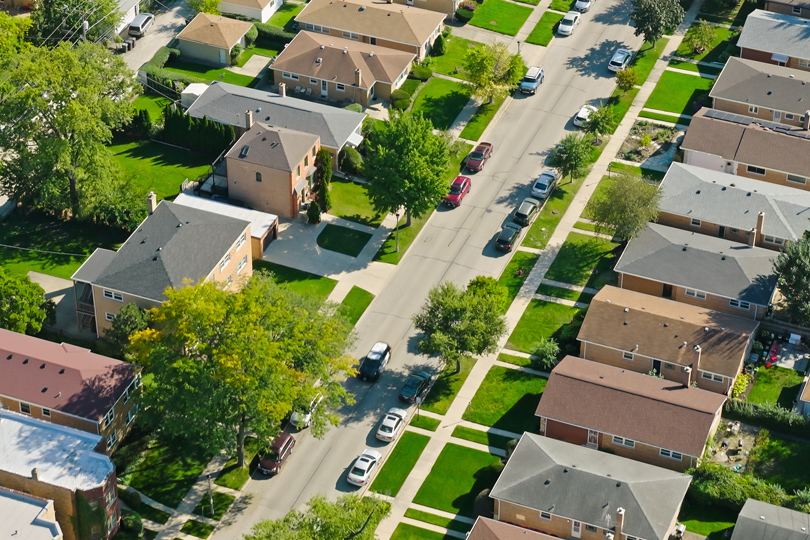
Rising Inventory Meets Strong Seller Demand

As the 2nd largest county in the United States, Cook County, Illinois, is heavily synonymous with the Chicago housing market as we look at the early 2025 dynamic and robust activity, marked by rising inventory, competitive pricing, and relatively quick sales.

Inventory Growth and Bedroom Type Dynamics

April 2025 saw a notable increase in housing inventory across all bedroom categories. The total number of homes available rose by 11.7% month-over-month, from 3,828 in March to 4,277 in April. Breaking it down by bedroom count:

  • 1-bedroom homes increased by 22.6%
  • 2-bedroom homes rose by 18.3%
  • 3-bedroom homes grew by 18.8%
  • 4-bedroom homes jumped by 22.4%
  • 5+ bedroom homes climbed by 20.2%

This broad-based inventory growth suggests a strengthening supply that could offer more choices to buyers across different household sizes.

Pricing and Sales Trends

Homes are commanding strong prices, with a median sale price around $337,000 as of February 2025, reflecting an 8.8% increase year-over-year. The median price per square foot also rose by 6.4% to approximately $239, indicating solid value appreciation.

Interestingly, the market remains highly competitive:

  • 42.3% of homes sold above asking price last month
  • 16% sold at asking price
  • 41% sold below asking price

This distribution highlights a seller’s market environment where bidding wars are common, especially for well-priced properties.

Speed of Sales and Market Activity

Sellers are selling homes quickly due to rising demand. In April 2025, 75% of homes sold within 30 days, with only 9% taking longer than 90 days to sell. The average listing age has slightly decreased year-over-year to 29 days, down 2%, underscoring brisk market activity and buyer urgency.

The Market Action Index, a proprietary Altos Research metric that measures the balance between supply and demand, remains steady at 49, indicating a strong seller’s market. Inventory levels are rising. However, sellers continue to list homes quickly due to strong demand.

Property Value Assessments and Long-Term Trends

Cook County’s 2025 property assessments reveal a 6.2% average increase in property values, continuing a multi-year trend of rising valuations up 86% since 2019. While this year’s increase is more moderate than 2024’s, it reflects ongoing market strength. Some properties, particularly subdivided parcels and certain condos, have seen dramatic value jumps of over 100%, with some townhomes doubling in value within a year. Needless to say, these tax burdens are serious detractors for purchasers who can find competing properties with lower overall monthly costs of ownership.

In speaking with Todd last week about his premium condo, due to the building’s location in the South Loop, age of the building that drove up assessments (older and therefore higher assessments per square foot than new buildings), and property taxes, they’ve struggled to sell after a year as the combination of $40,000 in annual assessments and $40,000 in property taxes has scared off multiple buyers.  This is NOT an isolated story.  Continued growth in property taxes burdens property owners, and they seek out cost-effective alternatives, such as moving further away or leaving Illinois altogether.

Regional and Statewide Context

Looking beyond Cook County, the Chicago metropolitan area and Illinois at large are experiencing similar trends of rising prices and steady sales activity. The Chicago Metro Area saw home prices increase by 7.5% year-over-year in February 2025, with sales expected to rise seasonally by 2.6% from March to May. The City of Chicago itself is experiencing a 6.3% price increase but a slight decline in sales volume, reflecting localized market variations.

Summary for Buyers and Sellers

For Buyers: Expect a competitive market with many homes selling above asking price and within a month. Acting quickly and being prepared to negotiate above the list price can be crucial.

For Sellers: The market favors you with rising prices, strong demand, and relatively low inventory. Pricing your home strategically can attract multiple offers and quick sales.

Rising inventory creates opportunities for buyers and sellers across different regions. For instance, buyers can explore more options while sellers still benefit from high demand. This creates opportunities for both buyers and sellers across various regions. Want to see what $1 million can buy today? Check out our Housing Market 2025 post. It shows examples across cities and property types..

For authoritative data on market trends, visit the National Association of Realtors to see the latest insights.

Want expert guidance on navigating this market? Contact us today, and our team will help you make informed real estate decisions.

Don’t forget to follow us on Facebook, Instagram, and X for updates, tips, and real estate news you can trust!

NEWSLETTER

Knowing a property's true value is key
to making informed real estate decisions

Visit us

7383 Lincoln Ave Suite,
#100 Lincolnwood, IL, 60712