Tag: sales comparison approach

Request a quote

Our blog

Latest news
& events

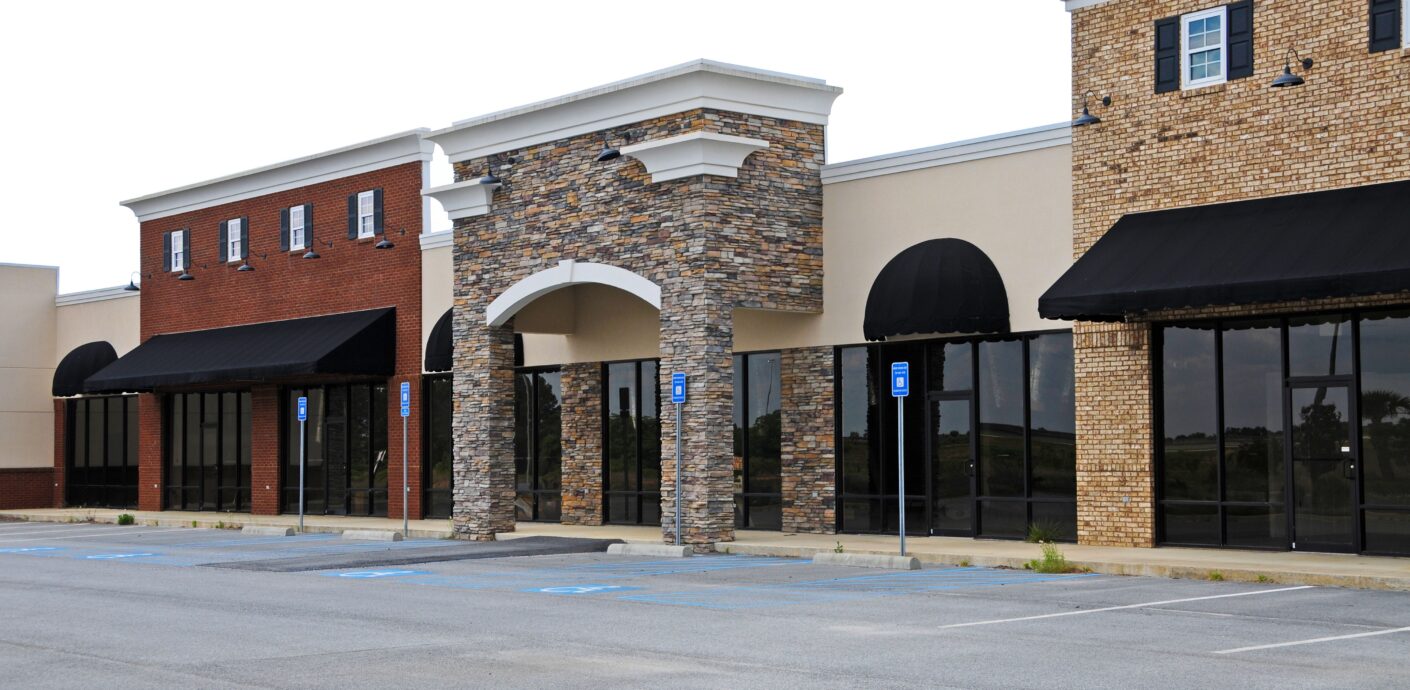
Newly built commercial property valued through a cost approach commercial appraisal
The Sales Comparison and Cost Approaches in Commercial Appraisal

Two of the three approaches to value get less attention than they deserve. The income approach dominates most commercial reports, so brokers and lenders tend to skim the rest. That is a mistake on the wrong property. A cost approach commercial appraisal is often the only credible path to value on a new building or a special-use facility. And the sales comparison approach tells you whether a buyer’s likely price lines up with what the income says. So here is how each one works, when it leads, and what to check when you read one.

By the end of this article, you’ll know:

  • How the sales comparison approach is adapted for commercial property with thin data
  • What a cost approach actually adds up, and how depreciation is measured
  • When each approach should carry the weight, and how to check that it does

How the Sales Comparison Approach Works for Commercial Property

The sales comparison approach values a property by what similar properties sold for, adjusted for the differences. Residential appraisers usually have several nearby sales from the last few months to work with. Commercial appraisers rarely have that luxury. A submarket may produce four flex-industrial sales in two years, and none of them is a twin of the subject.

So the method bends to fit the data. The search area widens, sometimes to the whole metro. The time window stretches too. Then a market conditions adjustment has to account for price movement between the comparable’s sale and the effective date. The unit of comparison also changes with the property type: price per square foot for industrial and office, price per unit for apartments, price per net rentable square foot for self-storage, price per key for hotels.

Adjustments are where the work lives. Location, size, age and condition, construction quality, ceiling height, loading, parking ratio, and lease status all get weighed. Where possible, paired sales or market participants support each adjustment, not the appraiser’s instinct. A grid of round-number adjustments with nothing behind them is the first thing a reviewer questions. Our overview of the three approaches to value covers how they fit together. This piece goes deeper on the two that get skipped.

One more commercial wrinkle. A sale of a leased building reflects the leases, not just the bricks. A comparable with a credit tenant on a ten-year lease is not the same as a vacant building of the same size. So the appraiser has to know the terms of each sale. Confirming them with a broker or a principal is part of the job, not a courtesy.

What a Cost Approach Commercial Appraisal Adds Up

The cost approach asks a simple question. What would it cost to buy the land and build this property new today, less the value the existing building has lost? The formula runs: site value, plus replacement cost new, plus entrepreneurial incentive, minus accrued depreciation.

Site value comes from land sales, so the cost approach starts with its own small sales comparison analysis. Replacement cost new is the cost to build a modern equivalent with the same utility, not an exact copy. That distinction matters on older buildings. Reproducing a 1920s masonry warehouse with its original details would cost far more than replacing its function with a tilt-up box. Buyers pay for function. Cost figures come from published cost services, contractor bids, and recent local projects. They cover direct costs such as labor and materials, plus indirect costs such as architecture, permits, financing, and lease-up.

Entrepreneurial incentive is the profit a developer would need to take on the project. Leaving it out understates cost. Including it without market support overstates it. Either way, it should be visible in the report, not buried.

The Uniform Standards of Professional Appraisal Practice require a developed cost approach to address site value, cost new, and accrued depreciation. That last item is where most of the judgment sits.

How Depreciation Is Measured

Depreciation in an appraisal is not the tax schedule. It is the gap between what the building would cost new and what it contributes to value today. It comes in three forms.

Physical deterioration is wear. Roofs age, parking lots crack, mechanical systems reach the end of their lives. Some of it is curable, meaning the cost to fix is less than the value it adds back, and some is not. Functional obsolescence is a design problem. Think 14-foot clear height in a market that wants 32 feet, or too little power for modern loads. External obsolescence comes from outside the property line, such as rising submarket vacancy or a highway interchange that moved the traffic.

Appraisers measure depreciation several ways. The age-life method compares effective age to total economic life. Market extraction pulls depreciation out of actual sales. Subtract land value from the sale price, then compare what remains to cost new. Breakdown analysis prices each form of depreciation separately. On a new building the number is small and easy to support. On a 45-year-old building it can exceed half of cost new. The further the estimate has to reach, the less weight the approach deserves.

A Worked Example on an Industrial Building

Consider a 36,000 square foot warehouse, twelve years old, in a stable industrial submarket. The cost approach might run like this:

  • Site value from land sales: $900,000
  • Replacement cost new, including indirect costs and entrepreneurial incentive: $4,200,000
  • Less accrued depreciation at 30 percent: $1,260,000
  • Depreciated cost of improvements: $2,940,000
  • Indicated value by the cost approach: $3,840,000

Now the sales comparison approach. Four metro warehouse sales, adjusted for location, age, clear height, and market conditions, bracket $98 to $112 per square foot. The appraiser reconciles to $105 per square foot, which indicates $3,780,000.

The two approaches land within two percent of each other. That agreement is itself evidence. When the approaches disagree by 20 percent, something is wrong with an input, and the reconciliation should say which one.

When There Are No Comps

Some properties have almost no market. A fire station, a school, a church, or a purpose-built manufacturing plant may trade once in a generation, and often not as the same use. These are special-use properties. Income struggles because there is no rental market. Sales comparison struggles because there are no sales. Cost is usually the only approach with real evidence behind it.

New construction is the other clear case. A building completed last year has minimal depreciation, current cost data, and a land value that can be supported. Lenders financing construction lean on cost for exactly that reason. Still, they expect it to reconcile against the completed value from the other approaches.

Cost also plays a quieter role on ordinary income property. When the income approach lands well below what it would cost to build, new supply is not feasible at current rents. That gap tells a lender something about competitive risk. It tells a broker something about how long existing stock will hold its pricing. An appraiser who develops cost even when it does not lead is giving you that signal for free.

Where Each Approach Earns Its Weight

On a stabilized multi-tenant building, income leads and sales comparison supports it. On an owner-occupied building with an active market, sales comparison may lead. Owner-user buyers think in price per square foot, not cap rate. On a special-use facility or a building still in its first year, cost leads. Our piece on what drives office building value shows the income-led case in detail.

The weighting is a judgment the appraiser has to explain. A report that develops all three approaches and then averages them has not reconciled anything. A report that leans on one approach should say why its evidence is stronger. Read the reconciliation with that question in mind, and you will know quickly whether the report was built or assembled.

Ask Which Approach Carried the Weight, and Why

Before relying on a commercial value, find the reconciliation and check three things. First, was the leading approach the right one for this property type and its data? Second, do the sales adjustments and the depreciation estimate have market support the report actually shows? Third, do the approaches agree, and if not, is the gap explained? If any answer is no, the cover-page number rests on less than it appears to. So ask the appraiser. A good one will walk you through it.

Selling a Building With No Clean Comps?

PahRoo develops the sales comparison and cost approaches with the support shown, so brokers can price with confidence and lenders can see the evidence.

Scope a Commercial Appraisal

Frequently Asked Questions

When is the cost approach used in commercial appraisal?

It leads on new or nearly new buildings, where depreciation is small and costs are current, and on special-use properties such as schools, churches, and purpose-built plants that have few or no comparable sales. On ordinary income property it usually supports the conclusion and serves as a feasibility check against the income approach.

How does the sales comparison approach work for commercial property?

The appraiser locates sales of similar properties, confirms the terms of each sale, and adjusts for differences in location, size, age, condition, lease status, and market conditions. Because commercial sales are scarce, the search often covers a wider area and a longer time period, and the unit of comparison changes by property type.

Why is the cost approach used for special-use property?

Special-use properties rarely sell and rarely rent, so the sales comparison and income approaches have little evidence to work with. The cost approach can still be developed from land sales, current construction costs, and a supported estimate of depreciation, which makes it the most credible path to value for those properties.

How is depreciation measured in a commercial appraisal?

Appraisal depreciation is the gap between cost new and the building’s current contribution to value. It includes physical deterioration, functional obsolescence, and external obsolescence. Appraisers estimate it through the age-life method, market extraction from actual sales, or a breakdown of each form, and the estimate should be supported in the report.

Are there enough comps for commercial property?

Often not many. A submarket may produce only a handful of relevant sales over two years. Appraisers widen the geography, extend the time window, and adjust for market conditions to compensate. When comparable sales are too thin to support a conclusion, the report should say so and lean on the cost or income approach instead.

Sales, Cost, and Income Analysis From One Appraisal Team

PahRoo Appraisal & Consultancy develops all three approaches to value on commercial assignments across Chicago and Cook County, Dallas-Fort Worth, Philadelphia, Phoenix, and Naples, from single-tenant industrial to special-use facilities. Our commercial appraisal services page covers scope and property types, our guide to net operating income explains the income side, and you can contact our team or call 773-388-0003 to discuss a specific property.
Mid-rise commercial building evaluated using the three approaches to value
Three Approaches to Value in a Commercial Appraisal

A commercial appraisal report can run sixty pages or more. Somewhere inside it sit the three approaches to value. Lenders often skim past them. Borrowers rarely read them at all. But those three sections carry the whole argument behind the number on the cover page.

By the end of this article, you’ll know:

  • What the sales comparison, cost, and income approaches each measure
  • Why an appraiser might omit one, and what that omission tells you
  • How reconciliation turns three indications into one opinion of value

What the Three Approaches to Value Actually Are

Appraisal practice rests on three ways of looking at the same building. The sales comparison approach asks what similar properties sold for. The cost approach asks what it would cost to build the property today, less depreciation, plus the land. The income approach asks what the property earns, and what an investor would pay for that income.

None of the three is decorative. Federal banking regulators expect each one to be considered. The Interagency Appraisal and Evaluation Guidelines state that an appraisal must include any approach that is applicable and necessary to the assignment, and that the appraiser should disclose the rationale for omitting one. So a missing approach is not a shortcut. It is a judgment the appraiser has to defend in writing.

The Sales Comparison Approach: What Similar Buildings Sold For

This one feels familiar because it is how residential work is usually done. The appraiser finds recent sales of comparable properties, then adjusts them for differences in location, size, age, condition, and terms of sale.

Commercial work makes that harder. There may be four warehouse sales in a submarket over two years, not forty. So the appraiser widens the search area, reaches further back in time, and adjusts more heavily. The unit of comparison changes by property type too. Industrial and office usually trade on price per square foot. Apartments often trade on price per unit. Self-storage trades on price per door.

When good sales exist, this approach carries real weight because it reflects what buyers actually paid. When they do not exist, the appraiser says so and leans elsewhere. Our commercial appraisal services cover office, retail, industrial, mixed-use, and special-purpose assignments, and the comparable pool looks different in every one.

The Cost Approach: What It Would Take to Build It Again

The cost approach starts with land value, adds the cost to construct the improvements new, then subtracts depreciation. Depreciation comes in three forms: physical wear, functional problems such as a bad floor plan or low ceiling height, and external factors such as a declining submarket.

This approach does its best work on new or nearly new buildings, where depreciation is small and easy to support. It also earns its keep on special-purpose property. A fire station, a church, a school, or a wastewater plant may have almost no comparable sales and no rental market. Cost may be the only credible path to value.

On a forty-year-old office building, the picture is different. Estimating depreciation across four decades involves a great deal of judgment, so the cost approach usually supports the conclusion rather than driving it.

The Income Approach: What the Property Earns

For income-producing property, this is normally the main event. Buyers of an apartment building or a leased industrial box are buying a cash flow. The appraisal should reflect that.

There are two common methods. Direct capitalization divides one year of stabilized net operating income by a market-derived capitalization rate. Discounted cash flow projects income over a holding period, then discounts it back to present value. Direct capitalization suits stable, leased property. Discounted cash flow suits property with lease rollover, a lease-up period, or step rents that change the income pattern over time.

Either way, the analysis is only as good as the inputs. The rent roll, the operating expenses, the vacancy assumption, and the rate all have to be supported by market evidence rather than by the owner’s optimism.

Reconciliation Is a Judgment, Not an Average

At the end of a commercial appraisal, three approaches may produce three different numbers. The appraiser does not average them. Averaging would treat weak data and strong data as equals.

Instead the appraiser reconciles. That means weighing the quantity and quality of evidence behind each indication, then explaining which approach carries the most weight and why. On a stabilized multi-tenant building, the income approach usually leads. On a newly built special-use facility, the cost approach may lead. On owner-occupied space in an active market, sales comparison may lead.

If you read only one part of a commercial appraisal, read the reconciliation. It tells you what the appraiser trusted, what the appraiser discounted, and how much support sits behind the final number. A reconciliation that simply asserts a conclusion without explaining the weighting is a fair thing to question.

Need a Commercial Appraisal That Shows Its Work?

PahRoo delivers commercial appraisals with the reasoning visible, so lenders, owners, and counsel can see exactly how the value was reached.

Request a Commercial Quote

Frequently Asked Questions

What are the three approaches to value?

The sales comparison approach, the cost approach, and the income approach. Sales comparison looks at what similar properties sold for. Cost looks at what it would take to build the property new, less depreciation, plus land. Income looks at what the property earns and what an investor would pay for that income.

Which approach matters most for commercial property?

For income-producing property such as apartments, offices, retail, and leased industrial, the income approach usually carries the most weight. For special-purpose property with few comparable sales, the cost approach often leads. The appraiser explains the weighting in the reconciliation.

When is the cost approach used in a commercial appraisal?

It is most useful for new or nearly new construction, where depreciation is small, and for special-purpose properties such as schools, churches, and utility facilities that have almost no sales or rental market. On older income property it usually supports the conclusion rather than driving it.

How do appraisers reconcile the three approaches?

They weigh the quantity and quality of evidence behind each indication of value, then explain which approach deserves the most weight for that property and assignment. Reconciliation is a reasoned judgment, not a mathematical average of the three numbers.

Can an appraiser use only one approach to value?

Yes, when the others are not applicable or necessary, but the appraiser must disclose the reasoning for leaving them out. Federal appraisal guidance expects any applicable approach to be developed, and expects an explanation whenever one is omitted.

Talk to an Appraiser Who Will Explain the Reconciliation

PahRoo Appraisal & Consultancy has appraised commercial property across Chicago and Cook County for more than two decades, along with Dallas-Fort Worth, Philadelphia, Phoenix, and Naples. Our commercial assignments run from single-tenant industrial to mixed-use and special-purpose property, and every report explains how the approaches were weighed. You can review our full real estate appraisal services, read common questions on our appraisal FAQ page, or call 773-388-0003 to discuss an assignment.


Appraiser comparing unlike homes to find comparable sales
How Appraisers Compare Homes That Aren’t Alike

No two homes are the same, yet every appraisal has to land on one number. So how appraisers compare homes that are not alike is less mystery than method. Appraisers call the method the sales comparison approach. It runs on two moves: picking the right comparable sales, then adjusting for the differences that remain. Understand those two moves and most “why did it appraise there?” questions answer themselves.

By the end of this article, you’ll know:

  • How appraisers choose comps, and why the nearest sale can lose out.
  • How dollar adjustments work, including which property gets adjusted.
  • What happens when a home has no close matches at all.

Where Comps Come From

A comp is a recent sale a buyer would have weighed against the subject home. Three filters do most of the sorting. Recency comes first, because last year’s market is not this year’s market. Location comes next, and it means market area, not just distance. Then comes similarity: style, size, age, condition, and lot.

Chicago makes this interesting. A brick bungalow, a frame two-flat, and a new infill build can share one block. Still, they belong to three different buyer pools. So an appraiser may skip the sale next door. Instead, the right comp may sit three streets away, in front of the same buyer pool. That choice is not cherry-picking. It is the whole point of the exercise.

Sources matter here too. Appraisers pull closed sales from the MLS and public records, then verify the details that photos hide. A sale with seller credits, or an off-market deal between relatives, can look like a comp and behave like a trap. For instance, a $400,000 sale with $15,000 in concessions did not really trade at $400,000. So verification keeps those numbers from skewing the comparison.

How Appraisers Compare Homes That Differ

Once the comps are chosen, differences remain. Adjustments translate those differences into dollars. Here is the part most people get backwards: the adjustment lands on the comparable, not on the subject. The question is always the same. What would this comp have sold for if it matched the subject?

A quick illustration shows the direction. Say a comp sold for $420,000 with a renovated kitchen, and the subject’s kitchen is original. The comp’s buyer paid something for that kitchen. So the appraiser adjusts the comp’s price downward to strip that advantage out. If the subject instead has the better feature, the comp adjusts upward. Run that logic across every meaningful difference and each comp produces an indicated value for the subject. The appraiser then weighs those indications, leaning hardest on the comps that needed the least adjusting.

What Moves the Number Most

Not every difference earns an adjustment. Appraisers adjust for what the market pays for, and the market is not sentimental. Location factors like school boundaries, transit, and busy streets tend to matter. So do livable square footage, bed and bath count, condition, and functional layout. Meanwhile, the $60,000 kitchen does not automatically return $60,000. We cover why in our guide to which property updates add value. Cost and value are different numbers, and adjustments track the second one.

Support for each adjustment matters too. Appraisers extract adjustment amounts from the market itself, by comparing sales that differ in just one feature. That discipline separates an appraisal from an estimate. Also, it is the standard that professional bodies like the Appraisal Institute train and credential for.

When There Is No Good Comp

Some homes break the easy version of the method. A rehabbed loft in a neighborhood of frame houses. The one oversized lot on the block. A home twice the size of anything nearby. For these, the appraiser widens the search in geography and in time. Then the goal is bracketing: at least one comp superior, at least one inferior. So the value lands inside a defensible range instead of hanging off one data point.

This is also where automated estimates struggle most, because an algorithm cannot tell which unlike homes are still comparable. We covered that gap in detail in our Zestimate versus appraisal breakdown. The harder the property is to match, the more the value depends on judgment. That judgment is exactly what you are hiring.

Comparison Is a Method, Not a Guess

So the answer to the question in the title comes down to this. Appraisers compare unlike homes in three steps. First, they select the sales a real buyer would have considered. Then they adjust those sales for measurable differences. Finally, they weigh the results by how much adjusting each comp needed. Every step leaves a paper trail. That is why a credible appraiser can explain the report line by line. So a number nobody can explain should make you ask better questions. For residential appraisals across Chicagoland, that paper trail is the product.

Two homes, same block, $40,000 apart. Why?

Get a valuation built on the right comparables, with every adjustment explained.

Request My Appraisal Quote

Frequently Asked Questions

How do appraisers pick which homes to use as comps?

By asking which recent sales a buyer would have treated as real alternatives to the subject home. Recency, market area, and similarity in style, size, age, and condition drive the choice. The appraiser skips the nearest sale when it belongs to a different buyer pool.

What is an appraisal adjustment?

A dollar amount that accounts for one difference between a comp and the subject property. Condition, square footage, and lot size are typical examples. Appraisers extract adjustments from market evidence rather than a chart.

Does the appraiser adjust my home or the comparable?

The comparable. Each comp’s sale price gets adjusted to answer one question. What would it have sold for if it matched your home? If the comp has the better feature, its price adjusts down. If your home has the better feature, the comp adjusts up.

What happens if no similar homes have sold nearby?

The appraiser widens the search area and the time window. Then the subject gets bracketed with at least one superior and one inferior comp, so the value sits inside a supported range. Unusual properties take more work, not less accuracy.

Will a renovated kitchen raise my appraisal by what it cost?

Usually not dollar for dollar. Adjustments reflect what buyers in your market actually pay for the feature. That can be more or less than its cost. Cost and market value are related but different numbers.

Appraisals Grounded in the Right Comparables

PahRoo Appraisal & Consultancy appraises residential and commercial property across Chicagoland, with offices serving Dallas, Philadelphia, Phoenix, and Naples. An appraiser holding both MAI and SRA designations leads the firm. Every report documents the comps chosen, the adjustments made, and the evidence behind them.


NEWSLETTER

Knowing a property's true value is key
to making informed real estate decisions

Visit us

7383 Lincoln Ave Suite,
#100 Lincolnwood, IL, 60712