Tag: commercial appraisal

Request a quote

Our blog

Latest news
& events

Brick courtyard apartment building in Chicago, the subject of a multifamily appraisal
The Rent Roll Is Where Apartment Value Lives

A multifamily appraisal lands on a lender’s desk with one number on the cover and forty pages behind it. But those pages matter more than the number. An apartment building sells for its rents, so the appraisal stands or falls on the rent roll, the expenses, and the cap rate. If you underwrite apartment loans, those are the pages to read first.

By the end of this article, you’ll know:

  • How a multifamily appraisal turns a rent roll into value.
  • Which rent roll and expense details deserve a second look in the report.
  • What owners can prepare so a refinance appraisal holds up.

How a Multifamily Appraisal Values an Apartment Building

Apartment buildings trade on income, so the income approach carries the most weight. The appraiser estimates what the building should earn in a typical year. Then the cost to run it comes off, and the result converts into value. The sales comparison approach checks that answer against recent apartment sales, usually on a price per unit basis. The cost approach rarely drives the number on an existing building, though it can matter on new construction.

Unit count changes the paperwork too. Under the OCC’s appraisal rule for national banks, a transaction not secured by a single 1-to-4 family residential property counts as a commercial real estate transaction. So a five-unit building falls on the commercial side. The same rule calls for a State certified appraiser on federally related commercial transactions over $500,000. Two- to four-unit buildings still go on the residential Fannie Mae Form 1025, where the income approach is a simple gross rent multiplier. At five units and up, the work usually moves to a full commercial income analysis instead.

The Rent Roll Comes First

The rent roll lists every unit in the building and what each one pays. A usable one shows unit number, unit type, tenant, lease start and end, contract rent, and any concession. It should also flag vacant units, down units, and units set aside for staff. The appraiser checks it against the leases and the trailing twelve months of operating statements. In many assignments, bank deposits get checked too.

Then contract rents get compared to market rents. If in-place rents sit well below market, the building has upside a buyer will pay for, but only with time and turnover. If rents sit above market, that extra income may not survive the next lease cycle. Concessions matter here as well. One free month on a 12-month lease cuts the effective rent by about 8.3 percent, and a rent roll showing only face rent hides that.

From Occupancy to Net Operating Income

Occupancy comes in two versions. Physical occupancy simply counts occupied units. Economic occupancy compares the rent actually collected against the rent the building could earn. A building can be 96 percent physically occupied and still collect far less because of concessions, delinquency, or below-market leases. So the appraiser applies a vacancy and collection loss based on the market and the building’s history, not just today’s snapshot.

Operating expenses get the same scrutiny. Property taxes, insurance, owner-paid utilities, repairs, payroll, management, and replacement reserves all come out before net operating income. Then appraisers usually test each line per unit against comparable buildings. An owner who self-manages still carries a market management fee in the analysis, because a buyer would pay one. We walked through the full build in our guide to net operating income in commercial real estate.

Cap Rate, Price Per Unit, and the Gross Rent Multiplier

Direct capitalization divides one year of stabilized NOI by a market cap rate. That rate should come from confirmed sales of similar apartment buildings, not a national survey. Our explainer on the cap rate in commercial real estate covers where those rates come from. For a building in lease-up or mid-renovation, the appraiser may run a discounted cash flow instead, as our income approach guide explains.

Consider a hypothetical 24-unit building averaging $1,650 a month per unit. That comes to $475,200 a year in potential rent. Add $14,400 in parking and laundry income, then take 5 percent for vacancy and collection loss. Effective gross income lands at $465,120. Subtract $6,800 per unit in expenses, including reserves, and NOI comes to $301,920. At a 6.75 percent cap rate, the indicated value is about $4,470,000, or roughly $186,000 per unit.

Now move the cap rate to 7.25 percent. Same building, same rents, and the value drops to about $4,160,000. Half a point cost more than $300,000. That is why the cap rate support deserves as much attention as the rent roll.

The gross rent multiplier is the quick check. It divides price by gross rent, so it skips expenses entirely. Here, $4,470,000 over $475,200 in annual rent is about 9.4. If similar buildings nearby traded closer to 8 times rent, the appraiser has some explaining to do.

What Lenders Should Check Before Relying on the Number

A lender does not need to redo the appraisal. But a handful of checks catch most problems.

  • Rent roll date. It should sit close to the effective date, and the unit count should match the building.
  • Contract versus market rent. The report should show both and say which one drives the income.
  • Concessions and delinquency. Look for the adjustment, not just the face rents.
  • Expense support. Per-unit expense comparables, a market management fee, and reserves.
  • Cap rate support. Confirmed apartment sales in the same submarket, with the income extracted for each.
  • As is versus as stabilized. If the report gives both, know which one your loan depends on.

The OCC rule also expects appraisals to analyze and report deductions for partially leased buildings and non-market lease terms. That applies directly to a building mid-turnover or full of below-market leases. If the report skips it, ask why.

Where the Apartment Market Sits Right Now

Market data sets the backdrop for those assumptions. CBRE’s Q2 2026 multifamily figures put national vacancy at 4.3 percent, with average rent at $2,257 a month. Net absorption also beat new completions for a second straight quarter. In its release, CBRE said the Midwest led the country in annual rent growth at 2 percent.

Chicago looks tighter than most. Cushman & Wakefield’s Chicago MarketBeat reported 94.9 percent occupancy in Q2 2026, above the 10-year average of 93.8 percent. Effective rents rose 3.2 percent year over year. Still, a metro average does not appraise a 24-unit walk-up in Rogers Park. Instead, the submarket, the building’s condition, and its actual leases decide that.

For Owners: Get the File Ready Before the Appraiser Calls

If you own the building and a refinance is coming, most appraisal delays trace back to missing paperwork. So pull these together before the lender orders the report.

  • A current, dated rent roll with concessions and vacant or down units marked.
  • The trailing 12 months of income and expenses, plus the two prior calendar years.
  • Copies of the leases, or at least a sample, plus any commercial leases in the building.
  • Recent tax bills, the insurance declarations page, and the utility bills you pay.
  • A dated list of capital work, such as roofs, boilers, and unit renovations, with what each cost.

Then reconcile the rent roll to your bank deposits yourself. If they don’t match, the appraiser will find it, and the explanation takes longer later than now. Don’t annualize your best month either. Appraisers work from the trailing twelve months and the market, so an optimistic pro forma won’t carry the value. A clean file won’t raise the number. Still, it keeps an appraiser from discounting the number for uncertainty.

Underwrite the Rent Roll, Not the Offering Memo

An offering memo shows the building at its best. A credible multifamily appraisal shows it the way a typical buyer would see it, with market rents, real expenses, and a cap rate taken from actual sales. So read the rent roll analysis before the value on the cover. If the income holds up there, the number usually does too.

Underwriting an Apartment Loan This Quarter?

PahRoo appraises apartment buildings from the rent roll up, with market rent, expense, and cap rate support your credit team can check line by line.

Request a Multifamily Appraisal Quote

Frequently Asked Questions

How are apartment buildings appraised?

Mainly through the income approach. The appraiser analyzes the rent roll and operating statements, estimates market rent, vacancy, and expenses, and converts net operating income into value with a cap rate drawn from comparable sales. Price per unit and gross rent multiplier comparisons from recent apartment sales serve as a check.

What is a rent roll?

A unit-by-unit list of a building’s tenants and rents. It typically shows unit number and type, tenant, lease start and end dates, contract rent, concessions, and which units are vacant. Appraisers compare it against the leases and operating statements before relying on it.

How does NOI work for multifamily?

Net operating income is effective gross income minus operating expenses. For an apartment building, that means potential rent plus other income such as parking or laundry, less vacancy and collection loss, less taxes, insurance, owner-paid utilities, repairs, payroll, management, and reserves. Debt service is not deducted.

What is a gross rent multiplier?

The ratio of a property’s sale price to its gross rent. Fannie Mae’s Form 1025 for two- to four-unit properties multiplies gross monthly rent by a GRM to indicate value. For larger apartment buildings it works mainly as a quick check on the full income analysis, since it ignores expenses.

How many units make a property commercial?

Under federal bank appraisal rules, a loan secured by anything other than a single one-to-four family residential property counts as a commercial real estate transaction, so five units and up falls on the commercial side. Two- to four-unit properties usually go on residential appraisal forms. Individual lenders may draw their own lines for specific loan programs.

Multifamily Valuation for Lenders and Owners

Every apartment assignment at PahRoo Appraisal & Consultancy starts with the rent roll, across Chicago and Cook County, Dallas-Fort Worth, Philadelphia, Phoenix, and Naples. Our commercial appraisal services page lists the property types we cover. For local scope and timing questions, start with our Chicago appraisal services page.


Modern distribution center with loading docks, subject of an industrial property appraisal
What Your Warehouse’s Walls Are Really Hiding

An industrial property appraisal comes down to a simple question. How fast can product move through this building, and how much space does it hold while doing it? Curb appeal barely matters here. A plain concrete box with the right clear height and enough dock doors can out-value a prettier building down the street. Instead, the reason sits in the numbers behind the walls.

By the end of this article, you’ll know:

  • The five factors that carry the most weight in an industrial valuation.
  • Why clear height and dock ratios move value more than square footage alone.
  • What is fueling warehouse and logistics demand right now, and what it means for your number.

What an Industrial Property Appraisal Weighs Most

Five factors do most of the work in an industrial valuation.

  • Location inside the logistics network. Proximity to highways, intermodal rail, and the labor pool that staffs the building.
  • Clear height and functional layout. How much usable cubic space the building offers, not just its footprint.
  • Loading and circulation. Dock door count, trailer parking, and truck court depth relative to building size.
  • Tenant credit and lease structure. Who is paying rent, on what terms, and for how long.
  • Building age and systems. Power capacity, sprinkler class, and the capital needed to bring the space current.

Most industrial buildings, in practice, get valued through a blend of two approaches. Leased distribution centers and multi-tenant parks lean on the income approach. A buyer there is purchasing the rent stream, not just the shell. Owner-user buildings lean harder on the sales comparison approach instead. Appraisers weigh those sales against similar buildings in the same size and height class. The cost approach plays a supporting role too, mostly on newer or purpose-built facilities. Our commercial appraisal services also cover all three, across office, retail, and industrial property.

Income, NOI, and the Cap Rate Behind the Number

For leased industrial, the rent roll gets read closely. Contract rents get compared against market rents. Expirations then get mapped across the holding period, and the reimbursement structure gets checked line by line. Industrial leases run triple net far more often than office leases do. The tenant typically covers taxes, insurance, and most maintenance instead of the landlord. So that keeps the landlord’s expense load lighter, and the income more predictable. That predictability is part of why industrial has held cap rates tighter than office through the same rate cycle. We walked through how that income figure gets built in our guide to net operating income in commercial real estate. The same mechanics apply here. Tenant concentration still matters too. A single-tenant distribution building lives or dies with one renewal decision. So appraisers weigh that risk against the size of the rent check.

Clear Height, Docks, and the Physical Specs That Move Value

Clear height matters more than almost any other industrial spec. It is the unobstructed vertical space from the floor to the lowest hanging obstruction. That obstruction could be a joist, a light, or a sprinkler head. Still, older buildings across the Chicago market commonly top out around 24 to 28 feet. Modern Class A distribution space runs 32 to 36 feet instead. Large e-commerce fulfillment buildings increasingly push past 40 feet to support automated storage systems. That gap is not cosmetic. Moving from a 30-foot to a 36-foot clear height can add 10 to 25 percent of usable storage capacity. It does that without adding a single square foot to the building’s footprint. So appraisers price that extra cubic space directly into value.

Dock doors, trailer parking ratio, and column spacing round out the physical picture. A building with too few docks for its size creates a bottleneck. That bottleneck shows up as functional obsolescence in the appraisal. It happens even when the square footage checks every box on paper. Brokers advising an owner ahead of a listing can get ahead of this instead of explaining it after the fact. Pull the actual clear height and dock count before setting an asking price. Then anchor the comp set to buildings in the same height class, not the metro average. An appraisal that lands under the listing price on an older building usually traces back to a spec gap, not a market swing. So flagging it early keeps the deal from stalling at the lender’s desk.

Why Logistics and E-commerce Demand Is Driving Industrial Value

Industrial has been a standout sector for years. The current data backs that up. According to CBRE’s Chicago Industrial Figures for the second quarter of 2026, the metro’s industrial availability rate fell to 8.6 percent. That is down 30 basis points from the prior quarter. Net average asking rents climbed to $9.30 per square foot, up 7.4 percent year over year. Net absorption jumped to 6.1 million square feet in the quarter. That is well ahead of the 1.1 million square feet absorbed in the first quarter. Another 11.8 million square feet remained under construction, split evenly between speculative and build-to-suit projects.

Nationally, CBRE’s second-quarter research reported the first decline in industrial vacancy since 2022. Demand broadened beyond third-party logistics providers too, as manufacturers picked up a larger share of leasing activity. E-commerce fulfillment, manufacturing reshoring, and tighter big-box supply are feeding the same story from different directions. For an appraisal, that shows up as stronger market rent growth assumptions. In many submarkets, cap rates have also held firmer than other property types through the same financing environment.

The Number Should Match the Building, Not the Market Average

A market average is only a backdrop. Still, it does not appraise your specific building. Two distribution centers half a mile apart can carry very different values. Clear height, dock ratio, and lease structure decide that, not the address. Before a sale, refinance, or partnership buyout, get a number built from the building’s actual specs and tenants instead. After all, a market headline is not a substitute.

Ready to Put a Real Number on Your Industrial Building?

PahRoo appraises warehouses, distribution centers, and manufacturing buildings across Chicago and Cook County, Dallas-Fort Worth, Philadelphia, Phoenix, and Naples.

Request a Commercial Appraisal Quote

Frequently Asked Questions

How is industrial property appraised?

Most industrial buildings are valued through a blend of the income approach and the sales comparison approach. Leased distribution centers rely mainly on income, built from the rent roll, market rents, and expenses. Owner-user buildings lean more on comparable sales of similar buildings in the same size and clear height class. The cost approach plays a supporting role, particularly on newer or purpose-built facilities.

What is clear height in a warehouse?

Clear height is the unobstructed vertical space from the floor to the lowest hanging obstruction. Common examples are a joist, a light, or a sprinkler head. Older industrial buildings often run 24 to 28 feet. Modern Class A distribution space commonly runs 32 to 36 feet, and large e-commerce fulfillment buildings increasingly reach 40 feet or more to support automated storage systems.

Why is industrial real estate in such high demand?

E-commerce fulfillment, reshoring of manufacturing, and a slowdown in new construction have kept demand ahead of supply in most markets. CBRE’s second-quarter 2026 research recorded the first national decline in industrial vacancy since 2022. Manufacturers also took a growing share of leasing activity alongside traditional logistics tenants.

What is a distribution center worth?

There is no single number that applies across a market. Value depends on the building’s clear height, dock doors, and trailer parking ratio. It also depends on tenant credit, lease term, and location relative to highways and rail. Two similar-sized buildings in the same submarket can carry very different values once those specs are compared.

How does location affect an industrial appraisal?

Proximity to highway interchanges, intermodal rail, and the local labor pool drives both achievable rent and buyer demand. Submarkets along major logistics corridors typically see tighter vacancy and stronger rent growth than the metro average. Appraisers weigh that submarket-level data rather than a single citywide figure.

Built From the Building, Not the Headlines

PahRoo Appraisal & Consultancy appraises commercial property across five markets. That also includes industrial, office, and retail, for owners, investors, brokers, and lenders. For a similar look at income mechanics in another property type, see our office building breakdown of what drives the value of an office building. Or start with our Chicago appraisal services page for scope and timing questions.

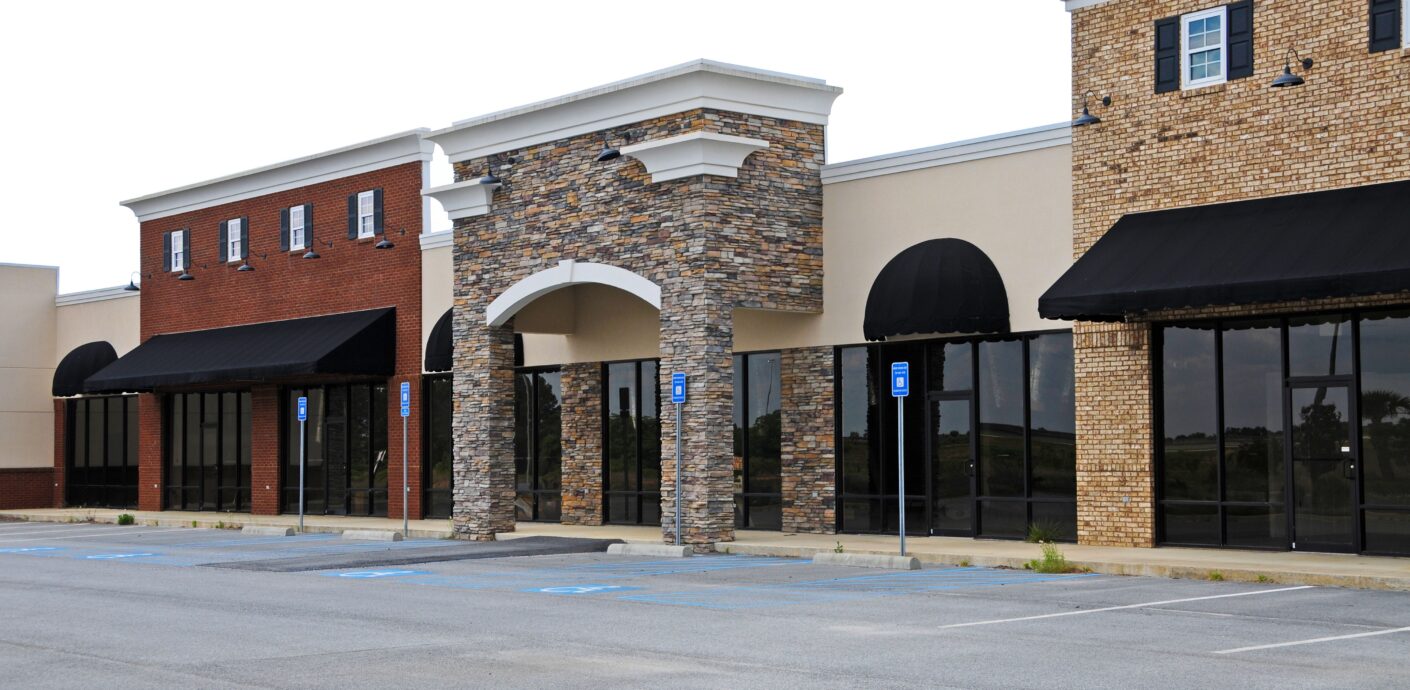
Neighborhood strip center with grocery anchor and inline shops, the subject of a retail property appraisal
Retail Property Appraisal and What Moves the Value

Two strip centers on the same road, same size, same age, same asking price. One is worth 15 percent more than the other, and nothing about the buildings explains why. The leases do. A retail property appraisal spends less time on the roof and the parking lot than brokers expect. It spends far more on who signed the leases, how long they run, and what happens to the rent when they end. So here is how location, tenants, and lease terms each move the number.

By the end of this article, you’ll know:

  • How trade area, access, and co-tenants set the ceiling on retail rent
  • Why tenant credit and tenant category can move a cap rate more than the building does
  • What a rent roll and lease abstract have to show before the appraisal can start

Location Sets the Ceiling

Retail rent is a function of what a tenant can sell from that spot. So the appraiser starts outside the property line. The trade area is the geography a center actually draws from. That may be a one-mile ring for a grocery-anchored neighborhood center, or a 20-minute drive for a destination power center. Population, household income, and daytime employment inside that area tell the appraiser what rent the market can bear. Then traffic counts, visibility, and access decide whether a tenant can capture it.

Co-tenancy matters almost as much as the corner. An inline space next to a strong grocer rents for more than the same space next to a vacant box. The grocer brings the cars. Anchors, shadow anchors across the street, and out-parcel pads all shape the rent an inline tenant will pay. So when the appraiser selects rent comparables, the first filter is not square footage. It is whether the comparable center has the same kind of draw.

Tenants Set the Cap Rate

Once the rent is established, the question shifts to how reliable it is. Two centers with the same net operating income can trade at very different prices. A buyer pays more for income that is likely to arrive. A national credit tenant on a long lease is income a buyer can underwrite. A first-year local operator is a bet. The appraiser reflects that difference in the capitalization rate. In practice, the spread between a credit-anchored center and a local-tenant center can be wider than the spread between a new building and an old one.

Tenant category matters too, and the national numbers show why. The Census Bureau’s July 2026 retail sales release put total retail and food services sales up 5.0 percent from a year earlier. Underneath that headline, nonstore retailers were up 7.7 percent and restaurants and bars were up 5.0 percent. Furniture stores were down 1.2 percent. So a center full of restaurants and service tenants is riding a different current than a center full of furniture showrooms. The appraiser’s vacancy and credit loss assumptions should say so.

Where tenant sales are available, the occupancy cost ratio is the health check. Rent plus recoveries, divided by sales, tells the appraiser whether a tenant can afford its lease. A tenant paying more of its sales than its category can sustain is a renewal risk no matter what the lease says. Most appraisals do not get sales data, though. Then the appraiser leans on category trends and the tenant’s public reporting where it exists.

Lease Terms That Change the Number

This is the section that does the work, and the one most rent rolls are least prepared for. The lease structure comes first. Under a triple net lease, the tenant pays its share of taxes, insurance, and common area maintenance on top of base rent. So the landlord’s net income sits close to the base rent. Under a gross lease, the landlord absorbs those costs, and rising taxes come straight out of net operating income. A modified gross lease splits them. Two centers with identical base rents can have very different net income. That is why our guide to net operating income starts with the recovery structure.

Term and rollover come next. A center where 40 percent of the income expires within 24 months carries costs a fully leased center does not: downtime, tenant improvement allowances, and leasing commissions. The appraiser models those costs in the year they land. So a long-term rent roll and a short-term rent roll with the same current income do not support the same value under the income approach. Renewal options, and whether they are at fixed rent or market, sit inside the same analysis.

Then the clauses that brokers sometimes skip. A co-tenancy clause lets a tenant reduce rent or leave if an anchor goes dark or occupancy drops below a threshold. So one vacancy can cascade. An exclusive-use clause blocks the landlord from leasing to a competing use. That narrows the pool of replacement tenants. Rent escalations, percentage rent breakpoints, and caps on CAM recoveries all change the income stream. None of them show up on a one-page rent roll. All of them show up in value.

What a Retail Property Appraisal Needs From the Rent Roll

A usable rent roll lists every suite with tenant name, square footage, lease start and expiration, and current base rent. It also shows the escalation schedule, recovery structure, renewal options, and any abatement still running. Behind it, the appraiser needs lease abstracts or the leases themselves for anchors and any tenant over about ten percent of the income. Add the last two years of CAM reconciliations and operating statements. Vacant suites need asking rent and the date they went dark.

When that package is complete, the appraisal moves quickly and the conclusions are defensible. When it is missing, the appraiser fills gaps with market assumptions. Market assumptions rarely favor the seller. The same package is what the buyer’s lender will ask for. So assembling it once serves the listing, the appraisal, and the closing.

A Hypothetical Neighborhood Center

Consider a 25,000 square foot center: a 12,000 square foot grocer on a triple net lease with 11 years left, six inline tenants, and one 1,800 square foot vacancy. Net operating income is $504,000. Suppose the inline leases are staggered, with no more than one expiring in any year, and the grocer is a regional credit. An appraiser might support a 7.0 percent cap rate, indicating $7,200,000.

Now change one fact. Four of the six inline leases expire within 18 months, and two tenants are month-to-month. The grocer has a co-tenancy clause tied to inline occupancy. Same building, same income today. An appraiser might now support an 8.0 percent rate, landing near $6,300,000, and deduct lease-up costs on top. The gap is close to $900,000 before those deductions. Every dollar of it lives in the leases.

Where Owners Get Ahead of the Appraisal

For an owner planning a sale or a refinance, the highest-return work happens before the appraiser is engaged. Renew the tenants whose leases expire inside the next two years, even at a modest concession. Term is worth more than the last dollar of rent. Resolve open co-tenancy exposure by backfilling the space that triggers it. Finish the CAM reconciliations so recovery income is documented rather than estimated. And abstract every lease so the rollover schedule, options, and clauses sit in one place. Each step converts an assumption into a fact the appraiser can cite.

Read the Rent Roll Before You Read the Cap Rate

When a retail appraisal lands on your desk, skip the cover value and go to the rent roll analysis. Check that lease structures are identified suite by suite and the rollover schedule is laid out by year. Check that the anchors’ clauses are addressed by name. Then check that the cap rate reflects the tenants actually in the building, not a survey average. If those pieces are there, the value will hold up with the buyer’s lender. If they are not, the number is a guess with a decimal point. Our overview of the three approaches to value shows how the income analysis fits with the others. For retail, it is nearly always the one that decides.

Pricing a Center With Rollover on the Horizon?

PahRoo appraises retail property from the leases up, with rollover modeling and cap rate support a buyer’s lender will accept.

Request a Retail Appraisal Quote

Frequently Asked Questions

How is a retail property appraised?

Primarily through the income approach. The appraiser analyzes the rent roll and leases to establish net operating income, evaluates tenant credit and lease term to select a capitalization rate, and models lease-up costs for expiring or vacant space. Sales comparison serves as a check on the result, and location analysis of the trade area, traffic, and co-tenancy frames the rent the market will bear.

What is a triple net lease and why does it matter to value?

Under a triple net lease the tenant pays its share of property taxes, insurance, and common area maintenance in addition to base rent. The landlord’s net income is close to the base rent and is insulated from rising expenses. Under a gross lease the landlord absorbs those costs, so the same base rent produces lower net operating income and a lower value.

How does tenant credit affect the cap rate?

Buyers pay more for income they are confident will arrive, so a center anchored by a national or regional credit tenant on a long lease supports a lower capitalization rate than a center leased to local operators on short terms. The appraiser reflects that in the rate, and the spread between the two can move value more than the age or condition of the building.

What is a co-tenancy clause?

A lease provision that lets a tenant reduce rent or terminate if a named anchor closes or center occupancy falls below a set level. It means one vacancy can trigger others. An appraiser reads anchor and major tenant leases for these clauses and accounts for the exposure in the vacancy and credit loss analysis.

What does an appraiser need from the rent roll?

Every suite with tenant name, square footage, lease start and expiration, current base rent and escalations, recovery structure, renewal options, and any abatements still running. Behind the rent roll, the appraiser needs lease abstracts or full leases for anchors and major tenants, two years of operating statements, and the CAM reconciliations.

Retail Valuation From the Lease Up

Brokers, owners, and lenders across Chicago and Cook County, Dallas-Fort Worth, Philadelphia, Phoenix, and Naples engage PahRoo Appraisal & Consultancy for retail assignments from single-tenant pads to anchored centers. Our commercial appraisal services page lists the property types we cover, and our article on office building value drivers shows the same lease-first method applied to a different asset class. To discuss a retail property, contact our team.

Newly built commercial property valued through a cost approach commercial appraisal
The Sales Comparison and Cost Approaches in Commercial Appraisal

Two of the three approaches to value get less attention than they deserve. The income approach dominates most commercial reports, so brokers and lenders tend to skim the rest. That is a mistake on the wrong property. A cost approach commercial appraisal is often the only credible path to value on a new building or a special-use facility. And the sales comparison approach tells you whether a buyer’s likely price lines up with what the income says. So here is how each one works, when it leads, and what to check when you read one.

By the end of this article, you’ll know:

  • How the sales comparison approach is adapted for commercial property with thin data
  • What a cost approach actually adds up, and how depreciation is measured
  • When each approach should carry the weight, and how to check that it does

How the Sales Comparison Approach Works for Commercial Property

The sales comparison approach values a property by what similar properties sold for, adjusted for the differences. Residential appraisers usually have several nearby sales from the last few months to work with. Commercial appraisers rarely have that luxury. A submarket may produce four flex-industrial sales in two years, and none of them is a twin of the subject.

So the method bends to fit the data. The search area widens, sometimes to the whole metro. The time window stretches too. Then a market conditions adjustment has to account for price movement between the comparable’s sale and the effective date. The unit of comparison also changes with the property type: price per square foot for industrial and office, price per unit for apartments, price per net rentable square foot for self-storage, price per key for hotels.

Adjustments are where the work lives. Location, size, age and condition, construction quality, ceiling height, loading, parking ratio, and lease status all get weighed. Where possible, paired sales or market participants support each adjustment, not the appraiser’s instinct. A grid of round-number adjustments with nothing behind them is the first thing a reviewer questions. Our overview of the three approaches to value covers how they fit together. This piece goes deeper on the two that get skipped.

One more commercial wrinkle. A sale of a leased building reflects the leases, not just the bricks. A comparable with a credit tenant on a ten-year lease is not the same as a vacant building of the same size. So the appraiser has to know the terms of each sale. Confirming them with a broker or a principal is part of the job, not a courtesy.

What a Cost Approach Commercial Appraisal Adds Up

The cost approach asks a simple question. What would it cost to buy the land and build this property new today, less the value the existing building has lost? The formula runs: site value, plus replacement cost new, plus entrepreneurial incentive, minus accrued depreciation.

Site value comes from land sales, so the cost approach starts with its own small sales comparison analysis. Replacement cost new is the cost to build a modern equivalent with the same utility, not an exact copy. That distinction matters on older buildings. Reproducing a 1920s masonry warehouse with its original details would cost far more than replacing its function with a tilt-up box. Buyers pay for function. Cost figures come from published cost services, contractor bids, and recent local projects. They cover direct costs such as labor and materials, plus indirect costs such as architecture, permits, financing, and lease-up.

Entrepreneurial incentive is the profit a developer would need to take on the project. Leaving it out understates cost. Including it without market support overstates it. Either way, it should be visible in the report, not buried.

The Uniform Standards of Professional Appraisal Practice require a developed cost approach to address site value, cost new, and accrued depreciation. That last item is where most of the judgment sits.

How Depreciation Is Measured

Depreciation in an appraisal is not the tax schedule. It is the gap between what the building would cost new and what it contributes to value today. It comes in three forms.

Physical deterioration is wear. Roofs age, parking lots crack, mechanical systems reach the end of their lives. Some of it is curable, meaning the cost to fix is less than the value it adds back, and some is not. Functional obsolescence is a design problem. Think 14-foot clear height in a market that wants 32 feet, or too little power for modern loads. External obsolescence comes from outside the property line, such as rising submarket vacancy or a highway interchange that moved the traffic.

Appraisers measure depreciation several ways. The age-life method compares effective age to total economic life. Market extraction pulls depreciation out of actual sales. Subtract land value from the sale price, then compare what remains to cost new. Breakdown analysis prices each form of depreciation separately. On a new building the number is small and easy to support. On a 45-year-old building it can exceed half of cost new. The further the estimate has to reach, the less weight the approach deserves.

A Worked Example on an Industrial Building

Consider a 36,000 square foot warehouse, twelve years old, in a stable industrial submarket. The cost approach might run like this:

  • Site value from land sales: $900,000
  • Replacement cost new, including indirect costs and entrepreneurial incentive: $4,200,000
  • Less accrued depreciation at 30 percent: $1,260,000
  • Depreciated cost of improvements: $2,940,000
  • Indicated value by the cost approach: $3,840,000

Now the sales comparison approach. Four metro warehouse sales, adjusted for location, age, clear height, and market conditions, bracket $98 to $112 per square foot. The appraiser reconciles to $105 per square foot, which indicates $3,780,000.

The two approaches land within two percent of each other. That agreement is itself evidence. When the approaches disagree by 20 percent, something is wrong with an input, and the reconciliation should say which one.

When There Are No Comps

Some properties have almost no market. A fire station, a school, a church, or a purpose-built manufacturing plant may trade once in a generation, and often not as the same use. These are special-use properties. Income struggles because there is no rental market. Sales comparison struggles because there are no sales. Cost is usually the only approach with real evidence behind it.

New construction is the other clear case. A building completed last year has minimal depreciation, current cost data, and a land value that can be supported. Lenders financing construction lean on cost for exactly that reason. Still, they expect it to reconcile against the completed value from the other approaches.

Cost also plays a quieter role on ordinary income property. When the income approach lands well below what it would cost to build, new supply is not feasible at current rents. That gap tells a lender something about competitive risk. It tells a broker something about how long existing stock will hold its pricing. An appraiser who develops cost even when it does not lead is giving you that signal for free.

Where Each Approach Earns Its Weight

On a stabilized multi-tenant building, income leads and sales comparison supports it. On an owner-occupied building with an active market, sales comparison may lead. Owner-user buyers think in price per square foot, not cap rate. On a special-use facility or a building still in its first year, cost leads. Our piece on what drives office building value shows the income-led case in detail.

The weighting is a judgment the appraiser has to explain. A report that develops all three approaches and then averages them has not reconciled anything. A report that leans on one approach should say why its evidence is stronger. Read the reconciliation with that question in mind, and you will know quickly whether the report was built or assembled.

Ask Which Approach Carried the Weight, and Why

Before relying on a commercial value, find the reconciliation and check three things. First, was the leading approach the right one for this property type and its data? Second, do the sales adjustments and the depreciation estimate have market support the report actually shows? Third, do the approaches agree, and if not, is the gap explained? If any answer is no, the cover-page number rests on less than it appears to. So ask the appraiser. A good one will walk you through it.

Selling a Building With No Clean Comps?

PahRoo develops the sales comparison and cost approaches with the support shown, so brokers can price with confidence and lenders can see the evidence.

Scope a Commercial Appraisal

Frequently Asked Questions

When is the cost approach used in commercial appraisal?

It leads on new or nearly new buildings, where depreciation is small and costs are current, and on special-use properties such as schools, churches, and purpose-built plants that have few or no comparable sales. On ordinary income property it usually supports the conclusion and serves as a feasibility check against the income approach.

How does the sales comparison approach work for commercial property?

The appraiser locates sales of similar properties, confirms the terms of each sale, and adjusts for differences in location, size, age, condition, lease status, and market conditions. Because commercial sales are scarce, the search often covers a wider area and a longer time period, and the unit of comparison changes by property type.

Why is the cost approach used for special-use property?

Special-use properties rarely sell and rarely rent, so the sales comparison and income approaches have little evidence to work with. The cost approach can still be developed from land sales, current construction costs, and a supported estimate of depreciation, which makes it the most credible path to value for those properties.

How is depreciation measured in a commercial appraisal?

Appraisal depreciation is the gap between cost new and the building’s current contribution to value. It includes physical deterioration, functional obsolescence, and external obsolescence. Appraisers estimate it through the age-life method, market extraction from actual sales, or a breakdown of each form, and the estimate should be supported in the report.

Are there enough comps for commercial property?

Often not many. A submarket may produce only a handful of relevant sales over two years. Appraisers widen the geography, extend the time window, and adjust for market conditions to compensate. When comparable sales are too thin to support a conclusion, the report should say so and lean on the cost or income approach instead.

Sales, Cost, and Income Analysis From One Appraisal Team

PahRoo Appraisal & Consultancy develops all three approaches to value on commercial assignments across Chicago and Cook County, Dallas-Fort Worth, Philadelphia, Phoenix, and Naples, from single-tenant industrial to special-use facilities. Our commercial appraisal services page covers scope and property types, our guide to net operating income explains the income side, and you can contact our team or call 773-388-0003 to discuss a specific property.

Direct capitalization calculation in a commercial appraisal
The Income Approach: How Appraisers Value Income-Producing Property

When a lender questions a commercial value, the question almost always lands on the same section. The income approach appraisal analysis is where the reasoning is most exposed, because every assumption in it has a dollar attached.

By the end of this article, you’ll know:

  • How the income approach converts income into value
  • The difference between direct capitalization and discounted cash flow
  • The five assumptions worth checking before you rely on the number

What the Income Approach Appraisal Method Does

The income approach converts a property’s expected future income into a present value. It rests on a simple idea. Buyers of income-producing real estate are buying a stream of money over time, so the price they pay reflects how much that stream is worth today.

This is recognized methodology rather than one firm’s house style. The Appraisal Institute standards of professional practice set requirements for the development and reporting of an appraisal, and identify the organization’s Body of Knowledge as an authoritative source of recognized methods and techniques. The income approach sits squarely inside that body of work.

Two methods do the converting. Direct capitalization handles one year. Discounted cash flow handles many.

Direct Capitalization: One Year, One Rate

Direct capitalization takes a single year of stabilized net operating income and divides it by a market capitalization rate. A property producing $560,000 of stabilized NOI, capitalized at 7 percent, indicates a value of $8,000,000.

The method assumes the income is representative of what the property will produce going forward. That assumption holds well when a building is fully leased, the leases run at market rates, and no large rollover is coming. It holds poorly when half the leases expire next year at rents far above or below market.

Direct capitalization is faster, easier to support with sales evidence, and easier for a reviewer to test. When it fits, appraisers use it.

Discounted Cash Flow: Many Years, Two Rates

Discounted cash flow projects the property’s income year by year across a holding period, usually five or ten years, then discounts each year back to present value. At the end of the period, the analysis adds a reversion, which is the projected sale price at the end of the holding period, discounted back as well.

The reversion is estimated using a terminal capitalization rate applied to the income in the year after the holding period ends. Two rates therefore appear in the analysis: the discount rate, which reflects the return an investor requires over the whole period, and the terminal rate, which reflects what a future buyer would pay.

Every projected year carries assumptions about rent growth, expense growth, renewal probability, downtime between tenants, and leasing costs. That is the strength and the weakness of the method. It can model a complicated property accurately, and it can also produce almost any answer if the assumptions drift.

When Appraisers Choose One Over the Other

The property picks the method. Direct capitalization suits stabilized property with steady income and market leases. Discounted cash flow suits property where the income pattern changes in a way one year cannot represent.

That includes a building in lease-up, a property with heavy lease rollover in the near term, leases with step rents or free rent periods, and any asset where major capital spending is scheduled. It also includes properties with a single tenant whose lease expires inside the projection period, since the value swing between renewal and vacancy is large.

Appraisers often develop both, then reconcile. When the two methods land far apart, that gap itself is informative and the report should explain it.

Five Assumptions Worth Checking Before You Rely on the Number

If you are reviewing an income approach, test these five inputs against the market rather than against the appraiser’s confidence:

  • Market rent. Is it supported by rent comparables, or borrowed from the subject’s own leases?
  • Vacancy and collection loss. Does it reflect the submarket, or does it assume the building stays full forever?
  • Operating expenses. Are they reconstructed to market levels, including a management fee and reserves?
  • The capitalization or discount rate. Is it derived from confirmed comparable sales, or lifted from a national survey?
  • Growth and rollover assumptions in a discounted cash flow. Are rent growth and renewal probability reasonable given the actual submarket?

Any one of those can move a value by hundreds of thousands of dollars. A good report lets you check all five without calling the appraiser. If it does not, calling the appraiser is the right next step.

Need an Income Analysis That Survives Review?

PahRoo builds income approaches lenders and reviewers can test, with every rate, rent, and expense assumption tied to market evidence.

Start a Commercial Appraisal

Frequently Asked Questions

What is the income approach in appraisal?

It is the method that converts a property’s expected income into a present value. Appraisers use it for income-producing property because buyers of such property are purchasing a stream of income rather than the building alone.

What is direct capitalization?

Direct capitalization divides one year of stabilized net operating income by a market capitalization rate to indicate value. It suits stabilized properties with steady income and leases at market rates, and it is easier for a reviewer to test.

What is the difference between direct capitalization and DCF?

Direct capitalization uses a single year of income and one rate. Discounted cash flow projects income across a holding period, discounts each year to present value, and adds a discounted reversion using a terminal capitalization rate.

When is discounted cash flow used?

When one year of income cannot represent the property, such as a building in lease-up, a property with heavy near-term lease rollover, leases with step rents or free rent, or an asset with scheduled major capital spending.

What is a discount rate in a commercial appraisal?

It is the rate of return an investor would require over the entire holding period, used to convert projected future cash flows and the reversion into present value. It differs from the capitalization rate, which applies to a single year of income.

Ask How the Income Approach Was Built, Not Just What It Concluded

PahRoo Appraisal & Consultancy develops direct capitalization and discounted cash flow analyses for commercial property in Chicago and Cook County, Dallas-Fort Worth, Philadelphia, Phoenix, and Naples, with assumptions documented so a reviewer can follow them. See our commercial appraisal services, browse the wider range of our real estate appraisal services, or call 773-388-0003.


Partially vacant retail property where vacancy reduces net operating income
Net Operating Income in Commercial Real Estate

Net operating income is the number a commercial appraisal is built on. Get it wrong by five percent and the value moves by five percent. Owners send us their profit and loss statement expecting it to be used as-is, and it almost never is.

By the end of this article, you’ll know:

  • How to calculate NOI step by step
  • Which expenses belong in NOI and which are excluded
  • Why an appraiser reconstructs the owner’s numbers before applying a cap rate

What Net Operating Income Actually Measures

Net operating income is the annual income a property produces after operating expenses, but before debt service, income taxes, depreciation, and capital expenditures. It measures the earning power of the real estate itself, separate from how any particular owner financed or structured it.

That separation is the point. Two buyers can pay the same price for the same building with completely different loans. The property still throws off the same income. NOI is what makes properties comparable to one another.

How to Calculate NOI, Step by Step

Start at the top of the rent roll and work down. Here is a simple example for a small multi-tenant building:

  • Potential gross income: $1,000,000, the rent if every space were leased at market
  • Less vacancy and collection loss at 7 percent: $70,000
  • Effective gross income: $930,000
  • Less operating expenses: $340,000
  • Less replacement reserves: $30,000
  • Net operating income: $560,000

Apply a 7 percent capitalization rate to that $560,000 and the indicated value is $8,000,000. Move NOI by $28,000, which is five percent, and the value moves by $400,000. Small errors in the income line become large errors in value.

What Belongs in NOI and What Does Not

Operating expenses are the recurring costs of running the property. Include property taxes, insurance, utilities not reimbursed by tenants, repairs and maintenance, management fees, janitorial and landscaping, and reserves for replacement of short-lived items such as roofs and parking lots.

Leave out mortgage principal and interest, income taxes, depreciation, capital improvements, leasing commissions and tenant improvement allowances, and any expense personal to the owner. A vehicle payment or a family salary that would disappear the day the property sold does not belong in a market-based analysis.

Owners often push back on the management fee. Even an owner who self-manages should show a market management expense, because a buyer would either pay a manager or value their own time. Leaving it out inflates NOI and produces a value the market will not support.

Why Appraisers Rebuild the Owner’s Numbers

An appraisal reflects what a typical buyer would expect, not what one owner happened to experience last year. So the appraiser reconstructs the statement using market rent, market vacancy, and market expense levels, then compares that reconstruction against the property’s actual history and against expense comparables.

Non-market conditions get adjusted too. Federal appraisal guidance addresses this directly. The Interagency Appraisal and Evaluation Guidelines require appraisers to analyze and report appropriate deductions and discounts for partially leased buildings and for leases with terms that do not reflect current market conditions. A building leased to the owner’s brother at half market rent will be analyzed on both the contract and the market basis, and the report will explain which one drives the value.

NOI Is Not Cash Flow, and It Is Not Taxable Income

Three numbers get confused constantly, and they are not interchangeable. NOI stops before debt service. Cash flow before taxes subtracts the mortgage payment from NOI. Taxable income follows a different set of rules again, with depreciation and interest treated the way the tax code says rather than the way an appraiser treats them.

Lenders care about the gap between NOI and debt service, because that gap is the debt service coverage ratio. Appraisers care about NOI because it feeds the income approach. Your CPA cares about the tax figures, and that is properly their work rather than ours. If your accountant and your appraiser show different numbers for the same building, both can be correct, because they are answering different questions.

So before you accept a value conclusion, look at the income reconstruction. If the vacancy assumption, the expense ratio, or the management fee looks off compared to your market, that is the conversation to have with the appraiser.

Your Value Starts With Your Income Line

PahRoo reconstructs income and expenses against real market evidence, then shows the reconstruction so you can see exactly where the value came from.

Request a Commercial Appraisal

Frequently Asked Questions

What expenses are included in NOI?

Recurring costs of operating the property, including property taxes, insurance, unreimbursed utilities, repairs and maintenance, management fees, janitorial and landscaping, and reserves for replacement of short-lived building components.

Does NOI include the mortgage?

No. Net operating income is calculated before debt service, so mortgage principal and interest are excluded. This lets properties be compared on the earning power of the real estate rather than on how a particular owner financed it.

How is NOI different from cash flow?

Cash flow before taxes equals NOI minus debt service. NOI stops before the mortgage payment. Taxable income differs again, because depreciation, interest, and capital costs are treated under tax rules rather than appraisal practice.

Why does an appraiser change my operating statement?

Because market value reflects what a typical buyer would expect, not one owner’s actual experience. The appraiser applies market rent, market vacancy, market expenses, and a market management fee, then compares that reconstruction to the property’s history.

Should replacement reserves be deducted from NOI?

In most commercial appraisal practice, yes. Reserves cover the periodic replacement of short-lived items such as roofs, HVAC units, and parking surfaces. The treatment should be consistent with how reserves were handled in the sales used to derive the cap rate.

Check the Income Reconstruction Before You Rely on the Value

PahRoo Appraisal & Consultancy analyzes rent rolls, leases, and operating statements for income-producing property across Chicago and Cook County, Dallas-Fort Worth, Philadelphia, Phoenix, and Naples. We show the reconstruction rather than hiding it in an appendix. Review our commercial appraisal services, request a preliminary consultation, or call 773-388-0003 to talk through a property.


Mid-rise commercial building evaluated using the three approaches to value
Three Approaches to Value in a Commercial Appraisal

A commercial appraisal report can run sixty pages or more. Somewhere inside it sit the three approaches to value. Lenders often skim past them. Borrowers rarely read them at all. But those three sections carry the whole argument behind the number on the cover page.

By the end of this article, you’ll know:

  • What the sales comparison, cost, and income approaches each measure
  • Why an appraiser might omit one, and what that omission tells you
  • How reconciliation turns three indications into one opinion of value

What the Three Approaches to Value Actually Are

Appraisal practice rests on three ways of looking at the same building. The sales comparison approach asks what similar properties sold for. The cost approach asks what it would cost to build the property today, less depreciation, plus the land. The income approach asks what the property earns, and what an investor would pay for that income.

None of the three is decorative. Federal banking regulators expect each one to be considered. The Interagency Appraisal and Evaluation Guidelines state that an appraisal must include any approach that is applicable and necessary to the assignment, and that the appraiser should disclose the rationale for omitting one. So a missing approach is not a shortcut. It is a judgment the appraiser has to defend in writing.

The Sales Comparison Approach: What Similar Buildings Sold For

This one feels familiar because it is how residential work is usually done. The appraiser finds recent sales of comparable properties, then adjusts them for differences in location, size, age, condition, and terms of sale.

Commercial work makes that harder. There may be four warehouse sales in a submarket over two years, not forty. So the appraiser widens the search area, reaches further back in time, and adjusts more heavily. The unit of comparison changes by property type too. Industrial and office usually trade on price per square foot. Apartments often trade on price per unit. Self-storage trades on price per door.

When good sales exist, this approach carries real weight because it reflects what buyers actually paid. When they do not exist, the appraiser says so and leans elsewhere. Our commercial appraisal services cover office, retail, industrial, mixed-use, and special-purpose assignments, and the comparable pool looks different in every one.

The Cost Approach: What It Would Take to Build It Again

The cost approach starts with land value, adds the cost to construct the improvements new, then subtracts depreciation. Depreciation comes in three forms: physical wear, functional problems such as a bad floor plan or low ceiling height, and external factors such as a declining submarket.

This approach does its best work on new or nearly new buildings, where depreciation is small and easy to support. It also earns its keep on special-purpose property. A fire station, a church, a school, or a wastewater plant may have almost no comparable sales and no rental market. Cost may be the only credible path to value.

On a forty-year-old office building, the picture is different. Estimating depreciation across four decades involves a great deal of judgment, so the cost approach usually supports the conclusion rather than driving it.

The Income Approach: What the Property Earns

For income-producing property, this is normally the main event. Buyers of an apartment building or a leased industrial box are buying a cash flow. The appraisal should reflect that.

There are two common methods. Direct capitalization divides one year of stabilized net operating income by a market-derived capitalization rate. Discounted cash flow projects income over a holding period, then discounts it back to present value. Direct capitalization suits stable, leased property. Discounted cash flow suits property with lease rollover, a lease-up period, or step rents that change the income pattern over time.

Either way, the analysis is only as good as the inputs. The rent roll, the operating expenses, the vacancy assumption, and the rate all have to be supported by market evidence rather than by the owner’s optimism.

Reconciliation Is a Judgment, Not an Average

At the end of a commercial appraisal, three approaches may produce three different numbers. The appraiser does not average them. Averaging would treat weak data and strong data as equals.

Instead the appraiser reconciles. That means weighing the quantity and quality of evidence behind each indication, then explaining which approach carries the most weight and why. On a stabilized multi-tenant building, the income approach usually leads. On a newly built special-use facility, the cost approach may lead. On owner-occupied space in an active market, sales comparison may lead.

If you read only one part of a commercial appraisal, read the reconciliation. It tells you what the appraiser trusted, what the appraiser discounted, and how much support sits behind the final number. A reconciliation that simply asserts a conclusion without explaining the weighting is a fair thing to question.

Need a Commercial Appraisal That Shows Its Work?

PahRoo delivers commercial appraisals with the reasoning visible, so lenders, owners, and counsel can see exactly how the value was reached.

Request a Commercial Quote

Frequently Asked Questions

What are the three approaches to value?

The sales comparison approach, the cost approach, and the income approach. Sales comparison looks at what similar properties sold for. Cost looks at what it would take to build the property new, less depreciation, plus land. Income looks at what the property earns and what an investor would pay for that income.

Which approach matters most for commercial property?

For income-producing property such as apartments, offices, retail, and leased industrial, the income approach usually carries the most weight. For special-purpose property with few comparable sales, the cost approach often leads. The appraiser explains the weighting in the reconciliation.

When is the cost approach used in a commercial appraisal?

It is most useful for new or nearly new construction, where depreciation is small, and for special-purpose properties such as schools, churches, and utility facilities that have almost no sales or rental market. On older income property it usually supports the conclusion rather than driving it.

How do appraisers reconcile the three approaches?

They weigh the quantity and quality of evidence behind each indication of value, then explain which approach deserves the most weight for that property and assignment. Reconciliation is a reasoned judgment, not a mathematical average of the three numbers.

Can an appraiser use only one approach to value?

Yes, when the others are not applicable or necessary, but the appraiser must disclose the reasoning for leaving them out. Federal appraisal guidance expects any applicable approach to be developed, and expects an explanation whenever one is omitted.

Talk to an Appraiser Who Will Explain the Reconciliation

PahRoo Appraisal & Consultancy has appraised commercial property across Chicago and Cook County for more than two decades, along with Dallas-Fort Worth, Philadelphia, Phoenix, and Naples. Our commercial assignments run from single-tenant industrial to mixed-use and special-purpose property, and every report explains how the approaches were weighed. You can review our full real estate appraisal services, read common questions on our appraisal FAQ page, or call 773-388-0003 to discuss an assignment.


Appraiser inspecting a commercial building during a commercial appraisal
How Long Does a Commercial Appraisal Take?

Every attorney and lender asks the same question in the first phone call. How long does a commercial appraisal take? The honest answer is two to four weeks for most assignments, and the range is wide for real reasons.

By the end of this article, you’ll know:

  • A realistic timeline range by property type and complexity
  • The five things that actually slow a commercial assignment down
  • What to send on day one so the clock starts immediately

How Long Does a Commercial Appraisal Take in Practice?

In practice, most commercial appraisals take two to four weeks from engagement to delivered report. A simple single-tenant building in an active market can land closer to ten business days. A multi-tenant property with a complicated rent roll, or a special-purpose facility with almost no comparable sales, can run five to eight weeks.

That spread is not padding. The report has to be built, not filled in. There is no commercial equivalent of a standardized residential form, so the appraiser designs the analysis around the property in front of them.

Why Commercial Work Takes Longer Than Residential

Residential appraisals benefit from deep sales data and a common report format, because the sheer volume supports both. Commercial work has neither.

The appraiser sets the depth of the assignment under the Scope of Work Rule in the Uniform Standards of Professional Appraisal Practice, which requires the research and analysis to be sufficient for credible results. In practice that means confirming sales with parties to the transaction, reading leases, building an income analysis, and researching zoning and highest and best use. Each of those steps depends on someone else answering a phone or an email.

The Five Things That Drive the Timeline

So turnaround is mostly a function of these five factors, and they compound:

  • Property type and complexity. A single-tenant retail box moves faster than a mixed-use building with ground-floor retail, upper-floor apartments, and a parking deck.
  • Data availability. Illinois is a non-disclosure state for many transactions, so sale prices often have to be confirmed directly rather than pulled from a public record.
  • Access and inspection scheduling. Tenant-occupied space needs notice. One uncooperative tenant can hold up an inspection by a week.
  • Owner-supplied documents. A missing rent roll or an incomplete operating statement stops the income approach cold.
  • Assignment purpose. Litigation, estate, and partnership work often needs a retrospective date of value, which means researching market conditions as they stood on a past date.

What to Send on Day One

In practice, the fastest assignments are the ones where the file arrives complete. So gather the documents before the engagement letter is signed. Send the current rent roll, two to three years of operating statements, and copies of all leases and amendments. Then add a survey or plat, the legal description, any environmental or engineering reports, recent capital expenditure records, and the property tax bill.

Attorneys can help their clients here more than they realize. Chasing a lease amendment in week three is the single most common reason a commercial report slips. Sending it in week one usually saves five to seven days on the back end.

Rush Assignments Are Possible, Within Limits

Yes, commercial appraisals can be expedited when the calendar demands it. Availability and price both move, and a rush engagement should be discussed before the deadline gets tight rather than after.

But some things cannot be compressed. Inspection access still depends on tenants. Sale confirmations depend on brokers returning calls. An appraiser cannot shorten the research and analysis below what credible results require, and no competent appraiser will. If your matter has a court date or a closing, work backward from it and start the conversation early. A week of lead time is worth more than any rush fee.

Working Backward From a Deadline?

Tell us the property and the date you need the report, and we will give you a straight answer on timing before you commit.

Discuss Your Commercial Assignment

Frequently Asked Questions

How long does a commercial appraisal take?

Most commercial appraisals take two to four weeks from engagement to delivered report. Simple single-tenant properties in active markets can finish in about ten business days. Multi-tenant and special-use properties can take five to eight weeks.

Why do commercial appraisals take longer than residential ones?

There is no standardized commercial form, comparable sales are fewer and often have to be confirmed directly, and the appraiser has to analyze leases, income, expenses, zoning, and highest and best use. Each of those steps depends on outside parties responding.

Can you rush a commercial appraisal?

Expedited assignments are often possible, and both availability and fee will reflect that. Some steps cannot be compressed, including tenant inspection access and confirmation of comparable sales. Discuss a tight deadline before engaging rather than after.

What information speeds up a commercial appraisal?

Send the current rent roll, two to three years of operating statements, all leases and amendments, a survey and legal description, environmental or engineering reports, capital expenditure records, and the property tax bill at the start of the assignment.

Does a retrospective date of value take longer?

Usually yes. A retrospective appraisal requires researching market conditions, rents, and sales as they existed on a past date, which takes more work than analyzing current conditions. Litigation, estate, and partnership assignments often need this.

Start the Timing Conversation Before the Deadline Tightens

PahRoo Appraisal & Consultancy works regularly with commercial lenders, CRE attorneys, and CPAs on deadline-driven assignments across Chicago and Cook County, Dallas-Fort Worth, Philadelphia, Phoenix, and Naples. If you need a scoping conversation first, you can request a preliminary consultation, review our commercial appraisal services, or contact our team at 773-388-0003.


Bruce Jones, MAI, on going concern appraisal, Appraisers on Purpose Season 9 Episode 1
Going Concern Appraisal: Bruce Jones, MAI

Appraisers on Purpose  |  Season 9, Episode 1  |  Bruce Jones, MAI  |  56 minutes  |  May 21, 2025

Most appraisers will go an entire career without appraising a going concern property correctly, and a fair number will do it wrong without ever finding out. Bruce Jones, MAI, has spent the last decade teaching the courses that fix that, and in this episode he lays out the analysis that separates the real estate from the equipment from the business.

If you have ever taken a restaurant, a car wash, a gas station, or a hotel assignment and reached for your standard commercial template, this conversation is about why that template produces the wrong number.

Jump to a chapter

00:00 Introduction
03:18 Sixteen years in brokerage, then a bad appraisal on his own building
10:23 The course where an instructor called the textbook the Bible
16:03 The demonstration report and the 4 a.m. club
19:45 Dodd-Frank, AMCs, and the decision to go somewhere else
24:22 Where the excess earnings method came from
34:10 The one thing a business appraiser cannot do
35:52 Why old restaurants keep becoming urgent care clinics
39:03 Teaching the courses, and the literature catching up
46:49 Building a national practice by saying no
51:11 What sophisticated lenders are actually underwriting
52:03 Florida hotels and rebutting business appraisers

What you will take away

  • Why the sticks and bricks approach gives you the wrong answer on a going concern property
  • Where the excess earnings method came from, and why business appraisers dislike a method real estate appraisers now rely on
  • The one thing a business appraiser cannot do, and why that makes you necessary rather than optional
  • How restaurant square footage collapsed from 8,000 to 3,500, and what that did to functional obsolescence
  • How Bruce built a practice across 18 states by turning down the small assignments

Sixteen years in brokerage, then a bad appraisal on his own building

Watch from 03:18

Bruce came out of college a finance major who wanted to be a financial planner, sat through a few interviews that turned out to be whole life insurance pitches, and took a friend up on an offer to try real estate instead. He stayed sixteen years: six as a residential agent, ten on the commercial side. By the end he was New Jersey broker of record for a company large enough that a publicly traded firm later acquired it.

What moved him was a cash out refinance on a property he owned, two houses on one lot, one 2,100 square feet and one 1,600. The appraiser arrived and warned him the only comparable he could find was a small duplex a couple of miles away. Its two units rented at roughly $650 and $700. Bruce was collecting $2,000 and $1,600. He sent the appraiser away and ordered a different one.

The course that started it

In 1997 he sat in a graduate level appraisal course taught by an attorney who was also an MAI. The instructor held up the ninth edition of The Appraisal of Real Estate and called it the Bible.

“So it is not about whoever expresses their opinion with the most force. No, there is actually a rule book. And I thought, that is kind of cool.”

Bruce Jones, MAI  |  10:49

Coming from brokerage, where the loudest opinion often wins, the existence of a standard was the draw. He did not act on it for another seven years. He entered the appraisal field in 2004 by partnering with an MAI to form a joint brokerage and appraisal company, which let him keep earning as a broker while logging his hours.

The demonstration report and the 4 a.m. club

Watch from 16:03

Bruce took his MAI coursework at Rutgers on weekends, then drove six or seven hours to Pittsburgh for the final course because New Jersey was not offering it. He finished the entire curriculum before sitting for state certification, which made the state exam easy, and passed the comprehensive on the first attempt.

The demonstration report took two years. He went to a week-long workshop in Texas built to get candidates started, and the instructor asked how many people in the room of about twenty had been working toward the MAI for a decade with only the demonstration report left. A quarter of the hands went up. Then he asked who had been at it for twenty years. Four or five hands.

Bruce chipped away at it every morning before work for two years and got it done. Within a year of earning the designation he opened his own firm, in 2011.

Dodd-Frank, AMCs, and the decision to go somewhere else

Watch from 19:45

The timing was rough. Dodd-Frank arrived in 2010, and the relationships Bruce had built with small and mid-sized banks across the tri-state area went progressively to appraisal management companies. The market he knew reorganized itself around fee and turn time.

In 2014, partly out of frustration, he signed up for a business valuation course in Texas run by the International Society of Business Appraisers. It ran two weeks. He and the rest of the class were up past midnight reading to keep pace, which he notes was not his habit as a man normally in bed by 9:30.

Sitting next to a fellow attendee from Miami, the light went on for both of them when the instructor got to the excess earnings method.

Where the excess earnings method came from

Watch from 24:22

The U.S. Treasury Department developed the excess earnings method in the wake of Prohibition. Breweries had lost enormous business value and were writing it off, and Treasury needed a way to separate the value of the business from the value of the real estate.

Business appraisers largely regard it as a poor method, too subjective to defend. Bruce wrote an article on exactly that tension, opening with quotes from well known business valuation professionals criticizing the method, and submitted it to NACVA. That same criticized method is what real estate appraisers now use to appraise going concern properties.

Mechanically, excess earnings are the earnings left over after the tangible assets have received a return on and return of investment. Total revenue is conceptually split three ways: a stream that supports the real estate, a stream that provides a return on and of the equipment, and whatever remains. The remainder supports the business.

Bruce is clear that this is an iterative process rather than a formula you run once. If nothing is left over for the business, the answer is not that the business is worthless. The answer is that the whole pie has to shrink, because the business has to clear enough to be sustainable. He compares it to a shopping mall after the anchors leave. Asking what the mall is worth on a price per square foot basis misses the question entirely.

“The value of the real estate and also the value of the equipment is based on its contribution to the enterprise. It is not the sticks and the bricks.”

Bruce Jones, MAI  |  30:04

The one thing a business appraiser cannot do

Watch from 34:10

Every real estate appraisal turns on highest and best use. A business appraiser cannot perform it. Not will not, cannot: no data, no training, no license.

“Business appraisers cannot do highest and best use for real estate. They cannot. They do not have the data, they do not have the training, they do not have the license.”

Bruce Jones, MAI  |  34:10

Bruce’s example: a restaurant clearing roughly half a million a year, sitting on three and a half acres that CVS would like to have. A real estate appraiser sees the answer immediately. The highest and best use may be to knock it down. A business appraiser working alone will never get there.

Which cuts both ways. A real estate appraiser using the excess earnings method has to be able to analyze the business, then turn the corner and ask what the site would be worth cleared. Competency in one discipline is not enough in either direction, and Bruce’s position is that these assignments need an interdisciplinary approach rather than two specialists working independently.

Why old restaurants keep becoming urgent care clinics

Watch from 35:52

Restaurants built twenty to twenty five years ago commonly ran 7,000 to 8,000 square feet. New construction now averages around 3,500.

That is a functional obsolescence problem sitting across a very large inventory of buildings. Bruce has watched older restaurants get bought and converted to medical facilities, and watched others get split, with half becoming an urgent care and half staying a restaurant. Owners are right sizing the box.

Teaching the courses, and the literature catching up

Watch from 39:03

Bruce teaches both American Society of Appraisers courses on valuing going concern properties, three and a half days each, and has done so for three years. His students are mostly experienced appraisers, twenty to forty years in, who have never handled these property types, and they come from across the country and increasingly from outside it.

The question he hears most often in class is who has the template set up. There is not one, because the analysis is different. Conceptually he does not think it is that complicated. You just have to look at it differently, which is harder than it sounds when you have run the same approach for thirty years.

He also notes that the appraisal literature took a long time to catch up. Earlier editions of The Appraisal of Real Estate handled going concern poorly, including the thirteenth, which was current when the course he now teaches was written. By his read the fifteenth edition finally gets it right.

Building a national practice by saying no

Watch from 46:49

Bruce has now appraised in 18 states, having started out wanting to work in his own county and the two or three next to it. He jokes that friends call looking for local comps and he has not worked in his own area in a long time.

The mechanism was not marketing. He has written eight or nine articles and says he should post more. What built the practice was a small core of people who knew him from his institutional work, where he had appraised complex property types including charter schools, plus a few reports in circulation that demonstrated what he could do.

The harder part was capacity discipline.

“I had to stop bidding on the little stuff, and basically keep myself available so that when I got those calls, I had the time and had plenty of bandwidth.”

Bruce Jones, MAI  |  46:49

What sophisticated lenders are actually underwriting

Watch from 51:11

Bruce’s referral flow comes largely from brokers and mortgage brokers working on financing that covers the business, the equipment, and the real estate together. They come to him because a wrong number on these property types is expensive, and because selecting on fee and turn time does not account for competency.

His observation on the lending side deserves attention. Many real estate appraisers instinctively frame the question as what the property is worth if the business goes dark. That is not what a sophisticated lender is underwriting. The lender is underwriting the likelihood that this operator keeps servicing the mortgage, which depends on revenue clearing enough to support the real estate and still leave the operator a living.

Florida hotels and rebutting business appraisers

Watch from 52:03

Bruce has been retained by Orange County, Florida to rebut business appraisers in hotel tax appeal matters, part of the wave that followed the early Disney cases. The pattern he describes is a real estate appraisal paired with a business appraiser opining that hundreds of thousands of dollars of hotel value is intangible, produced without the two disciplines collaborating.

That work is what has him energized for the next several years, and it puts the whole argument in one place. When the analysis crosses disciplines and nobody bridges them, the number comes out wrong and somebody has to prove it.

About Bruce Jones

Bruce Jones, MAI, is a New Jersey based appraiser specializing in going concern and special use properties. Sixteen years in real estate brokerage came first, including a decade on the commercial side as a New Jersey broker of record, before he entered the appraisal profession in 2004. The MAI designation followed, and in 2011 he founded [CONFIRM: firm name].

His work now spans 18 states. Bruce teaches both American Society of Appraisers courses on valuing going concern properties, and Orange County, Florida has retained him in hotel tax appeal matters. His published articles cover the application of the excess earnings method to real property assignments.

The file that does not fit your template

Bruce’s students ask who has the template set up. There is not one, because the analysis is different. That is true of more than going concern work.

When a file crosses into territory that needs an analysis you do not run every day, a contested tax appeal, an estate where the heirs do not agree, a matter heading toward testimony, you have two options. Turn it down, or hand it to a firm that will take it and give the client back to you.

PahRoo takes complex and contested assignments from other appraisers. Cook County tax appeals in front of the Assessor and Board of Review. Estate and trust matters. Divorce and marital property division. Partition actions. Litigation support where the report gets read by someone looking for a reason to throw it out.

You keep the client. You stay the point of contact.

Send us the file

Frequently Asked Questions

What is a going concern appraisal?

A going concern appraisal values a property where the highest and best use is continued operation of the real estate together with a business and, usually, its equipment. Restaurants, car washes, gas stations, and hotels are common examples. The appraiser has to determine what portion of the enterprise revenue supports the real estate, what portion supports the equipment, and what remains to support the business, rather than valuing the physical components on their own.

What is the excess earnings method?

The excess earnings method separates the value of a business from the value of the real estate by identifying earnings in excess of what the tangible assets require to receive a return on and return of investment. It was developed by the U.S. Treasury Department after Prohibition to help breweries account for lost business value. It is closely related to the parsing of income method, with the difference being that the excess earnings method prioritizes the real estate first.

Can a business appraiser determine highest and best use?

No. Highest and best use analysis requires real property data, training, and licensure that business appraisers do not hold. This is why going concern assignments benefit from an interdisciplinary approach, with the real estate appraiser and the business appraiser collaborating rather than working independently. A site’s highest and best use may be redevelopment even while a profitable business operates on it, and only a real estate appraiser can reach that conclusion.

Do I need a business valuation designation to appraise going concern properties?

Not necessarily, but you do need competency in analyzing a business, not just a template. The American Society of Appraisers offers two courses on valuing going concern properties, each running three and a half days. Coursework gets you started rather than making you proficient. As with real property appraisal generally, competency develops through practice, not from a licensing class.

Why can’t I use my standard commercial template on a restaurant or gas station?

Because the analysis is different. A general purpose property template values the physical components, typically on a price per square foot basis. A going concern property derives the value of both the real estate and the equipment from their contribution to the enterprise. Starting from the sticks and bricks produces the wrong number and misses the possibility that the site is worth more cleared than it is occupied.

Listen and subscribe

Appraisers on Purpose features appraisers and industry professionals talking about how they built their careers, what they learned, and what they are doing now for their teams, their clients, and the profession. Hosted by Michael Hobbs, President of PahRoo Appraisal & Consultancy.

Watch every episode on the Appraisers on Purpose YouTube channel.

NEWSLETTER

Knowing a property's true value is key
to making informed real estate decisions

Visit us

7383 Lincoln Ave Suite,
#100 Lincolnwood, IL, 60712