
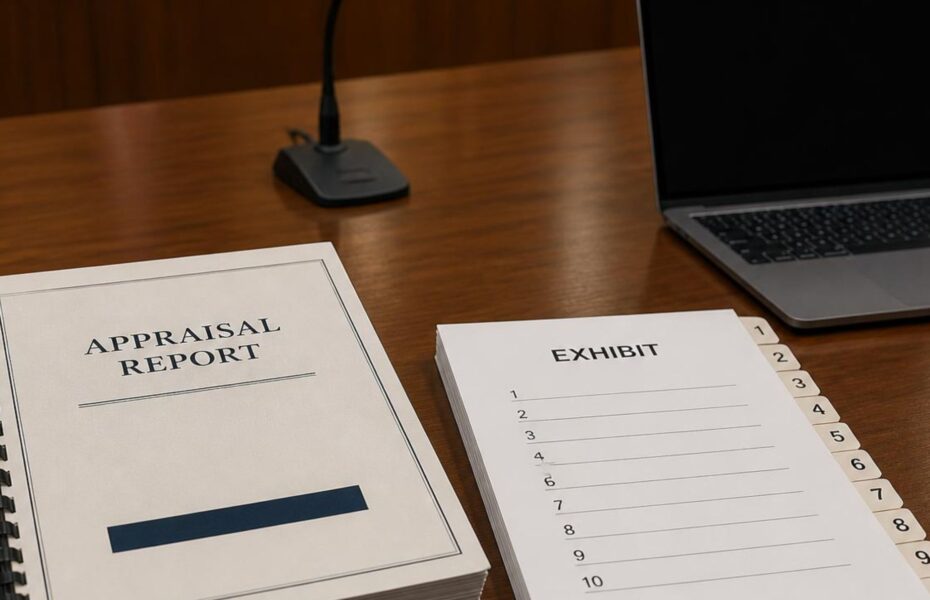
Collier County’s window to petition the Value Adjustment Board closes today, September 11, at 5 PM in the Clerk’s office and 11:59 PM online. If your client filed, the deadline is no longer the problem. The hearing is. From here on, VAB hearing evidence decides the case. A special magistrate weighs it, and that magistrate is a certified appraiser who has already read the property appraiser’s file. So here is what the evidence has to show, when to exchange it, and where petitions fall apart.
- Who the special magistrate is and what the recommendation has to contain
- What the statute makes you prove, and what the appraisal has to say
- The 15-day exchange, Collier’s upload rules, and the hearing-day mechanics
Who Is Sitting Across the Table
In Collier County, the five-member board does not hear petitions itself. Florida requires larger counties to appoint special magistrates. A magistrate who hears real estate valuation must be a state certified appraiser with at least five years of experience. The magistrate takes testimony, then writes a recommendation with proposed findings of fact, conclusions of law, and reasons. The board may then adopt it without another hearing.
Two more facts shape the room. A magistrate may not represent anyone before that board in a year of service. And the board may not accept an appraisal in any year its author serves as a magistrate there. So check your appraiser’s name against the current magistrate list before you exchange evidence. If they overlap, the report is out.
What VAB Hearing Evidence Has to Prove
Section 194.301 of the Florida Statutes sets the contest. The property appraiser earns a presumption of correctness by showing, more likely than not, that the assessment followed section 193.011 and accepted appraisal practice. Then the burden shifts. The petitioner has to show, more likely than not, that the assessed value does not represent just value. The old “every reasonable hypothesis” test no longer applies. So the petitioner need not prove the assessment indefensible. Only that it is more likely wrong than right.
If the petitioner clears that bar, the board sets the value itself. But only if the record holds competent, substantial evidence of value under section 193.011. Otherwise the matter goes back to the property appraiser with directions. A petition can win the argument and still lose the number, because nobody put a supportable value in the record. The appraisal fills that gap.
The evidence has to track the eight factors in section 193.011. Those are present cash value in an arm’s-length sale, highest and best use, location, size, cost and replacement value, condition, income, and net proceeds of sale. A magistrate who appraises for a living reads the report against that list. Skip highest and best use, or treat a distressed sale as arm’s length, and the report hands the property appraiser its rebuttal.
The 15-Day Exchange and Collier’s Upload Rules
At least 15 days before the hearing, the petitioner must give the property appraiser three things: an evidence list, copies of every document the board will see, and a summary of witness testimony. The property appraiser owes the same package, plus the property record card, on the same 15-day clock. Miss it, and the Clerk reschedules the hearing. One more rule matters. If the property appraiser asked for a document in writing and the petitioner refused, the magistrate may not accept it later. Withholding a rent roll in September can bar it in November.
Collier layers its own procedure on top. Under the Clerk’s evidence procedures, petitioner evidence goes into the Axia portal as a PDF under 60 MB, every page numbered, at least 15 calendar days before the hearing. Uploading to Axia does not start the statutory exchange by itself. The package still has to reach the property appraiser. A petitioner who will not attend can still have evidence considered. But it must be uploaded before the hearing, or delivered in two paper copies to the Clerk by 9:00 a.m. at least two workdays ahead.
What the Appraisal Itself Must Show
The effective date is January 1 of the tax year. Everything in the report has to anchor there: the sales, the condition of the property, the market it describes. A magistrate will discount a report that leans on sales closed after that date, or on a condition that changed in the spring.
The sales grid usually decides the case. Each comparable needs a closing date before January 1, confirmation of an arm’s-length sale, and adjustments a reader can follow. In Naples, the usual ones are condition, size, location, and waterfront or golf frontage. The eighth factor, net proceeds after usual costs of sale, is a Florida-specific point. A certified magistrate expects to see it addressed, not assumed. So is highest and best use, especially for older homes where the land carries most of the value.
Then the report should engage the property appraiser’s evidence directly. The property record card sits in the exchange package, and it lists the characteristics the mass appraisal model used. If the card gets the square footage, effective age, or a long-gone pool wrong, say so with a dated photograph and a measurement. The statute also lets the board consider assessments of comparable properties in the same neighborhood. Whether to press that angle is a call for counsel. The appraiser’s job is to make the sales evidence stand alone.
Hearing-Day Mechanics
The Clerk must send the hearing notice at least 25 calendar days ahead. Hearings often run in blocks. A petitioner cannot be made to wait more than two hours past the start. If that happens, the petitioner may leave and be rescheduled at no cost. Each side also gets one reschedule for good cause. To appear by video or phone, ask in writing at least 10 calendar days before the hearing.
Either party can require testimony under oath, and cross-examination is a right. A report that reads well loses ground fast when its author cannot explain a $40,000 location adjustment from memory. The written decision follows within 20 calendar days after the board’s last session day.
For Owners: The Weeks Between Filing and the Hearing
If you own the property and your attorney filed, four things are yours to do. First, pay the tax bill on time and in the right amount. A petitioner contesting value must pay all non-ad valorem assessments and at least 75 percent of the ad valorem taxes, less any early-payment discount, before they go delinquent. Otherwise the board denies the petition by April 20. Second, order the appraisal now, not when the hearing notice arrives. The report has to be finished, reviewed, and exchanged 15 days before the hearing.
Third, decide whether you will attend. You do not have to. Your attorney, a licensed appraiser, a licensed broker, a CPA, or someone with your written authorization can represent you. Collier will also consider uploaded evidence in your absence. Fourth, if the property appraiser sends a written request for a document, answer it. Refusing can keep that document out of your own case.
Owners of second homes in Naples and Collier County tend to miss one more thing. The appraiser needs access to the property, and the effective date is last January 1. If the house was mid-renovation or mid-repair on that date, gather the photos and contractor invoices now. They show condition on the only date that matters.
Two pages: every deadline and exchange rule with its statute section, and the evidence checklist to finish before the 15-day exchange.
Build the Record Before You Argue the Number
A VAB petition turns on the record, and the evidence exchange is due 15 days before anyone speaks. So the sequence for counsel is fixed. Confirm the appraiser is not on the magistrate list. Get the report dated to January 1 and written to the eight factors. Exchange it on time with numbered pages. Answer every written request from the property appraiser. Do that, and the hearing becomes a conversation about value between two appraisers. That is the contest the statute was written for. Skip a step, and the magistrate never reaches the number. Our appraisal services page covers tax appeal assignments, and the appraisal FAQ answers the timing questions that come up between filing and hearing.
Hearing Date Set and No Appraisal Yet?
PahRoo prepares January 1 appraisals for Collier County VAB petitions, written to section 193.011 and delivered in time for the 15-day exchange.
Frequently Asked Questions
What happens at a Florida VAB hearing?
A special magistrate takes testimony from both sides, reviews the evidence exchanged 15 days earlier, and may ask questions. Witnesses can be sworn, and each side may cross-examine. The magistrate then recommends, with findings of fact and conclusions of law, and the board makes the final decision.
Do I need an appraisal for a VAB petition?
Florida law does not require one. But the petitioner must prove by a preponderance that the assessed value does not represent just value, and the board can then set the value only if the record holds competent, substantial evidence meeting section 193.011. An appraisal dated to January 1 supplies it.
Can I appeal without appearing at the hearing?
Yes. A petitioner may be represented by an attorney, a licensed appraiser or broker, a CPA, an employee, a person holding a power of attorney, or an uncompensated person with written authorization. In Collier County, evidence uploaded before the hearing can be considered in the petitioner’s absence. Electronic appearance needs a written request 10 days ahead.
What is a special magistrate?
An independent hearing officer appointed by the Value Adjustment Board. For real estate valuation, the magistrate must be a state certified appraiser with at least five years of experience and may not represent petitioners before that board in the same year. The board may adopt the recommendation without another hearing.
What is the burden of proof at a VAB hearing?
The assessment is presumed correct if the property appraiser proves by a preponderance that it complied with section 193.011 and accepted appraisal practices. The petitioner must then prove by a preponderance that the assessed value does not represent just value. Statute rejected the old every-reasonable-hypothesis standard.
Appraisal Support for Collier County VAB Petitions
Property tax attorneys and owners of Naples-area homes and commercial property engage PahRoo Appraisal & Consultancy for January 1 appraisals written for Value Adjustment Board hearings, along with tax appeal work in Chicago and Cook County, Dallas-Fort Worth, Philadelphia, and Phoenix. To discuss a petition that already has a hearing date, contact our team.