
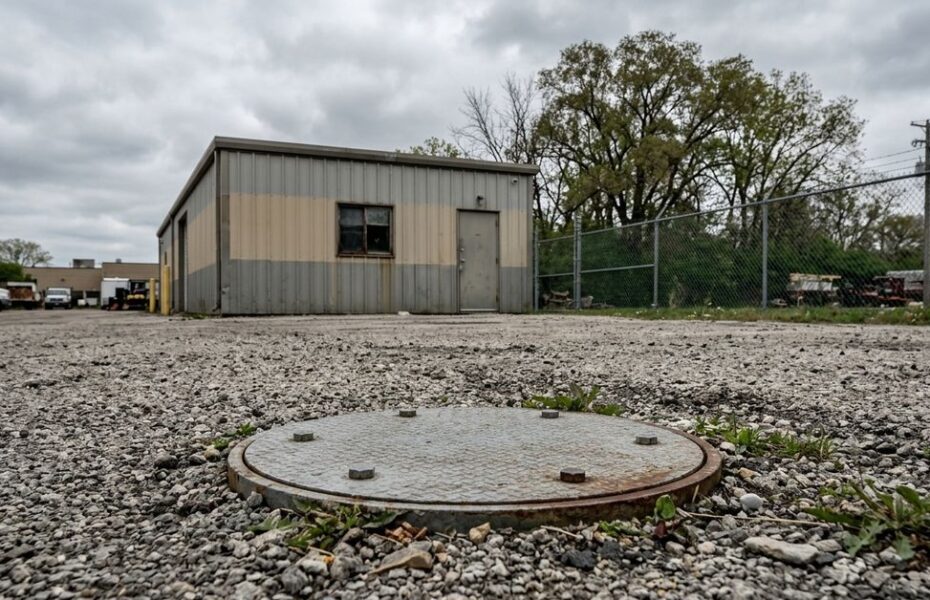
The owner of a small industrial building in Maine Township once asked the Property Tax Appeal Board to value it at zero. The cleanup estimate was bigger than the clean value, so the math looked easy. The Board called the appraisal “decidedly speculative” and gave it no weight. If you’re building an environmental contamination assessment argument for a client, that case is a good place to start.
- Why subtracting a cleanup bid from clean value rarely holds up
- How Cook County already counts flood zones in residential values
- What evidence makes a stigma claim believable to a hearing body
- What environmental counsel should hand the tax team, and when
Why the zero-value appeal failed
The facts come from a 2012 PTAB decision. The appraiser valued the 6,000 square foot building at $690,000 if clean. He then subtracted a $730,000 remediation estimate and landed on nothing.
The Board wasn’t convinced that cleanup costs should come off market value dollar for dollar, especially with only a small part of the site affected. It also noted that the owner’s operations weren’t slowed down. Nobody showed the property was unmarketable. And because the consultant priced the cleanup to residential standards on a site zoned and used for industry, the Board treated that scenario as speculation.
Still, the owner got a reduction that year, based on comparable sales. The contamination evidence didn’t add a dollar to it. Then for the 2014 tax year, the same owner dropped the contamination argument at hearing and won a $690,000 market value on the clean appraisal alone.
How assessors treat an environmental contamination assessment
The International Association of Assessing Officers publishes a standard on this exact question, the Standard on the Valuation of Properties Affected by Environmental Contamination, approved in November 2016. It’s advisory, but it lines up closely with how the Board reasoned in Maine Township.
A few points matter most for an appeal. The standard treats the cost to cure as a form of obsolescence instead of a straight deduction. It warns that a full deduction can overstate the loss, since it ignores the property’s value in use. In the income approach, it adjusts the income stream using the amortized present worth of actual costs.
It also puts the burden of proof on the owner. Before an assessor considers contamination, the standard expects certification or verification from a government agency. Owners should show actual costs, plus proof that cheaper cleanup options aren’t acceptable to the regulator. And costs incurred after the assessment date may have to wait for the next assessment year.
Consider a hypothetical. A warehouse has a clean value of $2,000,000, and the owner’s consultant bids $600,000 for full excavation. Subtracting gives $1,400,000. But say the regulator has already approved a $250,000 engineered barrier, the tenant stays, and the work runs over three years. Buyers would likely price that very differently, so that gap is what the appraiser has to measure with data.
Flood zones are already in Cook County’s residential model
Flood risk works differently, because Cook County already counts it for homes. In 2019 the Cook County Assessor’s Office announced it had added FEMA floodplain data to its assessment models. A follow-up note said that as of July 2019, floodplain data was part of all its residential modeling.
The office’s own sales analysis found New Trier homes on a floodplain were about 30% less valuable than similar homes off it. But it also said it lacked data showing a considerable effect in Maine, Elk Grove, Northfield, and Barrington Townships. So a flood zone doesn’t come with a fixed discount anywhere in the county.
For a house, that means the appeal has to show something the model can’t see. That could be a property the map treats wrong, a documented history of flooding, or actual damage. The Assessor’s flooding guidance lists damage it will consider, such as foundation, flooring, mechanical, and mold problems. It excludes ordinary basement seepage and roof leaks. For more on how water problems show up in value, see our article on water damage and home value.
Commercial property is a different story. If a property sits in a high-risk A or V zone and carries a federally backed mortgage, flood insurance is a loan requirement. That premium, and any effect on financing, shows up in expenses and in what buyers will pay. So an appraiser can measure it through the income approach instead of guessing at a percentage.
Stigma has to show up in the sales
Stigma is the hardest piece to prove and the easiest to overstate. The IAAO standard describes it as an intangible factor that may not be measurable as a cost to cure but may still affect market value. It says a stigma reduction needs market data behind it, and allegations alone aren’t enough.
The standard also notes that stigma can outlast the cleanup, and that it often fades with time. Claims that contamination hurts neighboring property may be overstated too, since values there often show no clear effect.
So when we look at stigma, we look for evidence a hearing officer can test. That means sales of remediated sites compared against clean ones, the financing terms lenders actually offered, and how long similar properties sat on the market. If those numbers don’t show a penalty, we say so. It’s better to drop the argument early than to have the Board drop it for you.
What environmental counsel should send the tax team
Environmental attorneys usually hold the documents that win or lose these appeals. A short handoff early in the case saves a lot of trouble later.
- The full Phase I and Phase II reports, not excerpts or a summary letter
- Regulator correspondence and any approved remedial action plan
- Cost estimates tied to the approved remedy, plus invoices for work already done
- The status of any Illinois EPA No Further Remediation letter and its land use limits
- A timeline of what was known and spent before the January 1 assessment date
That NFR letter matters more than people expect. Illinois EPA’s fact sheet on NFR letters says the letter isn’t executed until it’s recorded with the county. It can also restrict land use, for example by barring residential use or the use of groundwater as drinking water. Those limits feed straight into highest and best use.
One more thing. Make sure the cleanup cost and timeline in the environmental matter match what the tax appeal relies on. If the numbers differ, the other side will notice.
Measure the impairment before anyone argues it
The pattern across these cases holds. The attorney argues the law, but the appraiser has to bring a number the market supports. So bring the appraiser in while the environmental file is still coming together, not after the filing deadline is set. Then the value opinion rests on the approved remedy, actual costs, and real sales. That’s the kind of record the Board weighs, and our guide to Board of Review evidence walks through what it expects.
Put a defensible number on the impairment
Send us the environmental file and the assessment notice. We’ll tell you whether the market data supports an impaired value, and how much of the gap it can carry.
Frequently Asked Questions
Can environmental contamination lower a property tax assessment?
It can, when the owner proves it. The IAAO standard on contaminated property puts the burden of proof on the owner. It also calls for agency verification of the contamination and evidence of actual costs before an assessor adjusts value.
Should cleanup costs be subtracted from market value?
Not dollar for dollar. The IAAO standard treats cost to cure as a form of obsolescence and warns that a full deduction can overstate the loss. In a 2012 Cook County case, the Property Tax Appeal Board was not convinced by that kind of deduction.
Does a FEMA flood zone reduce assessed value in Cook County?
The Cook County Assessor’s Office added FEMA floodplain data to its residential models in 2019. Its analysis found a large effect in New Trier Township but not a considerable one in several other townships, so the effect varies by area.
What is environmental stigma in an appraisal?
Stigma is a loss in value from how the market perceives risk, beyond the cost to cure. The IAAO standard says any stigma reduction needs market data behind it, and that stigma often fades with time.
What documents should an environmental attorney give the appraiser?
The full Phase I and Phase II reports, regulator correspondence, cost estimates tied to the approved remedy, invoices for work done, and the status of any Illinois EPA No Further Remediation letter, including its land use limits.
About PahRoo Appraisal & Consultancy
Contaminated sites and flood-prone parcels are some of the toughest files in a tax appeal. From our Lincolnwood office, PahRoo Appraisal & Consultancy prepares appeal appraisals that separate clean value from impaired value and show the market evidence behind each step. Michael Hobbs, MAI, SRA, leads the firm and is available for expert testimony. Along with Chicago real estate appraisals, we work with attorneys in Dallas-Fort Worth, Philadelphia, Phoenix, and Naples.