
Your insurance declarations page says one number. A recent appraisal or sale says another, and they can be far apart. That gap confuses a lot of homeowners, but it isn’t a mistake. Replacement cost vs market value comes down to two different questions. One asks what it would cost to rebuild the house, and the other asks what a buyer would pay for the whole property.
- What each number measures and who sets it
- Why an older Chicago home can cost more to rebuild than it would sell for
- When you need a market value appraisal instead of an insurance estimate
Replacement Cost vs Market Value at a Glance
Both numbers describe the same house, so it’s easy to assume they should match. But they come from different people and serve different jobs.
| Replacement cost | Market value | |
|---|---|---|
| Main question | What would it cost to rebuild? | What would a buyer pay? |
| Includes the land? | No | Yes |
| Who usually sets it | Your insurer or agent | The market, measured by an appraiser |
| Where it’s used | Your dwelling coverage limit | Sales, estates, divorces, tax appeals, floodplain reviews |
What Replacement Cost Measures
Replacement cost is a construction number. The NAIC is the national group of state insurance regulators. It explains that replacement cost coverage pays to repair or replace damaged property with materials of like kind and quality. So the estimate tracks labor, materials and the way your house was built, not what nearby homes sold for.
Actual cash value is the other settlement option you’ll see on a policy. The Illinois Department of Insurance’s homeowners definitions describe it as replacement cost less depreciation for age and condition. That’s why an actual cash value claim usually pays less on an older roof or furnace.
Your lender cares about this too. Fannie Mae’s property insurance rules require coverage on a replacement cost basis for the loans it buys, with an exception for roofs. Still, the coverage limit itself comes from your insurer’s rebuild estimate, not from the appraisal.
What Market Value Measures
Market value is a sales number. Fannie Mae’s definition of market value calls it the most probable price a property should bring in a competitive, open market, with a typically motivated buyer and seller. In practice, an appraiser gets there by comparing your home with recent nearby sales, which we explain in how appraisers compare homes.
The land is part of that price. The NAIC and the Illinois Department of Insurance both point out that market value includes the land. The state adds that market value is not generally used when settling insurance claims. In other words, buyers pay for the block, the schools and the commute, while an insurer only pays to put the building back.
Why the Two Numbers Rarely Match
Location is the biggest reason. A modest house on a valuable lot can sell for far more than it would cost to rebuild, because most of the price is in the land. The opposite happens too. Older homes with plaster walls, brick and custom millwork can cost more to rebuild than they’d sell for. The Illinois Department of Insurance’s 2014 shopping guide even lists a policy form meant for an older home whose replacement cost far exceeds its market value.
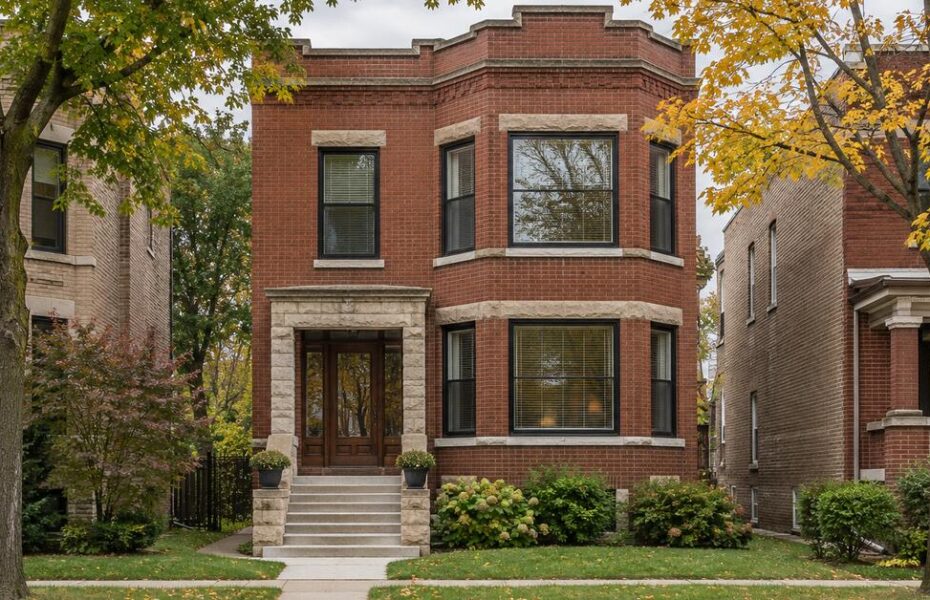
Take a hypothetical brick two-flat in Chicago. Say it would sell for $420,000, and the lot accounts for about $140,000 of that. So the building itself carries roughly $280,000 of market value. Meanwhile, the insurer’s estimate to rebuild it with similar materials comes to $520,000. The owner should insure for the rebuild, even though that’s more than the whole property would sell for.
Where Market Value Matters After Damage
Flood zones are one place where the building’s market value matters more than its rebuild cost. FEMA’s substantial damage guide says that if repairs will cost 50% or more of the structure’s market value, not counting the land, the building is substantially damaged. Then it has to meet current floodplain standards before it’s rebuilt. Local officials make that call, not FEMA.
Back in the two-flat example, half of $280,000 is $140,000. So a $150,000 repair estimate would cross the line, even though it’s well under the $520,000 rebuild figure. Communities often start from an adjusted tax assessment. However, Arizona’s floodplain program, citing FEMA’s desk reference, lists an independent appraisal by a professional appraiser as an accepted method. Condo owners and associations face the same rule, and our FEMA 50% rule appraisal page covers how that review works. For damage short of a flood, see how water damage affects home value.
For Home Buyers, Set Coverage Before Closing
Buyers often set the dwelling limit at the purchase price because it’s the number in front of them. But the price includes the land, so it can leave you over or under insured. A few steps help before you sign.
- Ask the insurer or agent for a replacement cost estimate on the house itself, and ask what it’s based on.
- Compare that estimate with your purchase price. A big gap either way is normal, but you should understand why it’s there.
- The Illinois Department of Insurance’s shopping tips say to insure for at least 80 percent of replacement value, so ask how your policy handles anything below full coverage.
- Ask about extended or guaranteed replacement cost. The state notes that most companies cap guaranteed coverage at 125%.
- Recheck the limit after you remodel. The state also says additions and remodeling can raise replacement cost, and our article on whether renovations increase home value covers the market side.
When You Need Market Value Instead
Insurance is the one place homeowners mostly deal with rebuild cost. Almost everything else runs on market value. Selling, settling an estate, a divorce buyout and a tax appeal all ask the same thing. What would the property bring on the open market? Our guide on when you need a home appraisal walks through those situations, and appraisals for inherited property covers the estate side.
So an appraisal won’t tell you how much coverage to buy. Likewise, an insurance estimate won’t stand in for a value in court, at the Board of Review or in a buyout.
Insure for the Rebuild, Appraise for the Market
Keep the two numbers in their own lanes. Set your coverage from a current rebuild estimate and review it every year, as the state suggests. Then, when a sale, an estate, a divorce or a floodplain review calls for a value, use a market value. Get it from an appraiser who can show the sales behind it.
Need the Market Value, Not the Rebuild Cost?
Settling an estate, dividing a home or facing a floodplain review? We appraise what your property would sell for and show the sales that support it.
Frequently Asked Questions
What is the difference between replacement cost and market value?
Replacement cost is what it would take to rebuild or repair the house with similar materials. Market value is what a buyer would likely pay for the whole property, including the land.
Should I insure my home for its market value?
Usually not. Homeowners coverage is built around the cost to rebuild, and market value includes land that insurance does not rebuild. Ask your insurer or agent for a replacement cost estimate.
Why is my replacement cost higher than my home’s value?
Older homes with plaster, brick or custom details can cost more to rebuild than buyers would pay for them. Location also plays a part, since land and neighborhood drive market value but not construction cost.
Does an appraisal tell me how much insurance to buy?
No. An appraisal estimates market value. Your coverage limit should come from your insurer’s replacement cost estimate, which your agent can update after a remodel.
When does a home’s market value matter after damage?
In flood zones, local officials compare repair costs with the building’s market value, not counting land. If repairs reach 50% or more, the building is substantially damaged and must meet current floodplain standards.
Market Value Appraisals for Owners Who Need a Real Number
When the question is what a home would actually sell for, owners, attorneys and accountants call PahRoo Appraisal & Consultancy. We appraise homes in Chicago and Cook County, Dallas-Fort Worth, Philadelphia, Phoenix and Naples from our Lincolnwood headquarters, and Michael Hobbs, MAI, SRA, signs our Illinois reports. See our appraisal services for the property types we cover.