

Cook County hotel assessments moved sharply higher in 2024, catching the attention of hotel owners across the county. For Class 5A hotels alone, assessed values increased by roughly 22 percent year over year. On paper, that level of growth suggests a hospitality market that has largely regained its footing.
Many operators, however, see a different picture when they review actual operating performance.
Occupancy and net operating income continue to lag behind the assumptions embedded in current assessments. As owners move into 2025, higher tax exposure has arrived faster than income recovery for many properties.
Why Hotel Assessments Rose So Quickly
Assessors appear to have based recent increases largely on forward-looking assumptions. In many cases, valuation models treat the post-pandemic period as complete and price hotel assets as though demand, profitability, and risk have returned to normal levels.
The market has improved, and travel activity has increased across several segments. Still, improvement does not always signal stability. Many assessments now reflect confidence that some properties have not yet achieved.
For hotel owners, this distinction matters. Assessments should reflect current market conditions, not optimistic projections.
Chicago Hotel Occupancy Is Still Lagging
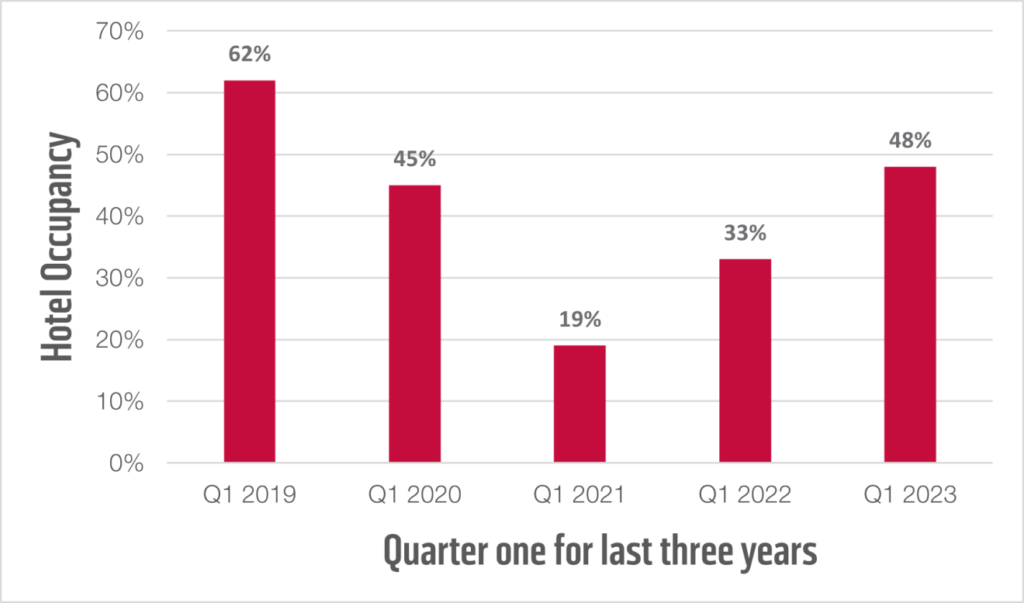
Occupancy trends highlight this gap clearly.
Data from STR, a widely relied-upon source for hotel performance metrics, shows that downtown Chicago hotel occupancy remains about 9 percent below 2019 levels. While the difference may seem modest, even small occupancy gaps can materially affect hotel revenue and profitability.
Lower occupancy reduces room nights and ancillary income and limits a property’s ability to absorb rising operating costs. These pressures flow directly through to NOI.
NOI Has Not Fully Recovered
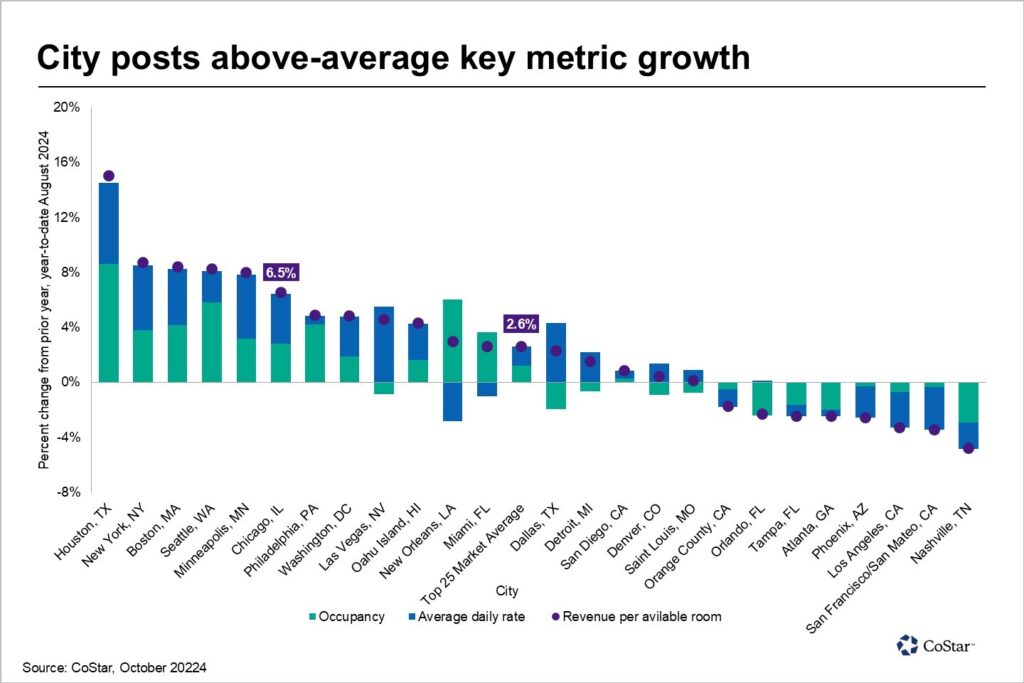
Revenue has improved since pandemic lows, but NOI has not kept pace for many Cook County hotel assets.
Recent market data shows NOI levels remain roughly 12 to 15 percent below pre-pandemic benchmarks for many properties. Operating expenses have grown faster than revenue, and margins remain tight even where average daily rates have increased.
Because NOI drives value, assessments that assume stabilized income risk overstating current market value. In these situations, an NOI-based hotel appraisal can help clarify whether assessed values reflect actual income rather than projected recovery.
Ongoing Operating Pressures
Hotels continue to face operational challenges that broad valuation models often understate.
Owners still contend with staffing shortages that push labor costs higher. Insurance, utilities, and vendor expenses have increased, while some properties have adjusted amenities or service levels in ways that affect demand. Convention and group travel have improved, but it has not fully normalized across all segments.
These conditions directly affect cash flow. When assessments overlook them, valuations can drift away from market reality.
Cap Rates and the Cost of Risk
Cap rate selection remains another area where assessments and market conditions diverge.
Some valuation models assume cap rates will return to pre-2020 levels. Investors and lenders, however, continue to price in higher risk for many urban hotel assets. Revenue volatility, financing constraints, and uncertainty around long-term demand patterns continue to influence pricing decisions.
A market-supported hotel cap rate analysis helps determine whether risk premiums used in assessments align with current investor expectations.
How NOI-Based Appraisals Are Being Used
Property tax attorneys increasingly rely on NOI-based appraisals to challenge hotel assessments in Cook County.
These analyses focus on trailing NOI, market-supported cap rates, documented occupancy trends, and property-specific operating conditions. This approach shifts valuation discussions away from projections and back toward current performance.
In one recent case, a hotel owner secured a 19 percent reduction in assessed value after demonstrating that recovery assumptions embedded in the assessment overstated current market value. This strategy has become increasingly effective in Cook County hotel property tax appeals, where income assumptions often drive valuation disputes.
What to Watch Heading Into 2025
As assessments continue to reflect optimistic recovery assumptions, hotel owners benefit from taking a closer look at how assessors value their properties.
Key questions include whether assessments align with current NOI rather than projected NOI, whether cap rates reflect today’s risk environment, and whether occupancy and operating costs receive realistic treatment.
When those answers remain unclear, a review can help identify potential exposure.
A Practical, Data-Driven Approach
We have prepared a reference guide that outlines 2024 and 2025 hotel cap rates, occupancy recovery trends, and valuation considerations specific to Cook County.
As assessed values rise faster than income, careful analysis and realistic assumptions remain critical. Owners who ground valuation discussions in current market data place themselves in a stronger position.
Schedule a hotel assessment review and get a clear, data-backed perspective before higher assessments become permanent.