
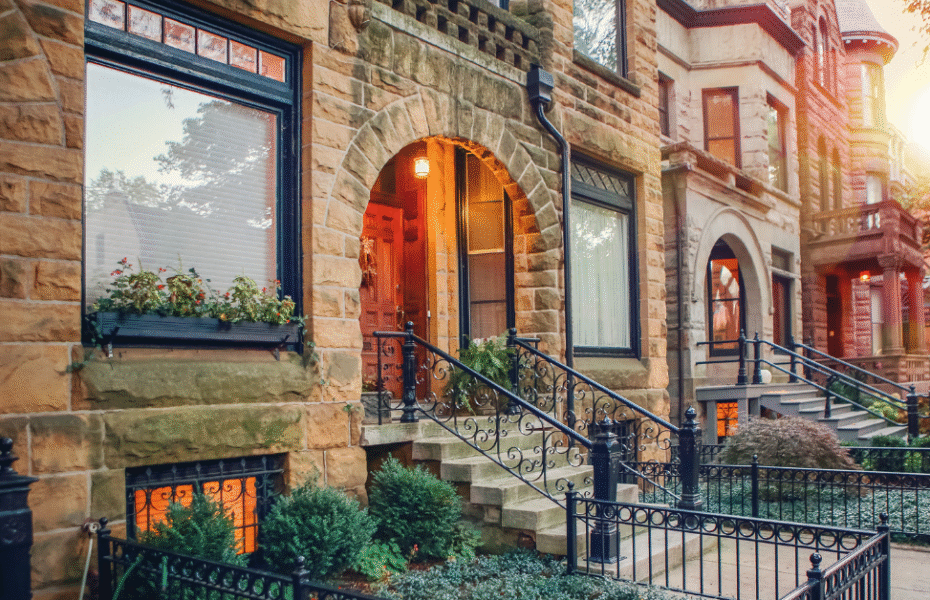
Chicago generates a fresh pile of market headlines every month, and most of them expire just as fast. The Chicago real estate trends that matter are the ones underneath: the patterns that hold while the monthly numbers wobble. As appraisers, we watch those patterns for a living, because they decide what properties are worth here. So this page tracks the durable ones, and our monthly reports handle the wobble.
- Why Chicago keeps landing on the tight-supply side of the national map.
- How one metro splits into four different markets, county by county.
- The two local forces, taxes and zoning, that bend values here like nowhere else.
The Chicago Real Estate Trends That Persist
So start with the pattern national data keeps confirming. In Realtor.com’s 2026 Market Clock analysis, only about a quarter of the 50 largest metros remain seller’s markets. Those sit mostly in the Midwest and Northeast, and Chicago made the short list of peak seller markets. Every buyer’s market sits in the South or West. So while much of the country rebuilt its for-sale inventory, Chicago stayed supply-constrained.
That is not a fluke of one survey. The region’s housing stock is old, and new construction has lagged demand for years. Owners holding low mortgage rates also have little reason to list. Tight supply became Chicago’s resting state, so it shapes everything downstream. Expect competitive conditions for well-priced homes, resilient prices, and a market that punishes overpricing by silence rather than lowball offers. One more durable habit follows from it. Well-prepared listings move fast here, while stale ones linger visibly. So Chicago sellers win by pricing right in the first week. Chicago buyers win by being ready before the right house appears.
One Metro, Four Different Markets
Averages, after all, hide the real Chicago. Our June 2026 market report found the metro splitting by county. Cook held prices on scarce inventory, while DuPage and Will showed demand-led growth. Lake County’s gains, meanwhile, rested on thin demand. Two sellers thirty miles apart can face opposite markets in the same month. So a metro-wide headline tells neither of them much.
The city also tells its own two-track story. Family buyers keep pushing into space, which keeps the suburbs and the bungalow neighborhoods competitive. Downtown’s condo segment runs on a different clock. In our appraisal work, the high-rise overhang that built up after 2020 has been steadily absorbed. Demand for well-located units has returned, too. The recovery is a trend precisely because it has persisted across seasons rather than spiking in one.
So match the trend to the move you are making. Selling a bungalow in a tight ward? Supply is your friend, if the price respects the block. Buying downtown? The recovery rewards patience less every season. Hunting in DuPage or Will? Expect company, and expect to prove your number. Each answer comes from the pattern, not the headline.
The Chicago X-Factor Is Property Taxes
No durable read on this market survives without the tax layer. Cook County’s system bends buyer math here like nowhere else. Assessments run on a three-year cycle, and the City of Chicago gets reassessed in 2027. The bill also arrives a year behind the value. So tax risk is part of every Chicago purchase, and savvy buyers price it in. A home with a stale low assessment carries a future bill increase. One with a fresh high assessment may carry appeal potential instead. So when you tour a Chicago home, ask for the tax history, too. If the assessment lags the price, budget for the catch-up. If it overshoots, an appeal may claw some back. Either way, the tax layer belongs in your offer math. Our plain-language guide to Cook County property taxes walks through the whole chain.
Policy Keeps Redrawing the Map
The second local force is zoning, and it moved recently. In September 2025, the City Council unanimously approved an ordinance legalizing accessory dwelling units. It covers areas zoned for small apartment buildings and business districts, with by-right status in the original pilot zones. In single-family zones, allowance depends on the local alderperson. So the same bungalow can hold ADU potential in one ward and none next door. That ward-by-ward patchwork is now part of lot values across the city. We covered the mechanics in our piece on how zoning changes property value. It belongs on any list of trends shaping Chicago prices, too.
Follow the Monthly Numbers, Price on the Pattern
Put the two layers together and the playbook writes itself. Check the monthly data for where the market sits right now, because timing questions live there. Then make the actual decision on the structural picture. That means your county’s dynamics, your block’s supply, the tax trajectory, and what the zoning permits. A pre-decision appraisal pulls all of it into one defensible number for your specific property. In a metro where the answer changes every few miles, that number beats any trend piece, including this one.
Which Chicago are you buying in?
Cook, DuPage, Will, and Lake run on different math. Get an appraisal built from your county’s evidence, not the metro average.
Frequently Asked Questions
Is Chicago a buyer’s or seller’s market?
In 2026, Chicago ranks among the strongest seller markets in the country, per Realtor.com’s Market Clock analysis. Tight Midwest inventory drives it. Conditions vary by county and neighborhood, though, so check current local data before pricing a specific property.
Why is Chicago housing inventory so tight?
Three durable reasons. The region’s housing stock is old and new construction has lagged demand for years. Owners holding low mortgage rates have little incentive to list, and demand for well-located homes has stayed steady. Together they made tight supply Chicago’s resting state.
Are the Chicago suburbs more competitive than the city?
Often, because family buyers compete for space. Our June 2026 report found DuPage and Will counties showing demand-led growth while Cook County held prices on scarce inventory. The city runs two tracks of its own. Neighborhood homes stay competitive while the downtown condo segment sits in a steady recovery.
How do property taxes affect Chicago home values?
Heavily. Cook County reassesses on a three-year cycle, with the City of Chicago next reassessed in 2027. Bills also run a year behind values. Buyers price in tax trajectories. So a stale low assessment implies a future increase, while an overshooting one may support an appeal.
Where can I see current Chicago market data?
Our monthly Chicago market reports track prices, inventory, and county-level dynamics as they move. This page covers the structural patterns behind them. For a decision about a specific property, an independent appraisal translates both layers into one defensible value.
Field Data From Two Decades of Chicago Appraisals
PahRoo Appraisal & Consultancy has valued Chicago-area homes and buildings for more than twenty years. An appraiser holding both MAI and SRA designations leads the firm. Maybe you need a residential appraisal before a purchase or sale. Maybe an estate, divorce, or tax matter calls for broader appraisal services. Either way, the trends above stop being abstractions and become the evidence behind your number.